




Rottnest Island Authority announced on Tuesday it has ceased redevelopment of the island's main bus stop in its current location following advice from the Whadjuk Aboriginal Corporation, in a joint statement with the Corporation.
WAC is the formally recognised cultural authority for the Whadjuk area, together with the Wadjemup Aboriginal Reference Group (WARG) and the Wadjemup Whadjuk Cultural Authority (WWCA).
Works to upgrade the precinct started in March but were suspended on April 8 when Aboriginal ancestral remains, known culturally as Baalang, were found during construction.
RIA has established protocols for ground-disturbing works on the island, including cultural heritage surveys and the presence of Aboriginal heritage monitors while works are carried out. The Authority and WAC said these protocols were followed during the main bus stop redevelopment.
"Appropriate authorities were notified of the discovery and, after forensic examination, were identified as being male and consistent with Aboriginal ancestry," the joint statement said.
"RIA and the WAC have collaborated since the discovery of Baalang to ensure cultural protocols are followed, and respectful decisions are made regarding the protection and ongoing management of Baalang's site."
Following the discovery, a ground penetrating radar survey and subsequent archaeological investigation found no further evidence of human remains at the site, which has been lodged as an Aboriginal Cultural Heritage Place with the Department of Planning Lands and Heritage.
Following discussions with representatives from the WAC, WARG and WWCA, RIA will not proceed the main bus stop project at its current location, the Authority and WAC said on Tuesday, noting that the project may be revisited if an alternative suitable site becomes available in the future.
WAC welcomed the decision and considers the protection of Baalang and the surrounding area to be the appropriate cultural priority.
A new pathway to the church, which was being delivered as part of the project, will proceed, RIA and WAC said, because it improves access to the building without impacting the burial site.
The discovery of Baalang outside of the known burial ground is of profound cultural and spiritual significance to Whadjuk Noongar people and the broader Aboriginal community.
Baalang was returned to their resting place following a cultural ceremony in May and it was agreed by the representatives that no further DNA or aging of the bones would be carried out.
Future memorialisation of the Baalang site will be developed in consultation with Whadjuk Traditional Owners and will have regard to the broader memorialisation work being undertaken through the Wadjemup Project, RIA and WAC said on Tuesday.
The state-wide Aboriginal-led project facilitated by the RIA and supported by WA's Department of the Premier and Cabinet is delivering truth-telling, ceremony, and commemoration strategies to acknowledge and reconcile the Aboriginal prison history on Wadjemup based on broad consultation with Aboriginal groups across the state.
Initiatives include: Truth Telling - to acknowledge Wadjemup's history of Aboriginal incarceration and its role in the colonisation of WA; Ceremony - to facilitate healing in line with Aboriginal cultural protocol; and Memorialisation - of the former prison sites on Wadjemup, including the Quod and the Wadjemup Aboriginal Burial Ground.
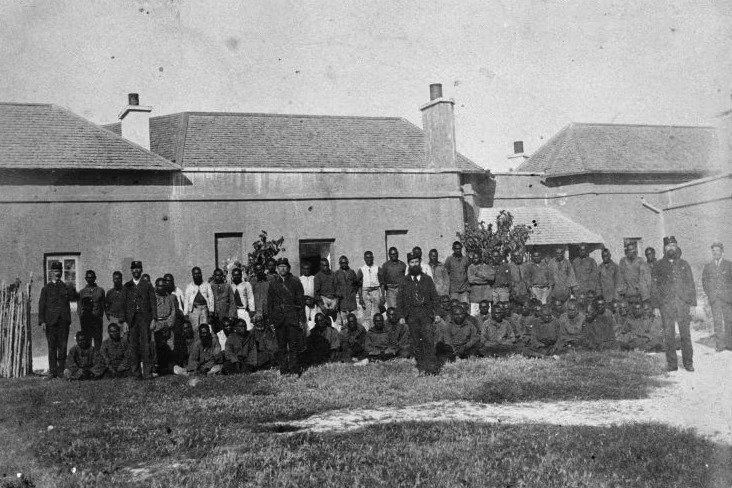
Between 1838 and 1931, colonial authorities used Wadjemup as a prison and then a forced labour camp, where about 3,700 Aboriginal men and boys were incarcerated. Hundreds died in appalling conditions. At least two English officers wrote to authorities in London during the 19th century to complain about the treatment of Aboriginal people on the island, to no avail.
New projects to confront the history of the island were announced in March.
Works to stabilise the Quod are "well progressed" and expected to be completed later this year, RIA and WAC said this week.
"Construction of the memorialisation of the Wadjemup Aboriginal Burial Ground is well underway and is expected to be finished in early 2027," the joint statement said.
"RIA and WAC recognise the profound cultural and spiritual significance of Wadjemup to Whadjuk Noongar people and the broader Aboriginal community. We acknowledge and express our deep regret for the significant distress the recent discovery and subsequent investigations have caused Aboriginal people.
"WAC encourages Aboriginal community members to reach out to their office or their local Aboriginal Corporation for support and information."
In July, the Rottnest Island Deaths Group Aboriginal Corporation began proceedings seeking heritage protection of Wadjemup / Rottnest Island under federal law.
The application under section 10 of the Commonwealth's Aboriginal and Torres Strait Islander Heritage Protection Act 1984 was publicly advertised by the federal government with a notification of an application for the protection of a specified area and "invitation to make representations", including full page ads featuring details of the application and a map showing the specified area.
A 1993 Federal Court judgement ruled that a Section 10 declaration under federal law is a remedy sought where State or Territory legislation is "ineffective or inadequate".



