



The Rottnest Island Deaths Group Aboriginal Corporation is seeking heritage protection of Wadjemup / Rottnest Island under federal law.
The application under section 10 of the Commonwealth's Aboriginal and Torres Strait Islander Heritage Protection Act 1984 has been publicly advertised by the federal government with a notification of an application for the protection of a specified area and "invitation to make representations", including full page ads featuring details of the application and a map showing the specified area.
A 1993 Federal Court judgement ruled that a Section 10 declaration under federal law is a remedy sought where State or Territory legislation is "ineffective or inadequate".
The foundation of the proposal is the argument that recently the completed redevelopment of Lodge Wadjemup posed a risk to culturally significant areas.
The application notes: "The threat extends across the island and surrounding waters, given the breadth of cultural and ancestral values attached to the specified area."
RIADGAC member Iva Hayward-Jackson told The West Australian they were not trying to cap tourist numbers, but want a bigger say in how the island's history and heritage is managed, shared and protected.
"It's not about stopping people from coming, it's about telling the truth," he said.
"We've been backed into a corner and forced to do a submission by the Cook Government."
WA Tourism Minister Reece Whitby has not commented whether the application, if successful, posed a risk to current operations or future development on Wadjemup.
"The West Australian government will be making a submission, but it will be in terms of acknowledging Aboriginal cultural heritage and the excellent way it's managed on Rottnest Island at the moment," he told The West Australian.
"Rottnest is a jewel in our tourism crown and will continue to be".
Mr Hayward-Jackson said the Minister had explicitly refused to engage with RIADGAC.
"The Tourism Minister Reece Whitby has sent us an email saying we will never deal with you again," he said.
"That is so culturally inappropriate and so hurtful to us."
The WA Government issued a statement that: "Western Australia has strong laws and processes to protect Aboriginal cultural heritage while supporting transparent and informed decisions about land use and development."
Whadjuk Aboriginal Corporation, which is not affiliated with the Rottnest Island Deaths Group Aboriginal Corporation, is formally responsible for overseeing cultural services on Wadjemup under an agreement with the WA Government's Rottnest Island Authority.
Under section 10 of the Aboriginal and Torres Strait Islander Heritage Protection Act 1984, Federal Environment Minister Murray Watt must be satisfied the area is "under threat from injury or desecration" in order to take action. His Department told The West "this matter is currently under assessment" and did not comment further.
..jpg)
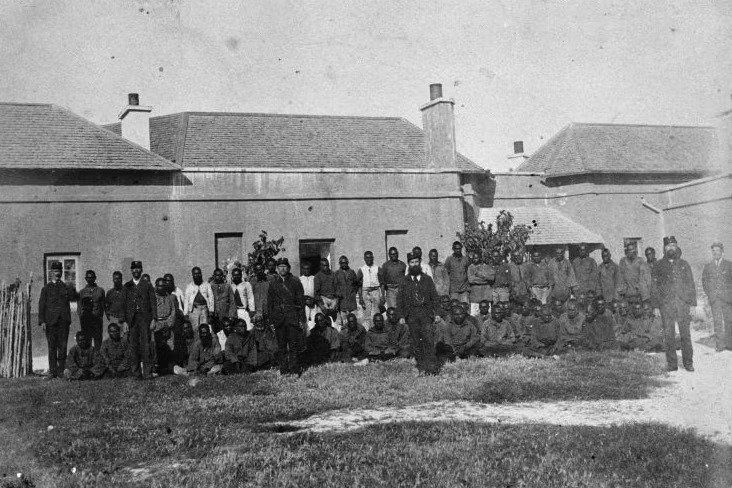
Between 1838 and 1931, colonial authorities used Wadjemup as a prison and then a forced labour camp, where about 3,700 Aboriginal men and boys were incarcerated and at least 400 buried.
These boys and men, aged from eight up to about 70, were taken from across Western Australia. They were charged with crimes that ranged from petty offences to murder, but it later emerged many of the prisoners were innocent and violently coerced into confessions.
Conditions were brutal on Wadjemup, where the men, including many Elders, and boys were forced to do hard labour while being denied adequate nourishment, causing hundreds of preventable deaths.
The appalling situation was repeatedly disclosed in WA Parliament, from the 1880s onwards, no actions were taken to address it and the WA government only stopped imprisoning Indigenous people on Wadjemup in 1931.
In April, the remains of a First Nations ancestor were found on Wadjemup near a development site.
At the time, proud Bibbulmun Noongar woman and human rights law expert, Dr Hannah McGlade, told National Indigenous Times Wadjemup is "a really deeply spiritual place, and we have to treat our ancestors with the utmost respect, because we've always believed that their spirits live on".
"We know that these men died on this island in very shocking, cruel circumstances, taken from their countries and families, and very few survived and made it home," she said.
Dr McGlade called for broader recognition of Wadjemup's cultural significance, and urged its nomination for World Heritage listing.
"That recognition would be consistent with the State Government's truth-telling commitment," she said.
With additional reporting by Natasha Clark and Ronan O'Connell



