


Note: this report includes images of Indigenous people who have died.
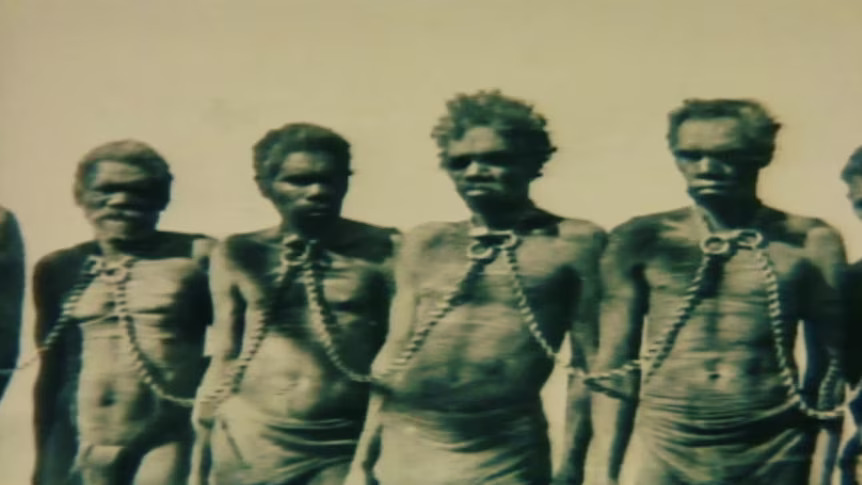
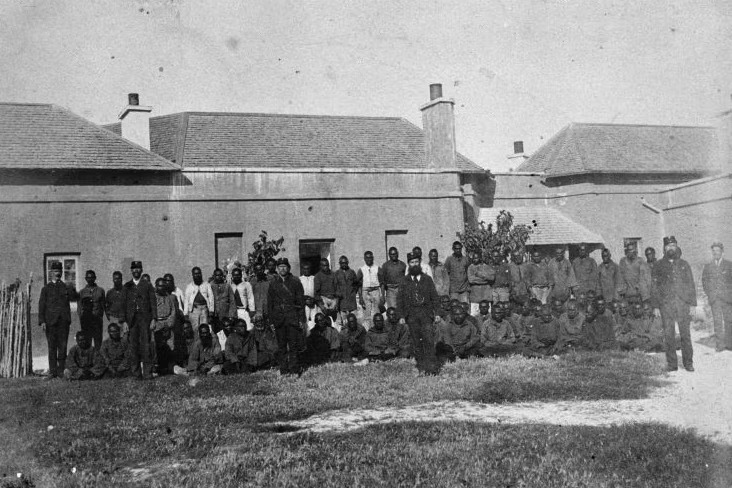
It is Boorloo / Perth's favourite holiday location, a majestic island ringed by beaches and fauna-rich reefs, and inhabited by the iconic Quokka. Yet many visitors to Wadjemup (Rottnest Island) remain unaware of its horrific history. Between 1838 and 1931, colonial authorities used Wadjemup as a prison and then a forced labour camp, where about 3,700 Aboriginal men and boys were incarcerated.
These boys and men, aged from eight up to about 70, were transported to this hellish environment from across Western Australia. They were charged with crimes that ranged from petty offences to murder. But it later emerged that many of these prisoners were innocent and were violently coerced into confessions. What made this even more damaging to the State's Indigenous communities is that many of these men were Elders. Their absence robbed these communities of leadership and access to traditional knowledge.
Conditions were brutal on Wadjemup, where Indigenous prisoners were forced to do hard labour while being denied adequate nourishment, causing hundreds of preventable deaths. Yet when this disgrace was repeatedly disclosed in WA Parliament, from the 1880s onwards, no actions were taken to address it. In fact, it wasn't until 1931 that the WA government stopped imprisoning Indigenous people on Wadjemup, by which time the island had already become a holiday spot.
These atrocities were long hidden from tourists. For many years, holiday makers could not only stay inside Wadjemup's former prison building, the Quod, but also sleep in a campground directly on top of the unmarked graves of at least 373 Indigenous males. These men and boys died in custody here while suffering brutal treatment, toiling in chain gangs in temperatures of up to 40C.
Now, however, the campground and prison accommodation have finally been closed as part of a WA government reconciliation effort. This drive has also seen Wadjemup get new Indigenous tourism ventures, monuments to the dead, Indigenous art projects, an Indigenous cultural space, and the renovated The Lodge Wadjemup resort, which is decorated by Indigenous artists. All of which is part of an ongoing project between the state government, the Rottnest Island Authority, and Indigenous stakeholders to better acknowledge Wadjemup's disturbing past.
A spokesperson for the Rottnest Island Authority told National Indigenous Times it is committed to continuing to work with the Aboriginal community to ensure Wadjemup's history is "shared openly, honestly and respectfully". They said one of the key goals of RIA over the next three years was to implementing the Wadjemup Project, which "focuses on conserving the Quod and the memorialisation of the Wadjemup Aboriginal Burial Ground in culturally appropriate ways, guided by Aboriginal people".
They explained there were now many ways that visitors to the island could engage with Aboriginal culture and history, such as by joining an array of Aboriginal-led tours and activities. Like Aboriginal art workshops, smoking ceremonies, cultural walks, and language classes by Dooga Waalitj Healing, or Aboriginal cultural activities for kids with Koorda's Crew. As well as interactive Aboriginal workshops and yarning sessions run for school groups by Mirliny.
Tourists can also visit the redesigned Wadjemup Museum, housed in the Old Mill and Hay Store, and designed with the input of the Wadjemup Aboriginal Reference Group (WARG). WARG is made up of six Aboriginal leaders from different language groups in WA, and advises the Rottnest Island Authority on issues to do with reconciliation and cultural heritage management.
The museum unravels the history of Rottnest, including that of its prison camp, via 17 exhibits, which feature ancient artefacts, immersive audio experiences, and a sculpture garden. It also features a Truth-telling space, the focal point of which is an old mill stone, which Indigenous male prisoners once used to grind wheat into flour.
While progress has been made in acknowledging Wadjemup/Rottnest's sinister history, a lot of work remains to be done, says Pamela Thorley, a Noongar Menang woman and Chair of the Wadjemup Aboriginal Reference Group (WARG).
"This needs to be a continuous truth-telling journey that amplifies Aboriginal voices and activities," Ms Thorley said.
"(Wadjemup) must be a culturally safe place for Aboriginal peoples on their journey of healing and paying respect to our Ancestors buried here.
"It is important that Aboriginal stories both culturally and historically are embedded in all of the works and activities that occur from development design, economic opportunities and activations on the Island and around the State that link the whole story of resilience, strength and survival.
"The island should reflect the richness of first nations peoples heritage and culture through development design, economic opportunities and activations, and the dark history that needs to be told as a continuous truth-telling journey."
Acknowledgment and respect of Wadjemup's Indigenous heritage was "layered through all aspects" of the design and development of the newly-renovated The Lodge Wadjemup, says its general manager, Jeremy Nordkamp. It had influenced place naming, in-room experiences, art and décor, and the creation of the Gathering Ground.
"We worked with an incredibly talented team of artists to bring The Gathering Ground vision to life, which is a central aspect of the overall design of The Lodge Wadjemup," Mr Nordkamp says.
"Depicting stories of the flora, fauna and cultural significance of Wadjemup, Kaedisha Westberg designed the sandblasted concrete and Tjyllyungoo, Lance Chadd, Nigel Chadd and Trish Robinson created the light projection elements.
"The Gathering Ground is a dedicated space that acknowledges the important cultural history of the Island, to accommodate public and private events, including ceremonies and culture sharing with the Nyungar community. As well as a social hub where guests, island visitors and tour operators can meet, start a tour, or to just relax and take in the natural surrounds."
Almost two centuries since Wadjemup was converted from an island paradise into hell for Indigenous people, its ghastly history is finally being acknowledged and revealed to all who visit.



