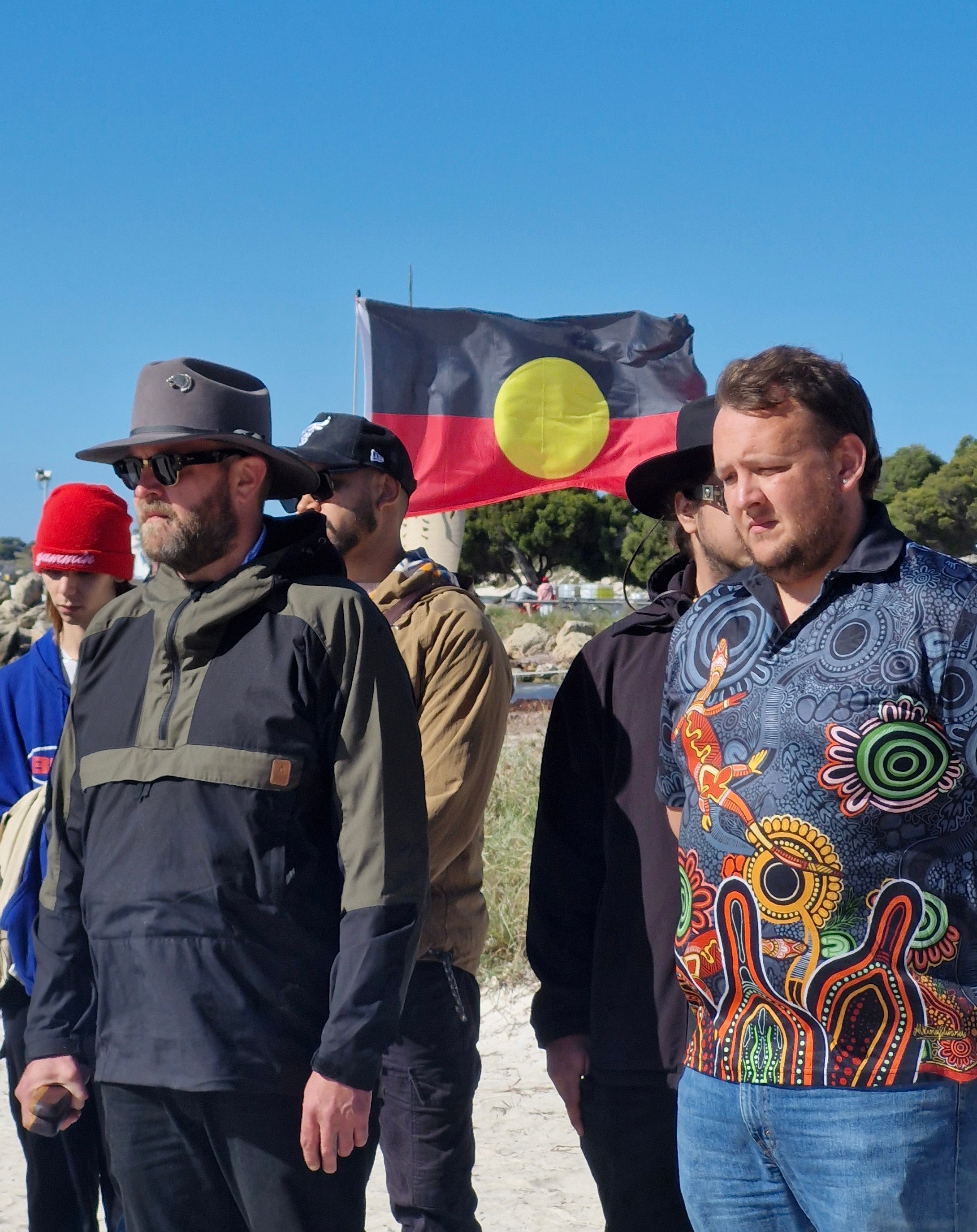
The human remains of Indigenous ancestry uncovered on Wadjemup last month were given a traditional burial on Saturday on the island by dozens of Indigenous men from across Western Australia.
The large group, which included many Elders, paid their respects to the ancestral remains found on April 8 not far from Wadjemup's ferry terminal during construction works on the island's main bus stop.
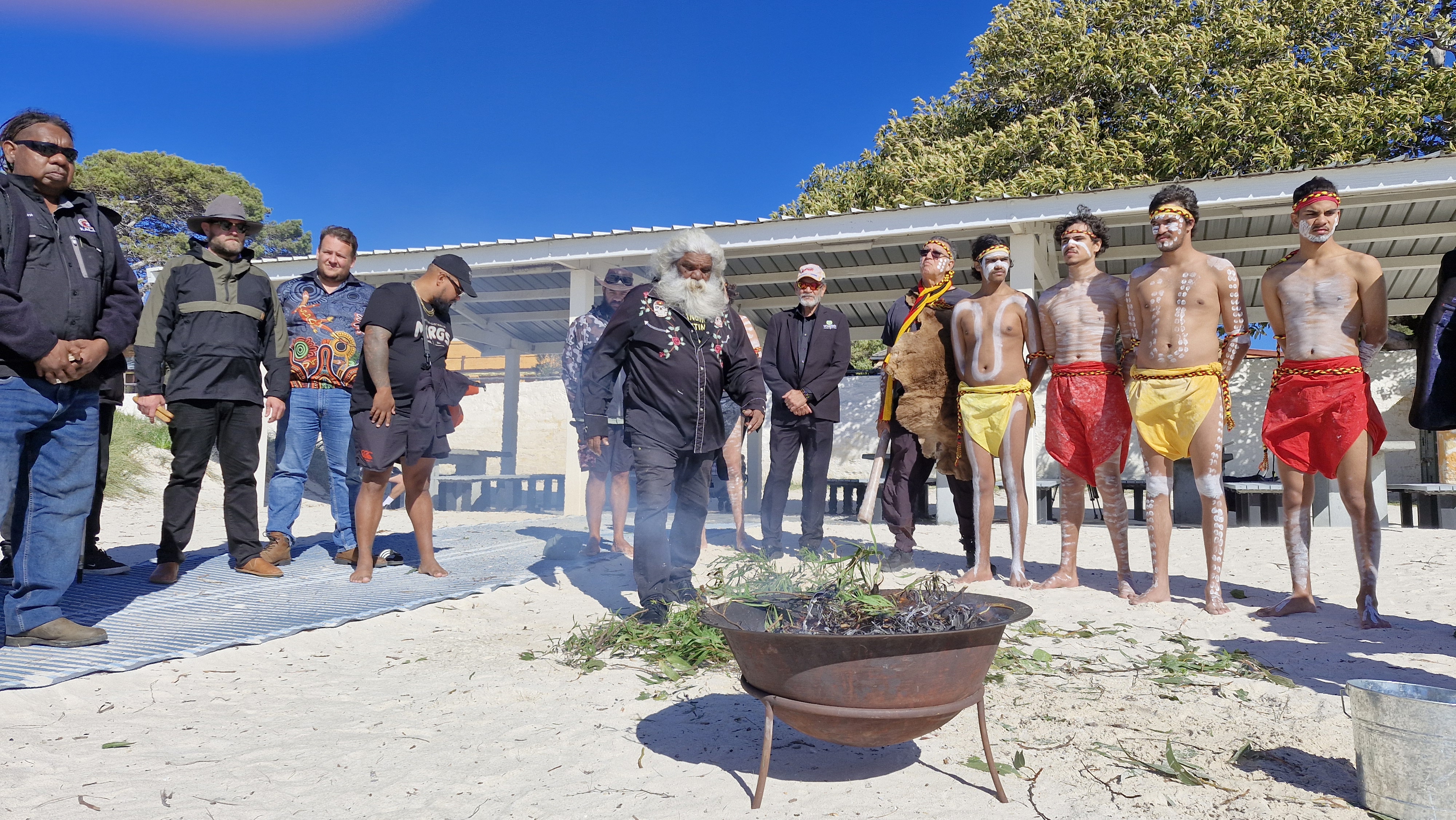
Subsequent scientific surveys have identified another 12 potential burial sites on Wajdemup, where more than 3,000 Indigenous males were imprisoned between 1838 and 1931. After departing the ferry Saturday morning, the group of about 50 Indigenous men formed a procession, led by young men in traditional body paint. They walked along the pier to North Thompson beach, where they paused to do a traditional smoking ceremony in the sand.
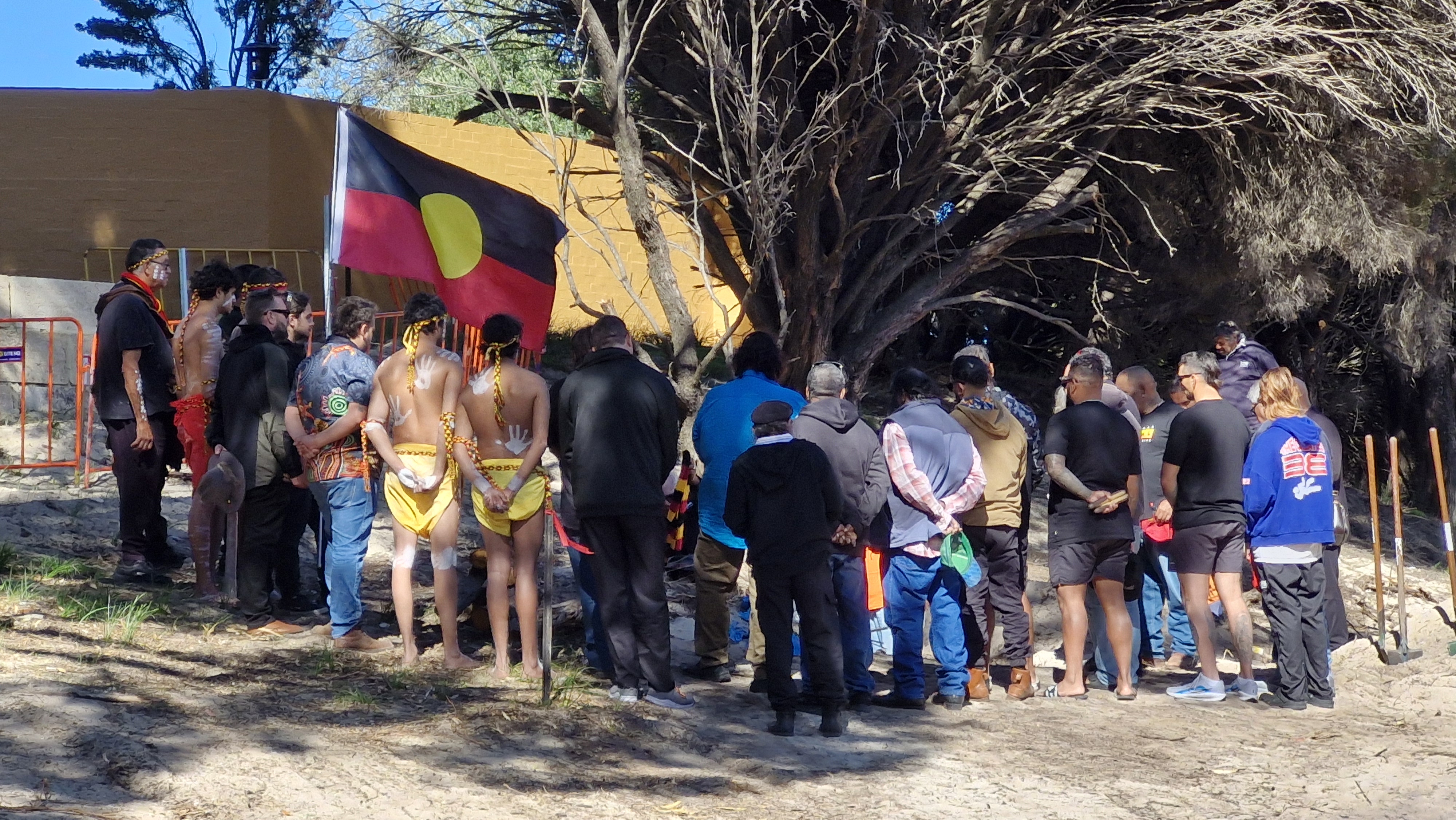
Next they conducted further smoking ceremonies at the Quod, a former prison building, and at the site where they buried the remains, alongside the bus stop. The smoking ceremonies were performed in that order to retrace the same steps that Indigenous prisoners used to tread after arriving on Wadjemup / Rottnest, according to George Hayden, a Noongar Elder and cultural engagement coordinator for Whadjuk Aboriginal Corporation.
Mr Hayden said they had returned the remains, known culturally as Baalang, so that the unknown male could find peace in the afterlife.
"In our culture, if he's not buried whole then his spirits not at rest," he said. "Today was very culturally significant but also very emotional and sad."
A crowd of about 40 onlookers were allowed to watch the initial part of the burial, before the Elders ask for privacy as they completed this ritual. Mr Hayden said the day had gone smoothly in part thanks to the cooperation of the Rottnest Island Authority.
An RIA spokesperson said that, since the remains were discovered, the RIA had been working closely with the Whadjuk Aboriginal Corporation to follow cultural protocols.
"Additional archaeological investigations will take place at the site next week to confirm if the anomalies are burial sites," the spokesperson said.
"WAC and RIA will share the findings of those investigations with the senior Whadjuk Elders and respected Aboriginal representatives and determine next steps."
WAC member, and Whadjuk Elder Kelvin Garlett said it was crucial to do comprehensive investigations into further remains on the island.
Mr Garlett said a lot of mystery remained about the number of Indigenous men buried on Wadjemup, as the official written history doesn't match Indigenous oral history. He believed any more Indigenous remains found on Wadjemup deserved the same, respectful burial that was performed on Saturday.
Eventually, all of the Indigenous "lost souls" on Wadjemup will be discovered thanks to emerging technologies, said Stan Headland, a Whadjuk Elder and WAC cultural advisory committee member.
"People are walking all over the ground here not knowing there's people (buried) underneath them," Mr Headland said. "We need to find lots more (Indigenous graves) so we can have those areas blocked off from the public."
His sentiments were echoed by Bunuba man Keith Andrews, who travelled to Wadjemup all the way from Fitzroy Crossing, about 1,800km away.
Mr Andrews said he didn't hesitate to make this trip because of its cultural importance. As a child, he had regularly heard Elders in his community telling stories about how their ancestors were unfairly imprisoned at Wadjemup. He believes it is important that this dark history remained in the public spotlight.
WA colonial authorities from 1838 to 1931 ran a prison and then a forced labour centre on Wadjemup, where at least 3,700 Indigenous men and boys were imprisoned. Aged roughly between eight and 70, those Aboriginal males were detained in locations throughout the State before being sent to this grim setting on Wadjemup.
Many of whom were later found to have been innocent of their alleged crimes, but had been beaten until they confessed. Such brutality continued at the prison camps on Wadjemup, where hundreds of Aboriginal detainees died due to inhuman living conditions.
Beyond the injustice of what occurred during this era, these ghastly events at Wadjemup also left many Indigenous communities in WA without key leadership figures. Because many of the men incarcerated at Wadjemup were Elders, who were cultural stewards and holders of traditional knowledge.
Despite this gruesome history, and Wadjemup's vast significance in Indigenous culture, the island later became a major holiday destination frequented by visitors who mostly knew nothing of its past. Now, however, far greater efforts are being made to acknowledge this history, and commemorate the Indigenous victims of Wadjemup's prison era.
The campground and prison accommodation have finally been closed as part of a WA Government reconciliation effort. Which has also seen Wadjemup get new Indigenous tourism ventures, monuments to the dead, Indigenous art projects, an Indigenous cultural space, and the renovated The Lodge Wadjemup resort, which is decorated by Indigenous artists. All of which is part of an ongoing project between the Government, the Rottnest Island Authority, and Indigenous stakeholders to better acknowledge Wadjemup's disturbing past.