
The recent Country visit of UN Special Rapporteur on the Rights of Indigenous Peoples Albert Barume highlights Australia's ongoing refusal to recognise and progress the realisation of Indigenous rights as well as respond to the increasing human rights violations, especially in relation to children.
Mr Barume, after meeting Aboriginal people across Australia and hearing firsthand of issues, concluded that the rights of Aboriginal people are not safe in the hands of state and territory governments.
He acknowledged the worsening situation of Aboriginal incarceration and child removals with concerns of another Stolen Generation, and notwithstanding the National Agreement on Closing the Gap, progress was undermined by fragmented laws, policy reversal and weak accountability mechanisms.
"First Peoples' rights cannot remain dependent on political goodwill, discretionary programmes or the political agenda of changing state and territorial governments," he warned.
Mr Barume ended his visit with a call for an enforceable national framework to implement the UN Declaration on the Rights of Indigenous Peoples with consistent standards, independent monitoring and effective participation across the jurisdictions.
Prime Minister 'seems determined to disregard the increasing risks posed by states and territories'
This recommendation is likely to be ignored the federal government. Prime Minister Anthony Albanese recently claimed at the UN in New York that he was unaware of the UN's concerns about Aboriginal children, notwithstanding a recent finding by the UN Committee on the Elimination of Race Discrimination that Australia's youth justice system was a form of systemic racial discrimination.
Mr Albanese seems determined to disregard the increasing risks posed by states and territories whose conduct ranges from flagrant racism demonstrated repeatedly by the NT and Queensland governments to the long held and pervasive forms of systemic discrimination and denial of Indigenous rights. He appears to simply not care.
Unfortunately, this attitude is not being publicly challenged by Minister for Indigenous Australians Malarndirri McCarthy whose engagement with Aboriginal communities has too often been underwhelming. For example, the ALP event in Forrest Chase this year following the failed bomb attack at Boorloo on Invasion Day involved numerous speeches by politicians and statements of support without any real commitment to Aboriginal people of any kind. Racism isn't going to be addressed by feel good, performative PR events. Northern Territory Aboriginal people have also been abandoned by a blatantly racist CLP party, and the federal Minister has yet to lead any meaningful interventions to address this dangerous conduct.
Albanese government 'has done nothing substantial to support Aboriginal people'
Apart from the referendum, which was terribly mismanaged, the Albanese government has done nothing substantial to support Aboriginal people, nor addressing disadvantage and systemic discrimination in Australia. The only significant commitment is their 'economic empowerment' agenda which lacks any tangible outcomes for the vast majority and is based on the questionable idea that wealth through a small number of business opportunities will 'trickle down' to communities.
The Albanese government has turned its back on the importance of an independent national Aboriginal representative body, ignored the Senate Inquiry into UNDRIP, which recommended a national action plan to further the realisation of the Declaration, and even refused to fund the Human Rights Commission national plan on racism. These are not the actions of a responsible government that respects Aboriginal and Torres Strait Islander people. If anything, they've given the green light to racist governments by consistently neglecting their responsibilities under international human rights law.
The agreement with the Coalition of Peaks must be reviewed as these policies are failing Aboriginal and Torres Strait Islander people at large.
Constitutional law Professor Megan Davis in her recent Romlie Mokak Oration spoke to 'in the room' privilege and a phenomenon of 'elite capture' observed by economic development theorists and which happens when 'the advantaged few steer resources and institutions that could serve the many towards their own narrow interest and aims'. Davis also speaks of the renegotiated national CTG agreement in 2020 devolving the Commonwealth of responsibility for Aboriginal affairs - which is a denial of the 1967 referendum in which a majority of Australians voted Yes in favour of the Commonwealth not only having constitutional power to make laws for Aboriginal people but exercising appropriate leadership in the face of oppressive and racist state and territory governments.
"It seems to me a profound misreading of the Australian Constitution, and of the High Court's interpretation of federalism, to imagine that the states and territories can adequately discharge responsibility for Indigenous affairs in the absence of a coherent national framework, federal leadership and a federal voice," she noted.
'We cannot give up'
Media attention focussed on the Special Rapporteur being denied entry into adult and youth prisons and detention centres in the Northern Territory and Queensland. It was no surprise those governments refused access, but it was disappointing that Mr Barume was unable to see any prison conditions. This was a missed opportunity; the UN visit should have included Western Australia as it allows access to UN officials and the Special Rapporteur could have observed the dire situation firsthand of Aboriginal incarcerated people living under conditions that are cruel and inhumane and including extensive use of solitary confinement.
The UN Rapporteur heard from many Aboriginal people about their disappointment in the rejection of the referendum for a national Voice to parliament and warned that the 2023 referendum was not a mandate to deny Indigenous rights. He also called for a national First Peoples self-determined and funded representative body at the national level. We cannot give up, he said, after one failed referendum result and he's right. After all, if we've learned anything from the Albanese government it is that our voices must be heard and Aboriginal community leaders are needed to advocate across all governments.
Our inherent right to self-determination and our own representative institutions under the Declaration are supported by international human rights laws and systems and it is also imperative we continue to bring our case forcefully under those mechanisms as well as in Australian domestic forums.
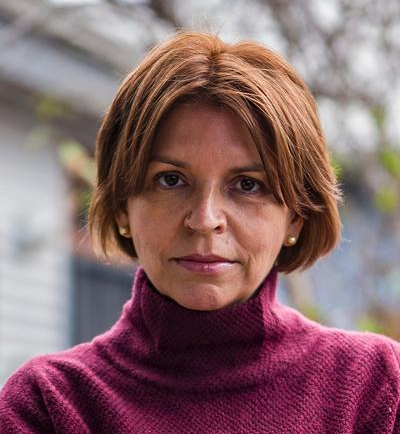
Dr Hannah McGlade is a Kurin Minang human rights expert and law academic.