One of the best parts of my job is spending time in communities across Australia and seeing the difference that our government's programs are making to individuals, families and communities.
Last week was no different.
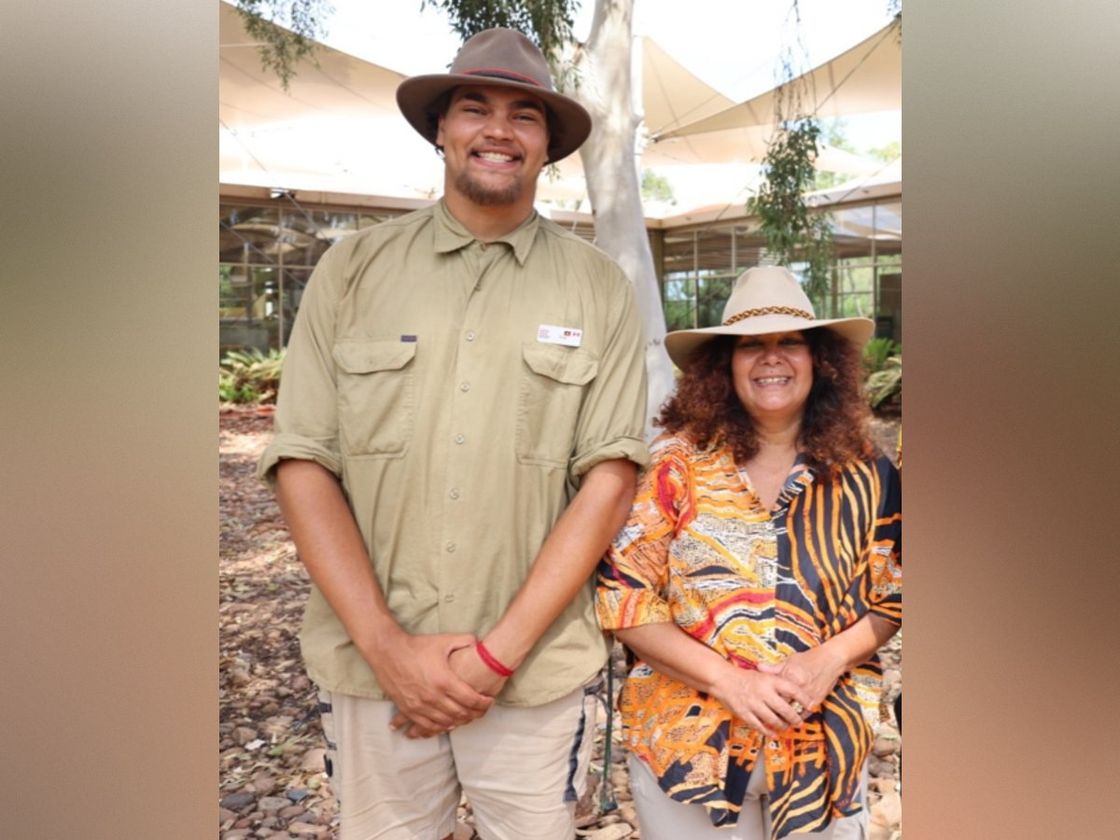
A few kilometres from Uluru, on Anangu Country, I met Tony, who works as a tour guide at Voyages, in a new job created through our Remote Jobs and Economic Development (RJED) program.
"Every time I wake up, I feel really happy to go to work."
Tony welcomes visitors to one of Australia's most iconic destinations.
"I get to give tours to people from around the world and teach them about bush foods, native plants, culture and language."
Like many people starting a new job, Tony was nervous at first. He now speaks with great pride about the role he plays, the knowledge he shares and the future he is building for himself and his family.
Tony's story stays with me because it reflects both the ambition and the purpose of the National Agreement on Closing the Gap.
The socio-economic targets provide an important measure of progress, but at their heart they are about creating opportunities for First Nations people.
Ultimately, it is about dignity.
Earlier this month, State and Territory Ministers, Local Government and the Coalition of Peaks came together in Canberra for the Joint Council on Closing the Gap.
As we discussed the work ahead, experiences like Tony's are a reminder that behind every target, investment and policy discussion are people, families and communities whose lives are shaped by the opportunities available to them.
We know too many First Nations people continue to face disadvantage and barriers to opportunity.
We know many of the challenges that Closing the Gap seeks to address remain significant.
At the same time, there are areas where sustained effort, genuine partnership and targeted investment are delivering measurable results.
In July this year, Closing the Gap Target 3 was achieved, with more than 95 per cent of First Nations children enrolled in preschool nationally.
Five other targets are improving, including youth engagement, student learning potential and tertiary qualifications.
Three more targets are improving and on track to be met, including employment.
Our Remote Jobs and Economic Development Program is contributing to this change.
Across remote and regional Australia, communities are creating opportunities, building local economies and delivering positive outcomes.
From nursery jobs in the Cook region of Queensland that reduce seasonal employment challenges, to building capacity for aquaculture technicians and fishing processing crews on Groote Eylandt in the Top End.
These are the kinds of jobs that help people participate in the economy, support their families and build the futures they want for themselves and their communities.
We should be honest about the challenges, while also recognising the progress being achieved through First Nations communities, organisations, businesses and governments working together to deliver better outcomes.
That is what programs like RJED are designed to support.
RJED is helping create employment opportunities in remote communities, backing local leadership and strengthening local economies.
More than 3,000 jobs have already been created through the program and, last week, I was pleased to announce the fourth funding round, which will support the creation of a further 800 jobs in remote communities across Australia.
Together, these investments are supporting our goal of creating 6,000 jobs in remote communities by 2030.
These numbers matter because behind every job is a person, a family and a community benefiting from greater opportunity and economic participation.
The opportunities themselves are as diverse as the communities they serve.
From maintenance and construction work supported by Laynhapuy Homelands Aboriginal Corporation in Arnhem Land, to apprenticeships and trade roles with West Daly Regional Council in Wadeye.
To new roles supporting the establishment of the Wanilla Firewood Enterprise near Port Lincoln in South Australia, creating employment in administration, project support and community maintenance.
This is what I continue to see across remote Australia.
Employers growing their workforce, communities identifying local solutions and people taking up opportunities close to home, in roles that reflect local priorities, strengths and aspirations.
These stories may not always make national headlines, but they matter.
They demonstrate what can be achieved when governments work in genuine partnership with First Nations people and back what works.
That is why we must continue to build on this progress.
My message to colleagues across all governments is simple, we need to double down on our efforts.
Closing the Gap is not the responsibility of one minister or one portfolio.
The National Agreement belongs to all governments, and delivering on it requires commitment across every area of government.
We know there is more work to do.
We remain committed to that work.
When people have a job, it changes lives.
Work provides financial security, but it also builds confidence, purpose and hope. It strengthens families and communities and creates opportunities for future generations.
Progress is real. It is happening in communities across Australia.
Malarndirri McCarthy is the Federal Minister for Indigenous Australians and a Senator for the Northern Territory.