



Twelve Indigenous students in the Bega Valley have begun training for careers in Aboriginal health, with a new program allowing them to study on Country for the first time.
The two-year Bega Valley Aboriginal Health Practitioner Traineeship combines classroom learning at the University of Wollongong's Bega campus with workplace experience at regional health services.
Trainees attend classes one day a week and spend four days working across partner organisations.
The students will study a Certificate IV in Aboriginal and/or Torres Strait Islander Primary Health Care Practice, and the current group includes school leavers, career changers and health workers seeking further qualifications.
The program is delivered by UOW and UOW College alongside Katungul Aboriginal Corporation Regional Health and Community Services, Directions Health and Southern NSW Local Health District.
It was officially launched at a community event on November 19.
Previously, students in the region had to travel to Sydney for face-to-face Aboriginal Health Practitioner training.
The University of Wollongong says there are currently only two qualified Aboriginal Health Practitioners working in the region, despite its higher-than-average Aboriginal population.
UOW Vice President of Indigenous Strategy and Engagement Nyssa Murray said local training could help build the regional health workforce and support Aboriginal communities to shape the services they need.
"Building a skilled Aboriginal health workforce within regional communities is essential to achieving this," she said.
"Programs like this, delivered on Country, create opportunities for local Aboriginal people to gain qualifications, develop meaningful careers and put their skills into practice without having to leave their communities."
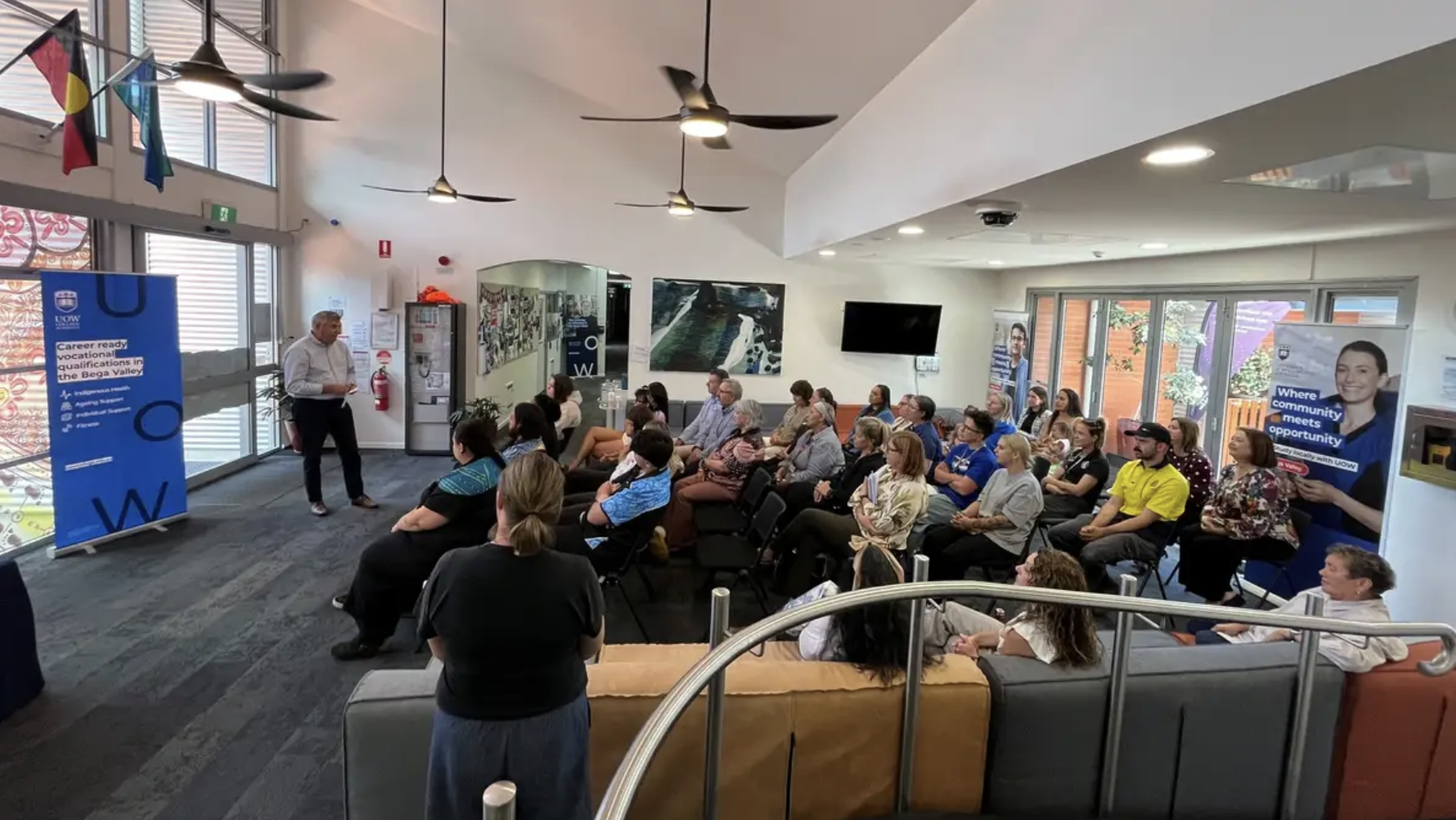
The traineeship builds on a partnership between UOW College and Katungul, which was established two years ago to provide further training for existing health workers.
Local Aboriginal Elders, health professionals and educators helped shape the new course through an advisory group, with a focus on making the program culturally safe and appropriate.
Katungul chief executive David MacQueen said the course had been developed to respond to local needs.
"This has taken a genuine community effort," he said.
"Local Elders, allied health workers and the educators at UOW have worked closely with us to shape a program that not only responds to what the region needs but that provides holistic and culturally appropriate wellbeing services for Aboriginal communities."
The program's delivery on Country has been supported by local grants, the NSW Smart and Skilled program and funding from the Federal Department of Health, Disability and Ageing through its Integrated Care and Commissioning initiative.
Community organisations, including Campbell Page, Bamarra Training and Illawarra Aboriginal Corporation, also supported prospective students with applications, interviews and traineeship arrangements.
Ms Murray said the opportunity was about more than gaining a qualification.
"This is about more than education," she said.
"It is about strengthening local capability, supporting communities to retain their skilled people and ensuring the next generation of Aboriginal health practitioners can contribute to the health and wellbeing of their own communities."



