


"I didn't read the words, I looked at the pictures. Bit by bit the pictures told me the whole story," says Brenton E. McKenna, remembering the comics that taught him how to read as a child.
Back then, teachers took his comic books off him.
Today, the Yawuru artist from Broome is Australia's first published Indigenous graphic novelist, with his works filling libraries across Australia.
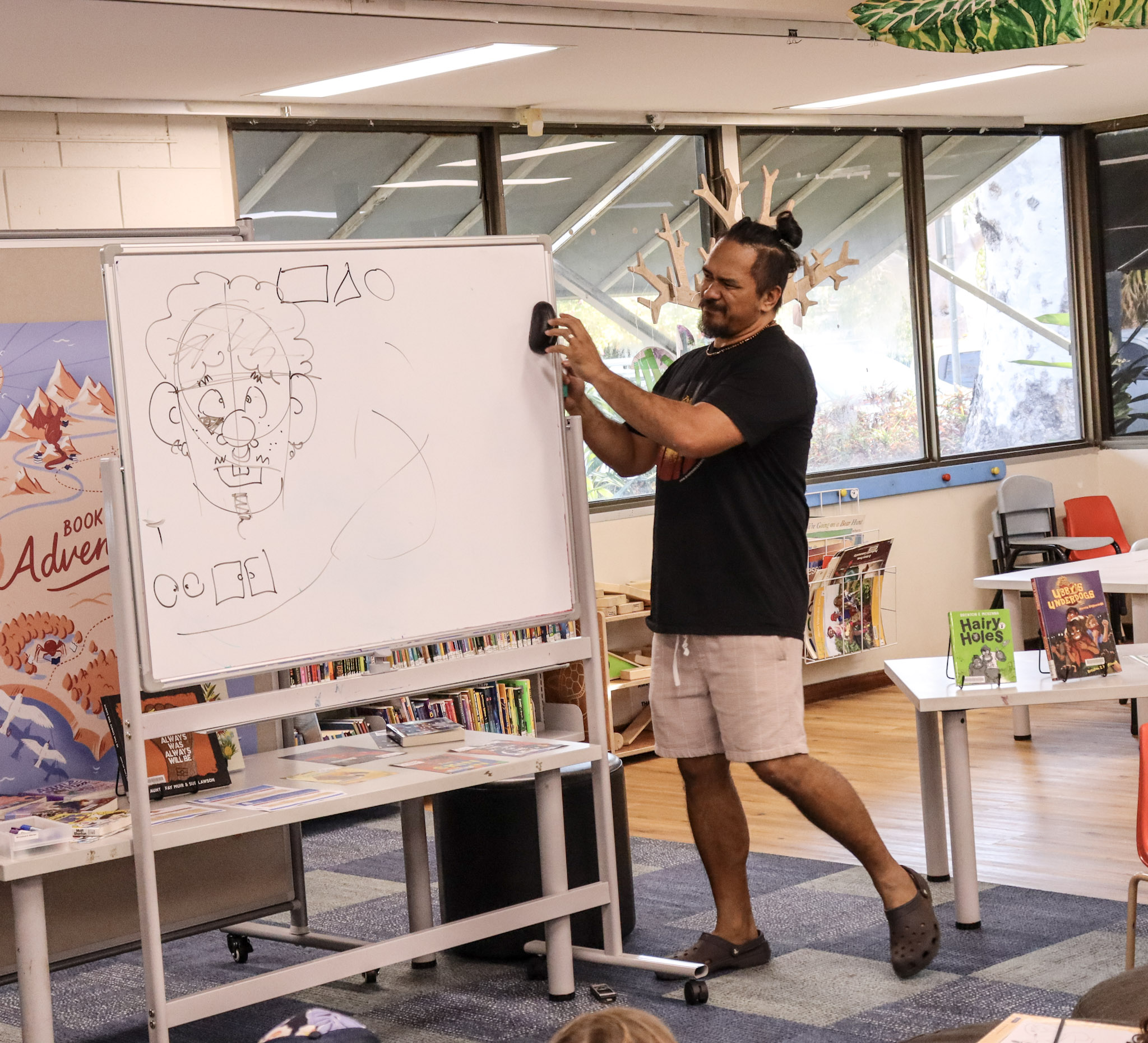
In his hometown last week, children crowded into Broome library for one of his comic workshops, anticipating the moment when a blank whiteboard would come alive.
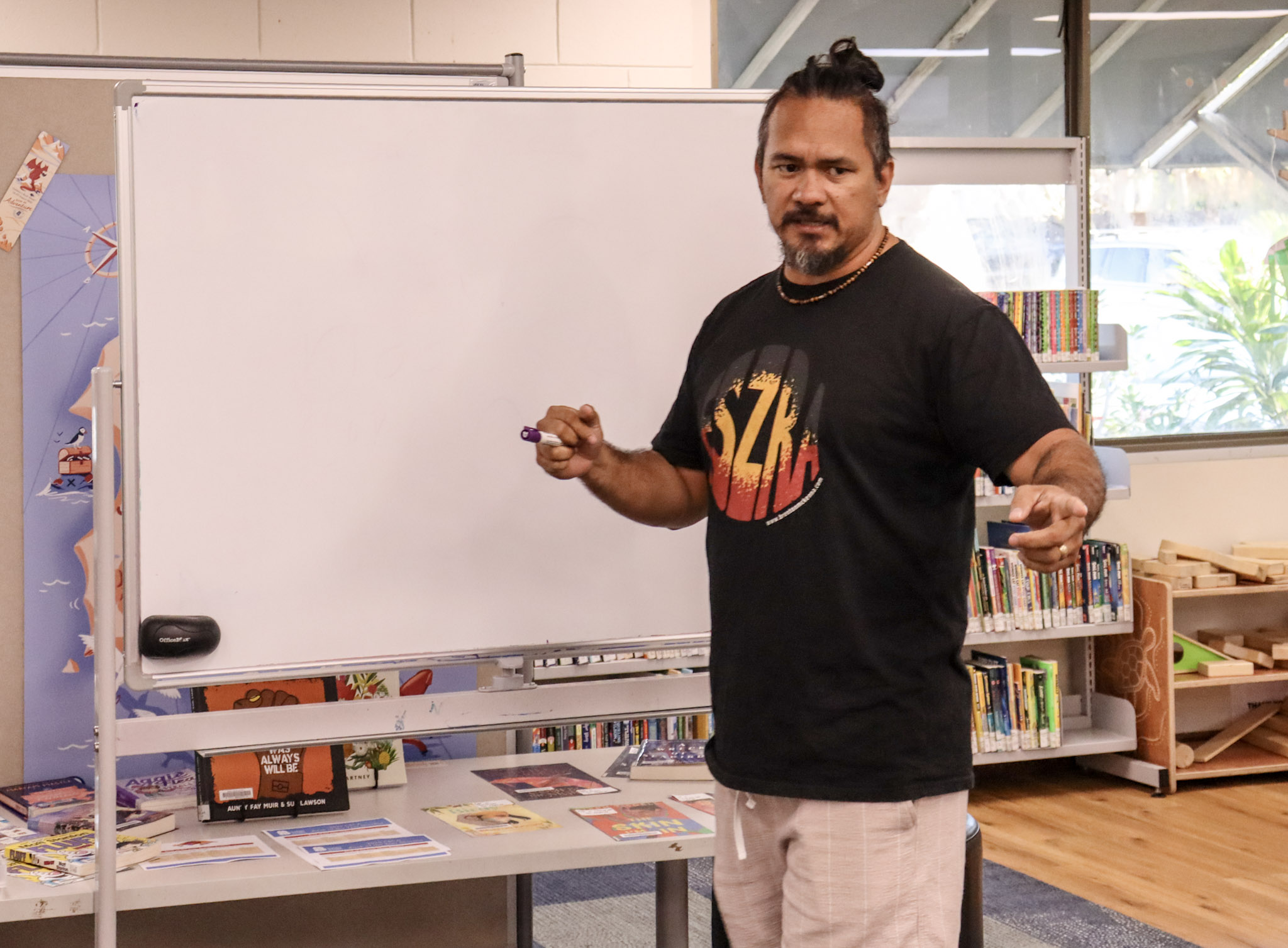
His debut trilogy, Ubby's Underdogs, published by Magabala Books, explored 1940s Broome history with myth and adventure.
The Hairy Holes series followed, also published by Magabala Books, reimagined the hairy-man stories he heard as a child, weaving humour into legends often told in whispers.
His drawings and words now travel further than he ever imagined, carried into classrooms through comic workshops in remote Aboriginal communities across northern Australia.
"English is hard in a lot of communities," he says.
"We only spoke English at school, at home it was language and Kriol, so I get it."
When Mr Mckenna was gifted his first comic book by his father Ghost Rider as a child, he couldn't read it.
He eventually read the comic cover to cover, realising he could in fact read.
"When I go out to remote Aboriginal communities I draw their stories as they tell them, then I get them to copy me," he said.
"Teachers will say, 'we have trouble engaging these kids because they don't read'. My message is: that's okay — we can still get them telling stories.
"If a kid isn't a strong reader or writer, I'll put money on them being a great artist — or vice versa. It's just about finding the way in."
Educators say what McKenna has witnessed for years — comics helping reluctant readers — is now backed by research.
A 2024 study in remote Java found students given folktales in comic form scored far higher in literacy tests than those given the same stories in plain text.
"Comics that present text and images can make it easier for students to understand new vocabulary or complex linguistic elements," the authors concluded.
Australian researchers have echoed the point, describing comics as "powerful mediums that boost reading habits and a love of learning", especially for children learning in a second language.
The evidence matters.
In 2023, just 39 per cent of Aboriginal Year 3 students in major cities met literacy benchmarks. In very remote areas, the figure fell to just 8 per cent, according to the Australian Institute of Health and Welfare.
But long before the comics, there were stories.
McKenna's childhood was inspired by hairy-man tales told by his Yawuru community in Broome, mysterious figures lurking at the edge of night.
"Every time I visit a community I ask the kids, 'what's the local ghost story?' I grew up with hairy-man stories before I was into comics, they're everywhere," he said.
Versions appear across the world, from Scotland to Singapore, but the Yawuru stories trace back thousands of years he says.
"As a storyteller you can sense origins, If a story's colonial you can usually tell."
"With ours, there's nothing like that, the origin is here."
Respecting cultural weight comes first for Mr McKenna, so his comics are always fictional, not a retelling of sacred stories.
"The hairy-man does have a traditional Yawuru name, but we couldn't use it," he said.
"That's why I created Hairy Holes as a fictional stand-in.
"I even gave the characters horns so readers know these aren't the real hairy men — they're just relatives."
But for McKenna, comics aren't just about education — they're also about unity.
"I try to keep it very contemporary so Indigenous and non-Indigenous kids are laughing at the same thing.
"That's the point of my books. Aboriginal kids feeling seen — but also building allies at the same time."



