




Broome's Short Street Gallery will close out its 2026 exhibition program with Kililpi Kutjara - Two Stars, a celebration of contemporary Aṉangu art, cultural connection and the creative legacy of two artists, Shane Dodd and the late Kunmanara (Desmond) Woodforde.
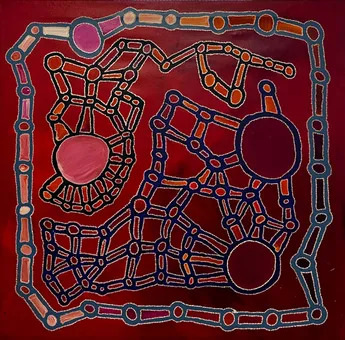
Opening November 6 and running until December 3, the exhibition brings together works spanning painting, printmaking and sculpture, exploring the relationship between Country, personal journeys and ancestral knowledge through contemporary artistic practices.
It will be the gallery's final exhibition before closing for the wet season, offering a fitting end to the year with a showcase that highlights both artistic innovation and the importance of keeping cultural knowledge strong across generations.
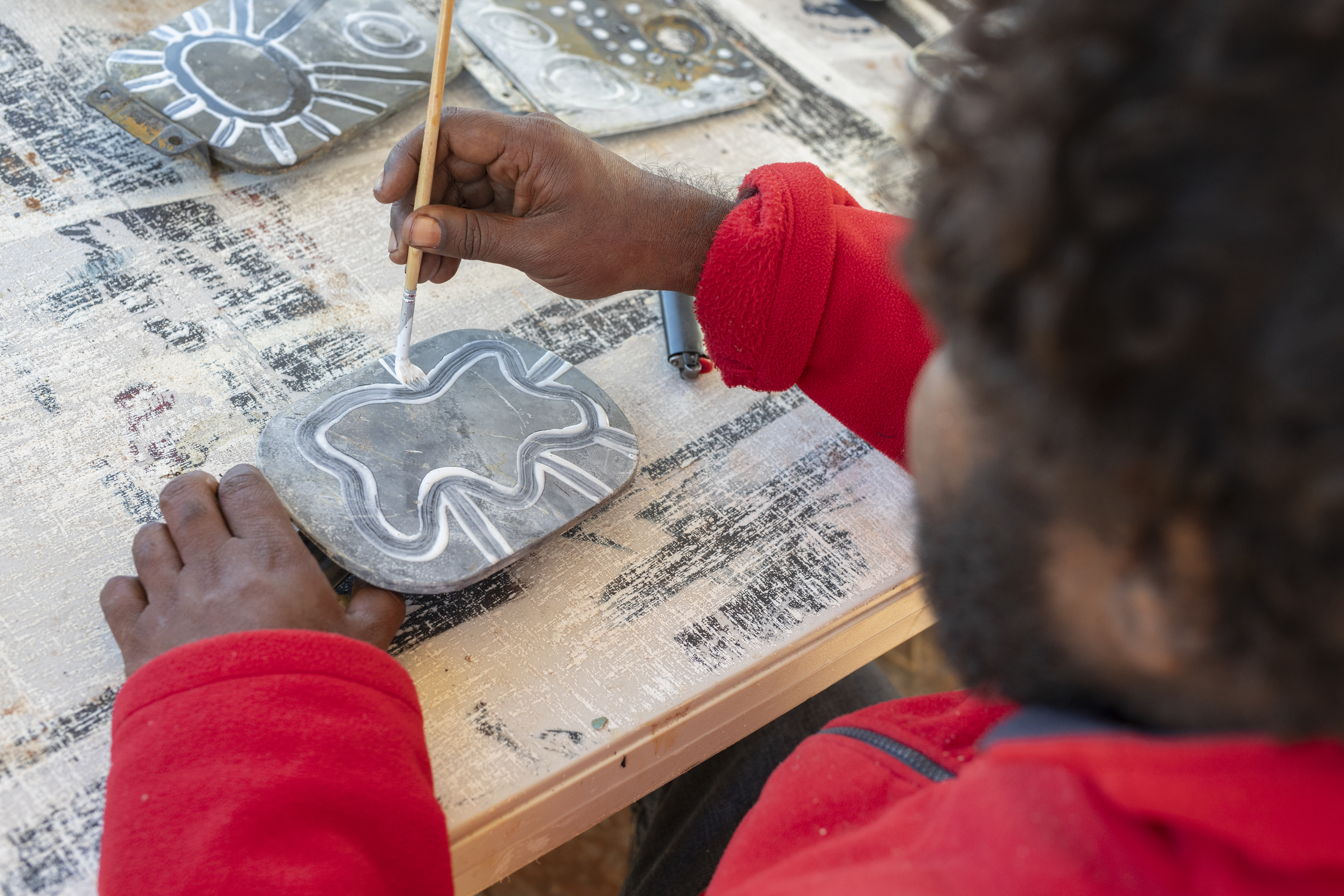
A standout element of the exhibition is Dodd's series of sandblasted metal works, made using discarded vehicle fuel caps and other car parts collected from the bush. Through an inventive combination of glue, spray paint and sandblasting, he transforms these familiar objects into detailed images of roads, walking tracks, rockholes, spinifex and birdlife.
But for Dodd, the story begins long before the artwork reaches the gallery.
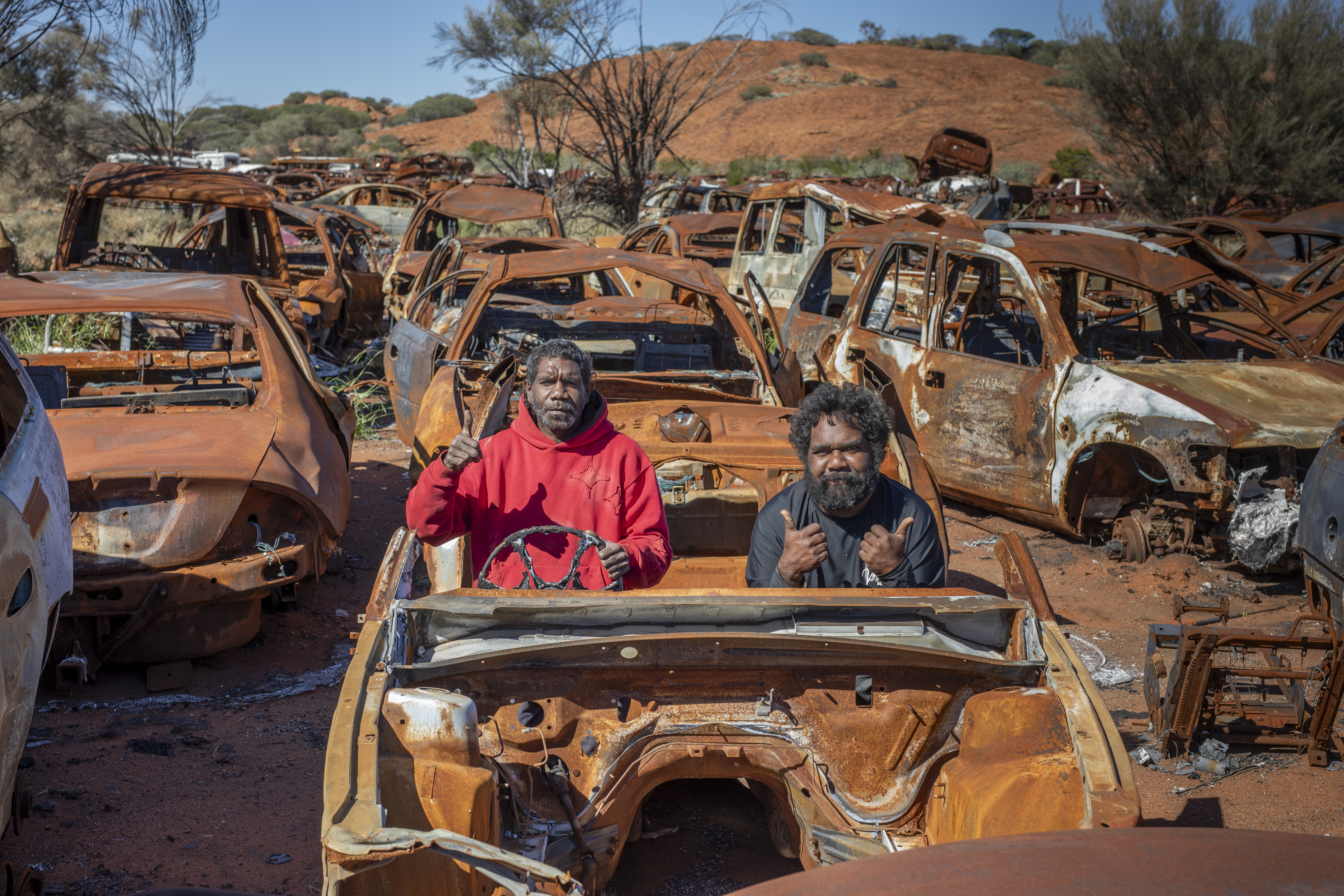
He regularly heads out bush with his father, Sandy, and sometimes his brother, collecting old car parts to bring back to the art centre. The journeys themselves have become an important part of his artistic practice.
"I go out driving with my dad Sandy, and sometimes my brother, collecting old car bonnets and fuel caps from out bush," Dodd said.
"Sometimes we drive all day, sometimes two days, finding these old car parts and bringing them back to the art centre. That travelling is part of the story too."
Dodd's work draws connections between traditional journeys across Country and the way families travel today, reflecting how the methods of moving through the landscape may have changed while the connection to Country remains.
"Long time ago Aṉangu were walking from camp to camp, one by one, travelling those long distances. Now we travel by car, driving out bush with family, looking after Country," he said.
"These old car parts help me tell those stories, about the old way and the new way of travelling."
The exhibition also honours the contribution of Kunmanara (Desmond) Woodforde, whose recent passing adds a particularly personal dimension to the collection.
A friend and fellow artist, Woodforde worked closely with Dodd in the men's studio at Mimili, where they experimented with different materials and approaches to making art. Although each developed their own distinctive visual language, their shared experiences helped shape an environment of learning, encouragement and creative exchange.
Dodd remembers Woodforde as someone who inspired him to keep experimenting and pushing his work further.
"Kunmanara was my friend. We worked together in the men's studio at Mimili, trying different ways of making art like with the sand blaster. He used the sandblaster in his own way, different from mine," he said.
"We were all learning from each other, trying new ideas and making strong work."
Their connection extended beyond the studio, with the artists travelling together to exhibitions alongside other men from Mimili.
"That made me really proud," Dodd said. "Working together with those men gave me confidence to keep trying new things and making my own work stronger."
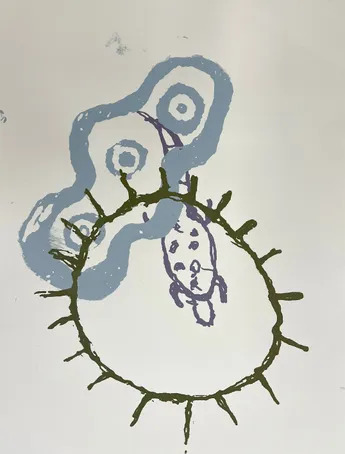
This sense of collective practice is central to Kililpi Kutjara - Two Stars, particularly through the men's printmaking workshops, which encourage collaboration, experimentation and the sharing of cultural knowledge.
Working with materials ranging from wood and sand to found car parts, the workshops provide opportunities for men to develop new techniques while strengthening their connections to Country, family and Tjukurpa.
For Dodd, making art alongside other men is an important part of both his creative development and cultural life.
"We go out bush, sit down together, talk story and make art. We help each other and learn new things," he said.
"Working together makes me happy and strong."
While the artists continue to explore contemporary materials and new ways of making images, the cultural stories and responsibilities behind their work remain firmly grounded in tradition.
"We are trying new ways of making our pictures, but the stories are still about our Country, our families and our Tjukurpa," Dodd said.
"Some stories and knowledge are secret. That is important, keeping our culture strong and looking after that knowledge."
The exhibition highlights how contemporary Aṉangu artists are expanding the possibilities of their practice without losing sight of the cultural foundations that underpin it. Through experimentation, artistic exchange and intergenerational learning, new materials become another way to carry stories and maintain connections across generations.
The growing recognition of the Wati Group reflects the increasing profile of this work within the Australian contemporary art scene. Dodd was named a finalist in the 2025 Fremantle Arts Centre Print Award, while Woodforde was a finalist in 2024.
For Dodd, continuing to make work that reflects his family and Country is a source of pride and an important part of carrying knowledge forward.
"My family has been looking after Country for a long time, and I am proud to keep making these stories in my artwork," he said.



