




Traditional Owners whose Country hosts Woodside's Karratha Gas Plant have warned state and federal governments against approving another generation of fossil fuel development while negotiations over a decades-old agreement governing the use of their land remain unresolved.
The Ngarluma Yindjibarndi Foundation Limited (NYFL), which represents Ngarluma and Yindjibarndi Traditional Owners in the Pilbara, is seeking to modernise its 1998 Land Access Agreement with Woodside, Australia's largest gas producer.
The agreement governs the relationship between the company and Traditional Owners whose Country has been used for the Karratha Gas Plant and associated North West Shelf operations.
The unresolved negotiations come as Woodside pursues environmental approvals for its proposed $50 billion Browse Basin gas development, which would transport offshore gas approximately 900 kilometres to the Karratha Gas Plant on Murujuga. The Commonwealth extended the plant's operating life in September 2025, allowing operations to continue until 2070.
Negotiations between Woodside, Australia's largest gas producer, and the Ngarluma Yindjibarndi Foundation Limited (NYFL) to modernise their 1998 Land Access Agreement are understood to have stalled.
The agreement provides funding for community programs but does not deliver production-based royalties to Traditional Owners.
According to sources obtained by the media, Woodside offered NYFL $87 million over 12 years in May, falling $303 million short of the $390 million package the organisation reportedly sought last November. Neither party confirmed the figures.
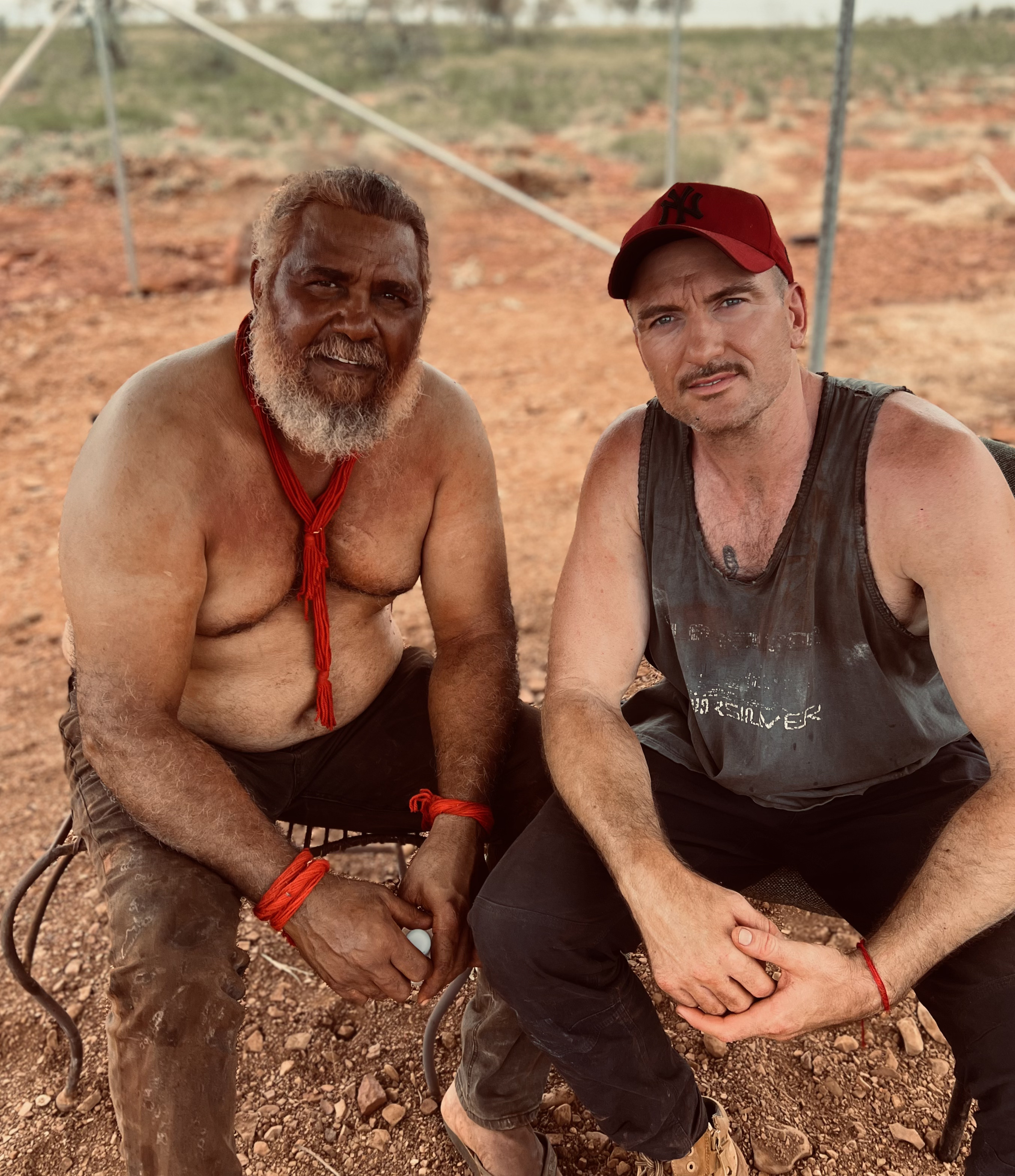
When asked about the reported figures and negotiations, NYFL chief executive Sean-Paul Stephens reiterated the organisation's position on confidentiality to National Indigenous Times.
"NYFL's position on confidentiality very clear. NYFL will not comment on any aspect of the current negotiations, including figures, offers, counteroffers, negotiating positions, the status of discussions or possible next steps," he said.
However, Mr Stephens told the masthead that Traditional Owners expect a contemporary agreement before further developments are approved.
"NYFL is not seeking to prescribe which particular statutory instrument or regulatory mechanism Ministers, the EPA or Commonwealth regulators should use," Mr Stephens said.
"Traditional Owners' expectation is that another generation of fossil fuel projects should not be approved for processing through the Karratha Gas Plant while there is no fit-for-purpose contemporary Land Agreement governing the relationship with Traditional Owners".
Mr Stephens said NYFL had repeatedly advised both governments that its members unanimously resolved in 2022 that the 1998 agreement did not meet contemporary standards and required urgent modernisation.
"Both governments were therefore fully aware of the issue when the State approved the NWS Extension in December 2024 and the Commonwealth approved it in September 2025," he said.
"The NWS was extended to enable operations through to 2070 while the Traditional Owner agreement remained unresolved. Browse now presents an opportunity not to repeat that outcome".
He rejected suggestions that Traditional Owners were attempting to obstruct industry.
"Traditional Owners have never taken an obstructive or anti-industry position through NYFL," Mr Stephens said.
"Traditional Owners should not have to threaten litigation, obstruction or project delay before legitimate concerns about Country, culture, wellbeing and economic inequality are taken seriously".
A Woodside spokesperson, responding on behalf of the North West Shelf Project, acknowledged that agreement-making standards had changed since 1998.
"The North West Shelf Project recognises that expectations and standards for agreement-making with Aboriginal communities have evolved significantly since 1998 and is working with NYFL to modernise the arrangements and ensure they continue to support meaningful outcomes for Ngarluma and Yindjibarndi people and the Roebourne community," the spokesperson said.
Woodside highlighted its support for employment, education and community initiatives, including the Warrgamugardi Yirdiyabura employment and training program and Ieramugadu Store Maya.
"We are proud of the long standing relationship we have built with NYFL over more than two decades. Over the life of the relationship, the North West Shelf Project has supported NYFL-led initiatives across education, employment and training, economic participation, capacity building, community development and cultural heritage".
The company declined to comment on confidential ongoing negotiations.
Mr Stephens said the dispute was fundamentally about the disparity between the billions generated by the resources industry and the socioeconomic disadvantage experienced by Aboriginal communities across the Pilbara.
He echoed Ngarluma woman Sam Walker's words: "It's not about money. It never has been. It never will be. It's about fairness. Protecting Country, and next generations".
"NYFL is seeking a future where Ngaarda-ngarli (Aboriginal people) can achieve something approaching economic and wellbeing parity with the broader Australian community," he said.
He contrasted contemporary resource agreements with the 1998 arrangement, which relied on annual payments described as "donations relating to goodwill".
"One contemporary gas-sector agreement publicly reported as providing more than $100 million in benefits over its life equates, when considered against anticipated LNG production, to approximately $1.35 per tonne of LNG. By comparison, independent analysis of historical 'donations' from the NWS associated with the North West Shelf has estimated an equivalent of approximately 13 cents per tonne of LNG over the period examined," he said.
"Self-determination is about Ngaarda-ngarli determining their own priorities, own assets, build an economic future, invest in children and future generations, strengthen culture, develop community-controlled institutions and build independent sources of wealth".
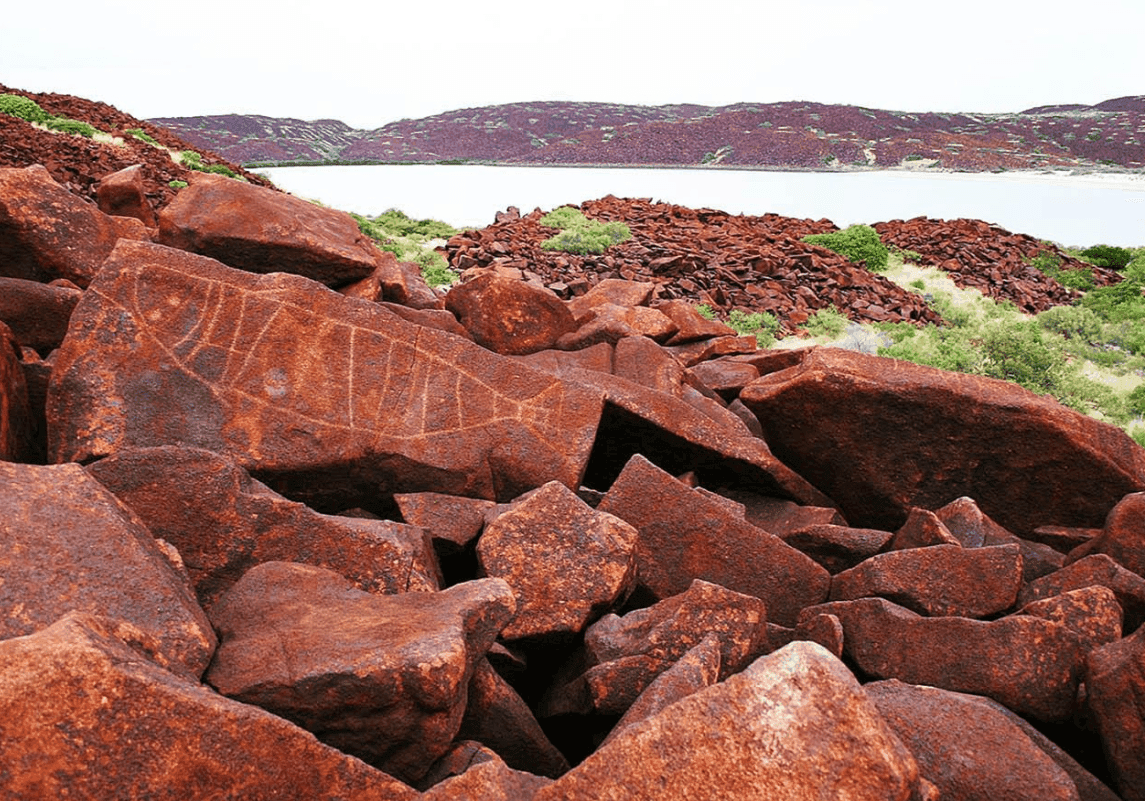
The dispute is also rooted in the historical destruction of thousands of cultural places during construction of the Karratha Gas Plant and surrounding industrial developments in the 1980s.
Mr Stephens said archaeological estimates indicated between 5,000 and 10,000 cultural places, overwhelmingly rock art sites, were destroyed.
A one-off $500,000 payment under the 1998 agreement for deprivation of land and waters equated to approximately $50 to $100 for each site, based on those estimates.
"So we, and now the world (following World Heritage Listing) must ask whether sacred rock art that holds universal value was worth $50-100 per piece?" he said.
"These marnda-ngarli (stones) and the marni-ngarli (carvings) held sacred and universal value. They can never be replaced".
Mr Stephens said cultural places of comparable significance to those now recognised through World Heritage protection had been destroyed before that recognition existed.
"In practical terms, cultural places of the same character and significance as those now protected through World Heritage recognition were destroyed, removed or heavily impacted before that protection existed. Had those parts of the landscape remained intact, they would have formed part of the cultural landscape considered for World Heritage protection," she said.
He questioned how Traditional Owners could ever be compensated for the destruction.
"So what is fair compensation for Rock Art and a living cultural landscape that holds universal value?," he said.
"How do you compensate Ngurrara (Traditional Owners) for rock art and cultural places that were blown apart, bulldozed or removed and can never be recreated?
"I do not pretend to have a simple answer to that question."
Mr Stephens said governments and industry could not undo historical destruction but could determine whether future development left a different legacy.
"But Australia, state and commonwealth governments, industry and First Nations people can control is what happens next," he said.
"Traditional Owners cannot reverse the decisions made decades ago to destroy the landscape. Governments and industry can, however, decide whether another generation of development leaves a different legacy. That is why the North West Shelf Extension and Browse matters."
He stressed NYFL was not opposed to development.
"NYFL is not expressing a position that development can never occur. Nor are we suggesting Traditional Owners should be able to dictate every regulatory decision," he said.
"We are asking for something much more fundamental. Before another potentially multi-decade development relies on the Karratha Gas Plant, ensure there is a contemporary, fair and fit-for-purpose framework with the Traditional Owners whose Country, culture and communities have carried the impacts of this industry for generations.
"There should not be extreme poverty - I deliberately use this word from Mrs T. Daniel (dec) who described it as such -on the doorstep of one of Australia's most valuable resource developments".
Mr Stephens said the ultimate measure of success should be whether Aboriginal communities were stronger when the projects eventually ended.
"A successful future should mean that when these projects eventually finish, the Aboriginal community is stronger than it was when they began. Right now we cannot say that," he said.
"NYFL wants to work with governments, industry and the community to ensure there is a fair and prosperous future for all."



