



A recent study tour by a Samoan delegation to Queensland has provided valuable insights into managing Samoa's growing feral pig problem.
The delegation, which included representatives from the Ministry of Agriculture and Fisheries, SROS, District Councils, a farmer's association, and a taro exporter cooperative, spent four days learning about Australia's feral pig management strategies.
Organised by Australian Pork Limited (APL) and supported by the Australian and New Zealand Government-funded Market Development Facility (MDF), the tour focused on knowledge exchange between the two nations.
Scientific Research Organisation of Samoa (SROS) chief executive, Dr Fiame Leo, stressed the significance of the exchange.
"The shared stories and site visits are very important for our way forward," he said.
"We will work on adapting parts of Australia's National Feral Pig Action Plan and their management policies for Samoa's context."
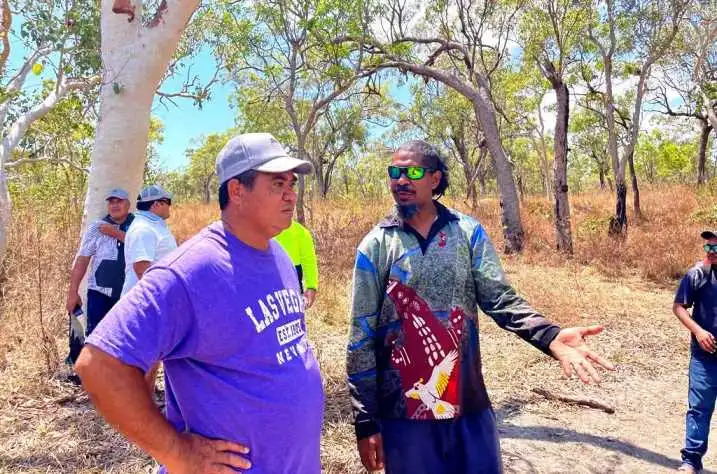
Chairman of the Junjuwarra Aboriginal Corporation and Ranger Coordinator, Mr Neil Jacko, explains the importance of traditional sacred sites in Starcke, QLD. (Image: Talamua)
During the tour, the delegation met with the North Australian Indigenous Land and Sea Management Alliance (NAILSMA) and the Junjuwarra Indigenous Rangers, who shared their experiences in managing feral pigs on traditional lands.
Junjuwarra Aboriginal Corporation chairperson and Ranger Coordinator, Neil Jacko, highlighted the cultural damage caused by feral pigs.
"The feral pigs are damaging our sacred cultural sites, story places and wetlands," he said.
"These are very special places used by our ancestors for medicine and healing.
"The feral pigs destroy these sites, turning them into swamps as they look for freshwater turtles, fish, and crabs."
The Junjuwarra Rangers demonstrated their feral pig management techniques, including tracking, trapping, and using drones and GPS collars to monitor pig movements.
The data from these methods can help inform better strategies in Samoa.
"It was eye-opening to see how technology like drones and tracking collars can be used to monitor feral pig movements. This is something we could potentially use in Samoa," Dr Leo said.
The tour also included discussions with third-generation cane farmer Joe Marano from the Innisfail Canegrowers Association, who shared how feral pigs had severely impacted their crops.
"In the last ten years, we have lost over a million dollars in income, which averages to about 100,000 dollars a year of profit just gone," Mr Marano said.
"We can really relate to the stories from Samoa on the impacts feral pigs have had on taro farmers."
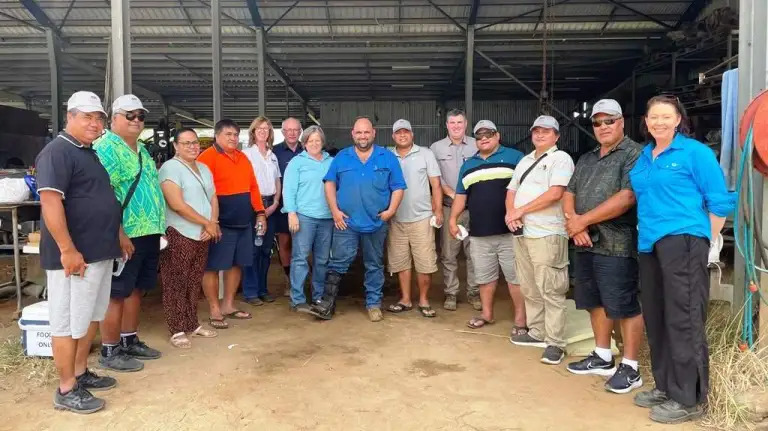
The Samoan delegation with the Innisfail Canegrowers Association in Cairns. (Image: Talamua)
Centre for Invasive Species Solutions' Feral Animal Projects lead researcher, Darren Marshall, expressed hope that the lessons shared during the tour would help Samoa tackle its feral pig issue before it worsens.
"There's a real opportunity for Samoa to get ahead of the feral pig problem and suppress it before it gets to unmanageable levels," he said.
"We hope that the information we've shared will be useful in finding solutions, and it's important to understand how feral pigs behave in the landscape."
The study tour concluded on 27 September, marking a significant step in the collaborative effort between Samoa and Australia to address the shared challenge of managing feral pigs.



