


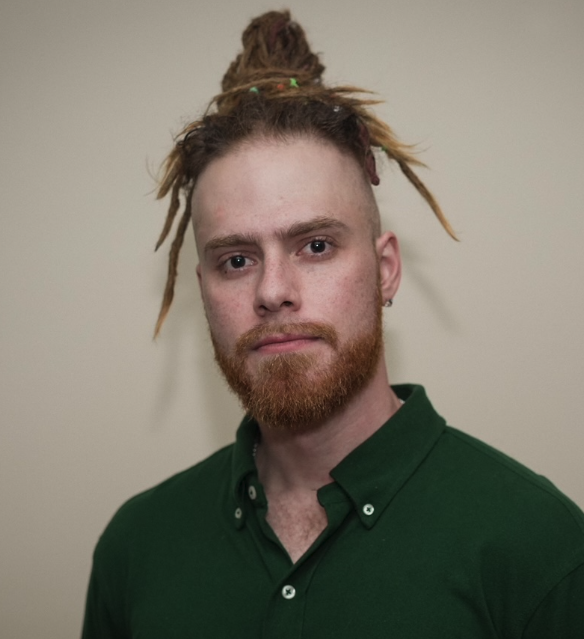

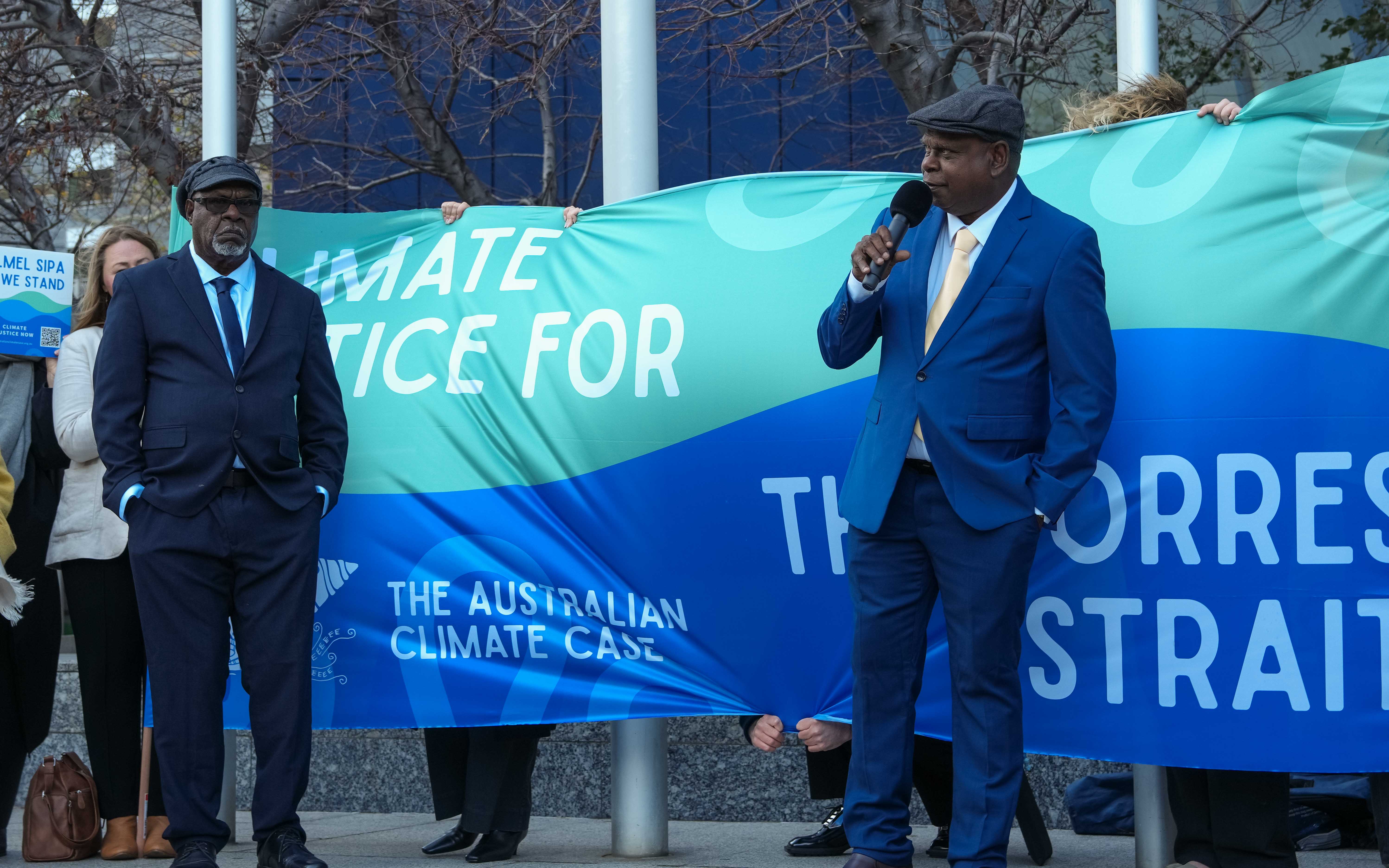
Torres Strait Traditional Owner Uncle Pabai Pabai has vowed to continue fighting for his community and future generations as his landmark climate case returns to court.
Uncle Pabai is seeking to protect Boigu Island, while fellow Traditional Owner Uncle Paul Kabai is fighting for Saibai Island.
They launched Federal Court proceedings against the Commonwealth in 2021, fearing for the future of their low-lying island communities.
They sought orders requiring the government to prevent further harm, including by cutting greenhouse gas emissions in line with the best available science.
Justice Michael Wigney accepted in July 2025 that climate change had harmed the Torres Strait and threatened its people, culture and way of life, but ruled negligence law did not establish a government duty of care over climate policy decisions or allow compensation for cultural loss.
Uncle Pabai told National Indigenous Times the four-year fight remained tied to his responsibilities to his people and Country.
"It's been a long journey for us over the past few years," Uncle Pabai said. "We're still fighting for justice because of my community."
"My community, my people and my ancestors are very important to me, and that is why I will keep fighting to reach my goal at the end of the appeal."
The four-day appeal began before the Full Federal Court in Melbourne on Tuesday.
Their legal team is arguing the original decision contained errors over the Commonwealth's duty of care, whether its additional emissions legally contributed to harm and whether cultural harm can be compensated under Australian law.
Counsel argued there was a disconnect between Justice Wigney's factual findings and his conclusion about the risk created by Commonwealth decisions.
The court heard the original judgment accepted a near-linear relationship between cumulative carbon dioxide emissions and global warming, as well as between rising temperatures and adverse climate impacts.
The legal team also relied on findings that the Commonwealth knew Torres Strait Islanders were particularly vulnerable, had already experienced climate harm and faced a high probability of further damage.
Judges questioned how Australia's contribution could be shown to cause significant local harm when the temperature difference attributed to the disputed targets was extremely small and could not be measured in the Torres Strait.
Counsel argued climate change was a cumulative global problem and a country's contribution should not be treated as immaterial solely because its isolated temperature effect was difficult to measure.
The appeal also argues the Commonwealth should have been required to genuinely consider the best available science when setting targets, rather than rely on science to the exclusion of other policy factors.
Uncle Pabai said his goal was to secure an outcome for people across Zenadth Kes.
"My goal is to win this case to help my people," he said.
"Not only my community, but the whole Torres Strait Islands, who are suffering from climate change.
"I'm standing here on behalf of the next generation to give them a better outcome."
A joint statement from Climate Change Minister Chris Bowen and Indigenous Australians Minister Malarndirri McCarthy following the 2025 decision acknowledged the Torres Strait Islands were vulnerable to climate change and already experiencing its impacts.
Chief Justice Debra Mortimer, Justice Craig Colvin and Justice Nicholas Owens will deliver their judgment at a later date.



