


Australia should use its COP31 presidency of negotiations to continue to lead on loss and damage and adaptation finance, starting with our own front line in the Torres Strait. Done properly, it is not charity. It is a cost-of-living, insurance and cost-of-capital play for every Australian household.
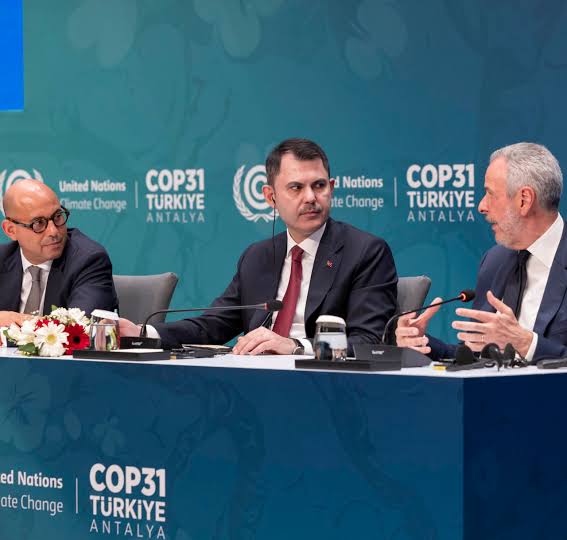
This week the Pre-COP31 opens in Fiji and Tuvalu. Six weeks later, in Antalya, an Australian Minister will hold exclusive authority over the negotiating texts. That is more influence over the global climate rulebook than this country has ever had.
We run energy businesses. We have spent the last 25 years in the energy industry and now own and operate a Supply Nation energy development businesses. We try to avoid activist framing. The transition is tough and getting tougher, and anyone who says it is cheap is selling something.
But we can read the signal. Australia now faces a simple choice: help write the global climate rules, or pay more to comply with rules written by others. That is why we should lead—and be clear about what we expect in return.
The front line is already inside our borders
Australia does not need to fly delegates to Tuvalu to see climate loss. It can go to Boigu and Saibai Islands of the Torres Strait region.
In Pabai v Commonwealth last year, the Federal Court accepted that the Torres Strait Islands, their people and their culture are being ravaged by human-induced climate change. Justice Wigney found the islanders had proved severe harm, particular vulnerability, and that the Commonwealth's 2015, 2020 and 2021 targets were inadequate when benchmarked against the science. The Justice did find no duty of care. The Full Federal Court heard the appeal in Melbourne from 28 to 31 July. The final Judgment is pending.
Think about what that means commercially. The facts of harm are now judicially accepted. Only the legal channel for liability remains unresolved. Any board would call that a contingent liability, not an open-ended uncertainty incapable of quantification.
Here is the gap nobody in Canberra likes to say out loud. The global Fund for responding to Loss and Damage exists for developing countries. Australia is a contributor, with $50 million pledged. Torres Strait Islanders live in a developed country, so the fund that Australia helps pay for cannot reach them. They fall between the international and domestic systems to fund responses that has never priced the loss.
The need is immediate: seawalls, freshwater security, relocation planning for burial grounds, and energy. Most outer islands still run on shipped diesel. Every litre is a cost, a supply risk and an emission. Indigenous-led projects such as the Torres Strait Renewable Energy Project, a council partnership our business Mirabou, across pilot islands including Masig, Ugar and Erub, show a practical path.
What they lack is patient, cheap capital, not ideas, and desperately needs decision-makers to move beyond existing vested interests.
Our emissions history counts, so does our per-capita emissions record
We are a young federation on an ancient continent. First Peoples cared for this country for more than 65,000 years with a negligible carbon footprint. The industrial nation is barely 125 years old.
On the numbers, Australia has emitted about 1.1 per cent of all the CO2e released since 1751. The United States, Europe and China account for the bulk of the stock now warming the planet. When the world allocates who pays for the damage already done, cumulative contribution should carry real weight. Australia must argue this.
But I will not pretend the argument is clean, because nobody in Antalya will let Australia. Our per-capita emissions are among the highest in the world, roughly double China's and many times India's. A small population with a big footprint is not a defence. It is a reason we can afford to lead, which is what is being attempted.
So the honest position is this: recognise our modest historical share when setting loss-and-damage burden-sharing, and in return we commit to financing adaptation at home and in the region at a scale that matches our wealth, not our population - but only if it is recognised in the international forums and mechanisms for climate adaptation finance.
Don't penalise the supplier twice
This is where Australia's economic interest is most exposed, and where the presidency matters most.
Our exported coal and gas generate more than twice our domestic emissions. Add both together and Australia's footprint is about 4.5 per cent of global fossil CO2e. Much of that is burned in China, India and other large emerging economies, including BRICS members, to power their own growth.
Under the Paris rulebook, those emissions are counted where the fuel is burned. That is correct, and Australia should defend it. The real penalties arrive through side doors instead: border carbon adjustments on emissions-intensive goods, a rising cost of capital for Australian resource and energy businesses, divestment screens, and litigation that treats the exporter as the polluter.
Each is rational on its own. Together they can charge the same tonne twice, once to the buyer and once to the seller.
Australia should ask the international institutions for a coherent framework, not an exemption:
- One tonne, one account. Emissions are counted and priced once, at combustion, with no stacking of penalties on the supplier through trade and finance channels.
- Shared responsibility for the buyer's side. Large emerging economies that burn imported fuel should carry a fair share of adaptation and loss-and-damage finance, in line with their growing capacity. The contributor base cannot stay frozen at its 1992 settings.
- Credit for the transition trade. Exports of critical minerals, green iron and firmed renewable energy that cut emissions offshore should earn recognition in climate finance and trade rules.
In return, Australia must show a credible export transition plan. We cannot demand fair treatment for yesterday's exports while planning no change to tomorrow's.
The prize: lower bills, lower premiums, cheaper money
For those readers focused on economics who think this is a moral argument dressed up as economics, look at three household line items.
Insurance. APRA's climate vulnerability assessment found home premiums rose 7.2 per cent a year between 2010 and 2025, against wage growth of 3.1 per cent. The Actuaries Institute counts 1.6 million households, 15 per cent of the country, in insurance affordability stress. Premiums are the market's price of unmanaged physical risk. Adaptation spending, levees, cyclone-rated housing, resilient networks, is the only thing that brings that price down. Every dollar of cheap international adaptation finance we can tap is a dollar off future premiums.
Energy. Remote Queensland alone ships and trucks more than 30 million litres of diesel a year to isolated power systems. Taxpayers cover the gap through a community service obligation of about $604 million in 2025-26. Displace diesel with community-owned solar and storage and that subsidy shrinks, the fuel-supply risk falls, and the savings can be shared with the communities that host the assets.
Cost of capital. This is the big one, and the one policy people underrate. Take an illustrative $100 million remote hybrid system financed over 20 years. At a 7.5 per cent commercial rate, annual debt service is about $9.8 million. At 4 per cent concessional, it is about $7.4 million. That is roughly a quarter off the annual cost of the asset, every year, for two decades. It is the difference between a project that banks and another feasibility study.
Canada worked this out. Its Indigenous Loan Guarantee Program was doubled to C$10 billion in March 2025. Its first guarantee, $400 million, gave 36 First Nations a 12.5 per cent stake in a gas pipeline. Guarantees cost the budget little unless they are called. They move ownership fast.
The transition will be paid for either way. The question is whether we pay through premiums, subsidies and expensive debt, or through cheap capital directed at resilient assets that communities own.
What Australia should table in Antalya
- Close the Indigenous gap in the loss-and-damage architecture. Seek recognition that Indigenous peoples facing existential climate loss inside developed countries, from the Torres Strait to the Arctic, can access technical support through the Santiago network, with host governments obliged to match it.
- Stand up a Torres Strait Loss, Damage and Adaptation Facility at home. Commonwealth-funded, governed by Torres Strait Islanders, with a multi-year budget rather than annual grant rounds. Announce it at the Pre-COP31. It is the proof that we mean what we negotiate.
- Create an Australian Indigenous clean-energy loan guarantee. Modelled on Canada's, reserved for projects where First Nations entities hold real equity, and open to adaptation assets as well as generation.
- Broker the export-emissions framework. One tonne, one account; a wider contributor base for adaptation and loss-and-damage finance as the first replenishment opens in 2027; credit for transition exports.
- Link climate finance to insurance outcomes. Direct concessional adaptation finance to the highest-risk postcodes and require insurers to reflect verified risk reduction in premiums.
- Measure assets, not reports. Count megawatts commissioned, litres of diesel displaced, premiums reduced and Indigenous equity held. Stop counting workshops.
James Reynolds is a Waanyi Gangalidda person from the Gulf of Carpentaria and founder of Mirabou Energy, a Supply Nation registered business. Mr Reynolds is also a member of the Investment Advisory Committee to the Clean Energy Finance Corporation (CEFC) Board on the Rewiring the Nation Fund.
Novita Pratignyo is the Chief Financial Officer of Mirabou Energy.



