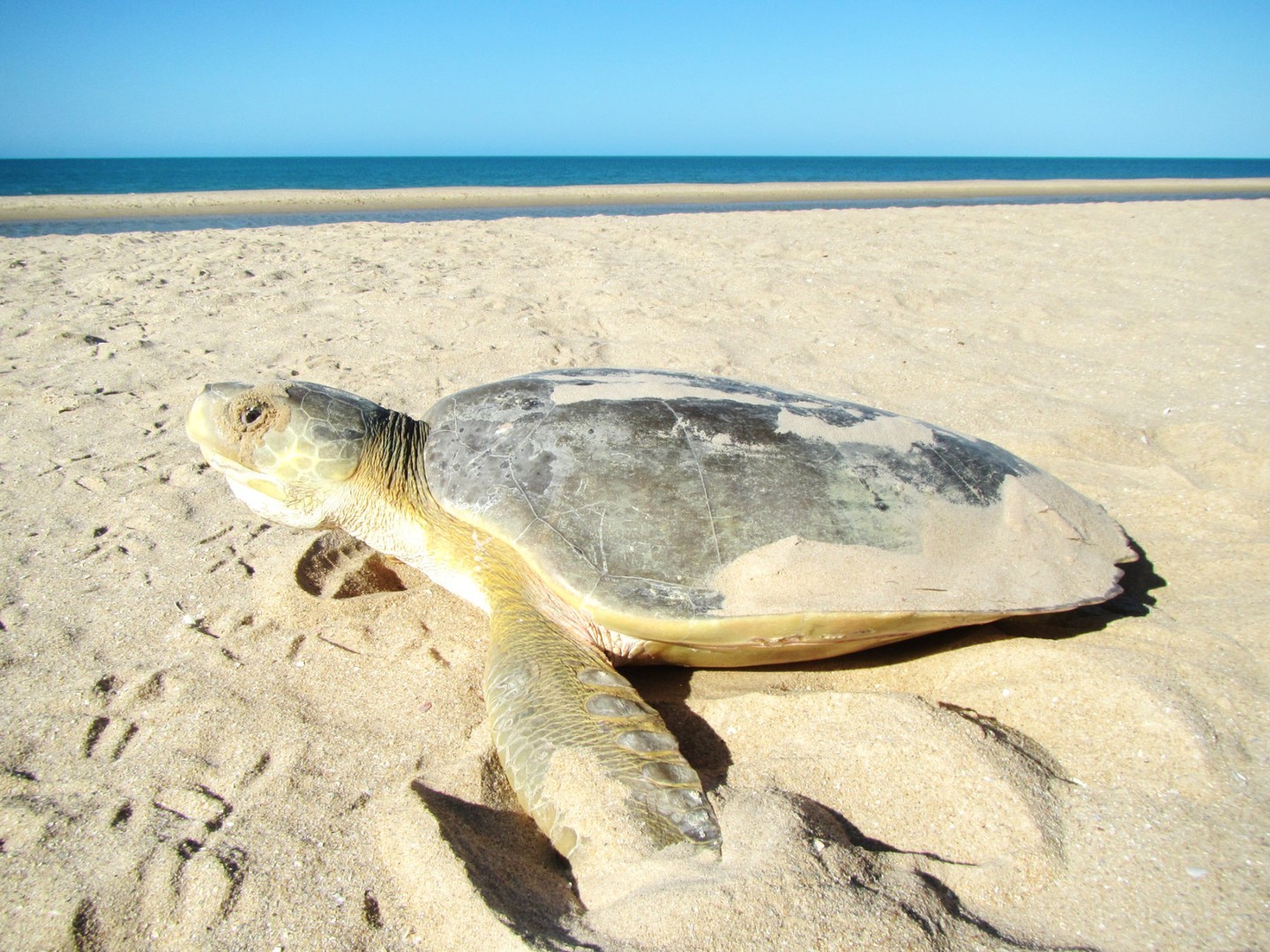

During the 2023 turtle season, around 12 per cent of the more than 5000 nests observed across the western Cape York Peninsula experienced damage from predators.
The annual evaluation by the Western Cape Turtle Threat Abatement Alliance, supported by Cape York NRM, highlighted the significance of the findings.
The alliance was established to protect turtle nest eggs and hatchlings in the region.
Cape York NRM's WCTTAA Coordinator, Dr Manuela Fischer, said it has been "a good year in many ways".
"Apart from keeping turtle nest predation to a sustainable number of under 30 per cent, and on some beaches under 10 per cent, we set up a new data collection system, NESTOR, to improve the accuracy of nest monitoring - and we have resolved the problem of losing data," she said.
"We also trialled a method of checking and reducing nest temperature, which, because of climate change, has been increasing.
"From the preliminary findings, we are seeing amazing results, so we will be conducting the official study this year, on a broader scale."
A forum in Cairns on January 30 brought together 36 attendees to review results, address concerns, and prepare for the upcoming 2024 season.
"We have a really busy year ahead," Ms Fischer said.
"Funding from the State and Federal Governments, under the Nest to Ocean Program is now locked in for another two years, which is excellent news.
"This will help with feral pig culling before the nesting season begins, which unfortunately didn't happen in some areas last year."
Some key moments from the forum note Mapoon Rangers saw increased predation on Skarden River nests due to feral pigs and landscape changes from flooding.
Meanwhile, other areas saw more hatchlings in 2023, with the first-ever discovery of a Leatherback turtle nest.
Pormpuraaw Rangers, dealing with cultural beach closures from Christmas Creek to Hersey Beach, observed a notable reduction in nests, dropping from approximately 140 to 40.
They attribute this decline to weather changes, turning beaches into mud flats, and are seeking expert advice.
The forum concluded with updates from National Feral Pig Action Plan coordinator Heather Channon, NESTOR trainer Ben Jones, Qld Department of Environment and Sciences' Mike Gregory on the Nest to Ocean program, Biosecurity's Dale Morris on beach clean-ups, and JCU/EnviroVet consultant Erina Young on turtle and dugong health and stranding responses.