



In his book 'Reflections on the Voice: During and After the Campaign', Professor Andrew Gunstone underscores the ongoing importance of continuing crucial conversations to drive meaningful change.
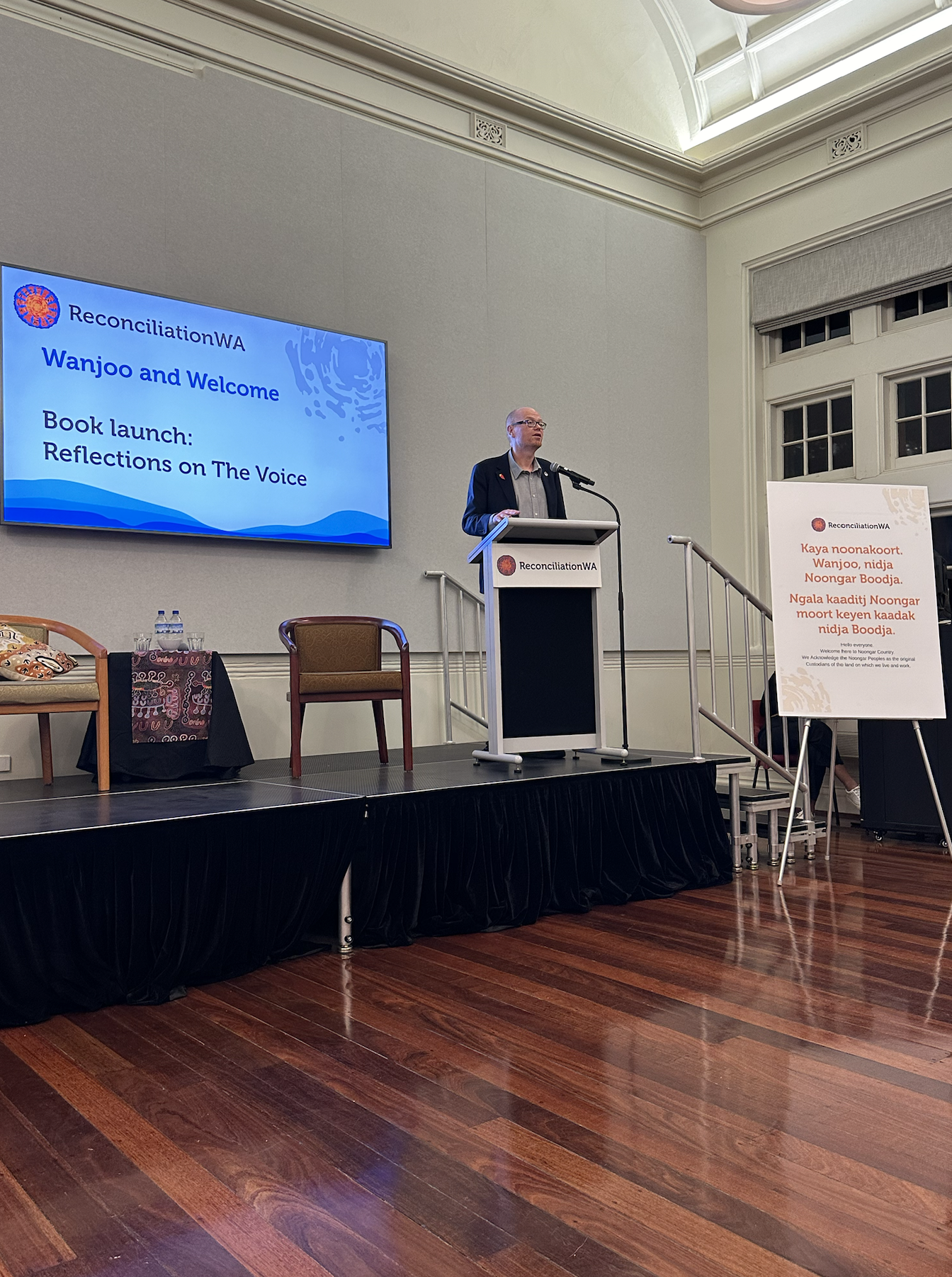
As a leading authority on reconciliation, Professor Gunstone serves as the Associate Deputy Vice-Chancellor of Reconciliation and Professor of Indigenous Studies at Federation University.
Professor Gunstone's book is the first to thoroughly examine the referendum and its aftermath, delving into its impact on national reconciliation efforts.
At the book's launch last Thursday, hosted by Reconciliation WA, Professor Gunstone was joined by panellists Nolan Hunter, Co-Chair of Reconciliation WA; Emma Garlett, Board Member of the National Centre for Reconciliation, Truth, and Justice; and Jesse Fleay, Research Associate at the same Centre.
Together, they reflected on the Voice to Parliament referendum and discussed the path forward in the journey towards reconciliation.
Mr Hunter, who was the co-convener of the Kimberley and Pilbara Dialogues which contributed to the Uluru Dialogue addressed attendees, said: "Uluru was not new in asking for a Voice because the symptom of history was that Aboriginal people had never been heard or listened to."
"And so, therefore, this notion of a Voice simply reaffirmed the request of our people going right back in history," he said.
Recalling a poignant moment during the Voice campaign, Mr Hunter shared an experience from a forum attended by many Indigenous nations. He noted that when he asked the crowd about their familiarity with the Uluru Statement, hardly anyone knew about it. However, when he inquired if their Old People had ever marched or protested for their rights, everyone in the audience could collectively resonate with that experience.
"Every single year, you'll see the same thing in this country, same story, whether it's Indigenous health or incarceration rates," he said.
"With the Voice, our people were just asking to be heard, yet again."
Comparing the Indigenous Voice referendum to the 44 others put to the public since 1901, it was argued that demands for a high level of detail were unwarranted, as previous referendums had never provided such specifics on proposals.
"Why would you go through and develop all of the legislative framework, the budget and policy before you have an opportunity and the chance to pass a referendum?" Mr Hunter asked.
"In those 44 referendums, this never happened that way either, suddenly when it was this referendum for Indigenous people to have a voice, there was a requirement for the details.
"It never works that way, it never did, not in history, not in those 44 referendums."
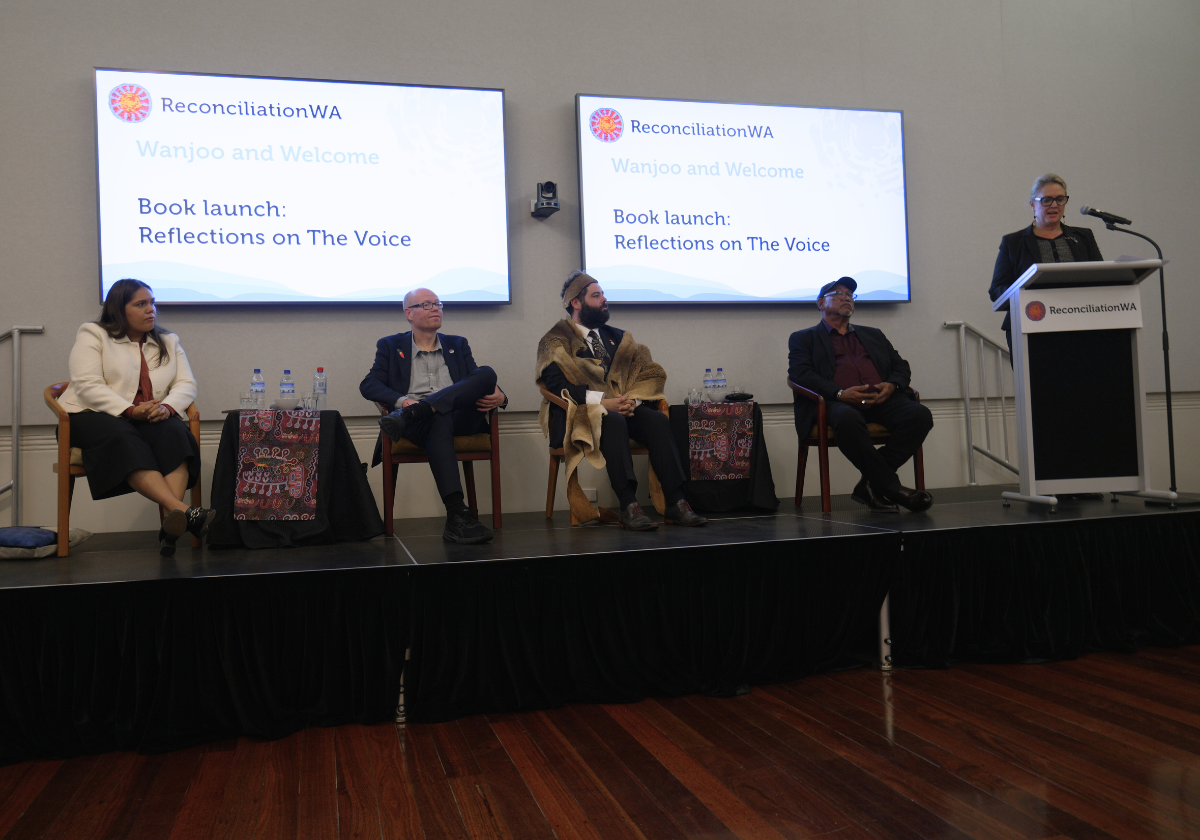
According to Professor Gunstone, the failure of the Voice could be attributed to "racism, lack of education, lack of truth-telling, education and complete apathy from the broader Australian population".
Professor Gunstone shared the non-linear journey behind creating his book, highlighting his persistence in bringing the information to light despite several setbacks.
With much to learn from the Voice referendum, Professor Gunstone spoke of a new path forward in the nation's reconciliation process.
Covering a wide range of topics, 'Reflections on the Voice: During and After the Campaign' delves into racism, Indigenous rights, 'equality,' truth-telling, community engagement, international agreements like the UN Declaration on the Rights of Indigenous Peoples, allyship, and a renewed commitment to Voice, Treaty, and Truth.
While an advocate for people displaying support for Indigenous causes through clothing and other paraphernalia, Professor Gunstone emphasised the difference between performative and meaningful reconciliation.
"If that's all you do, that's not enough," he said.
Speaking of Reconciliation Action Plans (RAP), Professor Gunstone said anti-racist policies, cultural safety training and genuinely investing in Indigenous businesses, encompass the meaningful change for which organisations should strive.
Professor Gunstone was critical of large organisations with RAPs who failed to support the Voice.
"To me, if you're an organisation with a RAP ...you already understood the importance of First Nations voices in your organisations ...So you've already made that commitment to First Nations voices ...I could never understand why those organisations who committed to the voices in their organisations did not simply commit to a First Nations Voice to Parliament," he said.
Professor Gunstone noted that many of these same organisations loudly and proudly supported the same-sex marriage plebiscite in 2017.
He recalled a major event in Australian history, which saw 250,000 Indigenous and non-Indigenous Australians united to walk across the Sydney Harbour Bridge on May 28, 2000, demonstrating a powerful call for reconciliation and amplifying the demand for a national apology to Indigenous Australians.
"Then over that year, millions of Australians marched over bridges, through country towns and suburbs ... great, well six months later Tampa happened and reconciliation was swept off the front page," he said.
It was eight years later when these calls were heard and former Prime Minister Kevin Rudd issued a historic national apology to the Aboriginal and Torres Strait Islander communities.
"So what I would hate to see is after the referendum, where we still had 6.2 million people vote yes and tens of thousands of people advocating for yes, I would hate to see that die off," he said.
When asked if the outcome would have been different had the vote been held a decade later, Ms Garlett expressed confidence that it would have been, attributing potential success to a new generation of emerging Indigenous leaders and supportive non-Indigenous allies.
"I do have hope in the next generation, I do hope that there will be change, I do hope that reconciliation will run its course and that we will have an Australia that is reconciled," she said.
"We have children that will give us a better future."
Reflecting on Australian culture and why the Voice didn't pass, Mr Fleay said he believes Australia still lacks a full understanding of who we are as a nation.
"We haven't had the opportunity to heal as a nation from our past, we (the broader Australian public) have had trouble with understanding our history, we need another decade of healing and working together as one people to understand who we are," he said.
"We do need to tell the truth about our history.
"All of us have a responsibility to be accountable and to tell the truth and to get the information we would like out there. And that is exactly what the referendum was about, giving people a voice."
Now available online, 'Reflections on the Voice: During and After the Campaign,' can be purchased from the National Centre for Reconciliation, Truth, and Justice at [email protected].
All proceeds from these book sales go towards funding an Indigenous PhD scholarship on truth-telling.



