




To some it is a bottle of kelp-based plant food sitting on a shelf at Bunnings, but for North-West Tasmania's Aboriginal community, tarkiner represents something much bigger.
After over a decade of dedication and groundwork, Circular Head Aboriginal Corporation (CHAC) is helping revive a once "sleeping" culture into a vibrant and thriving one.
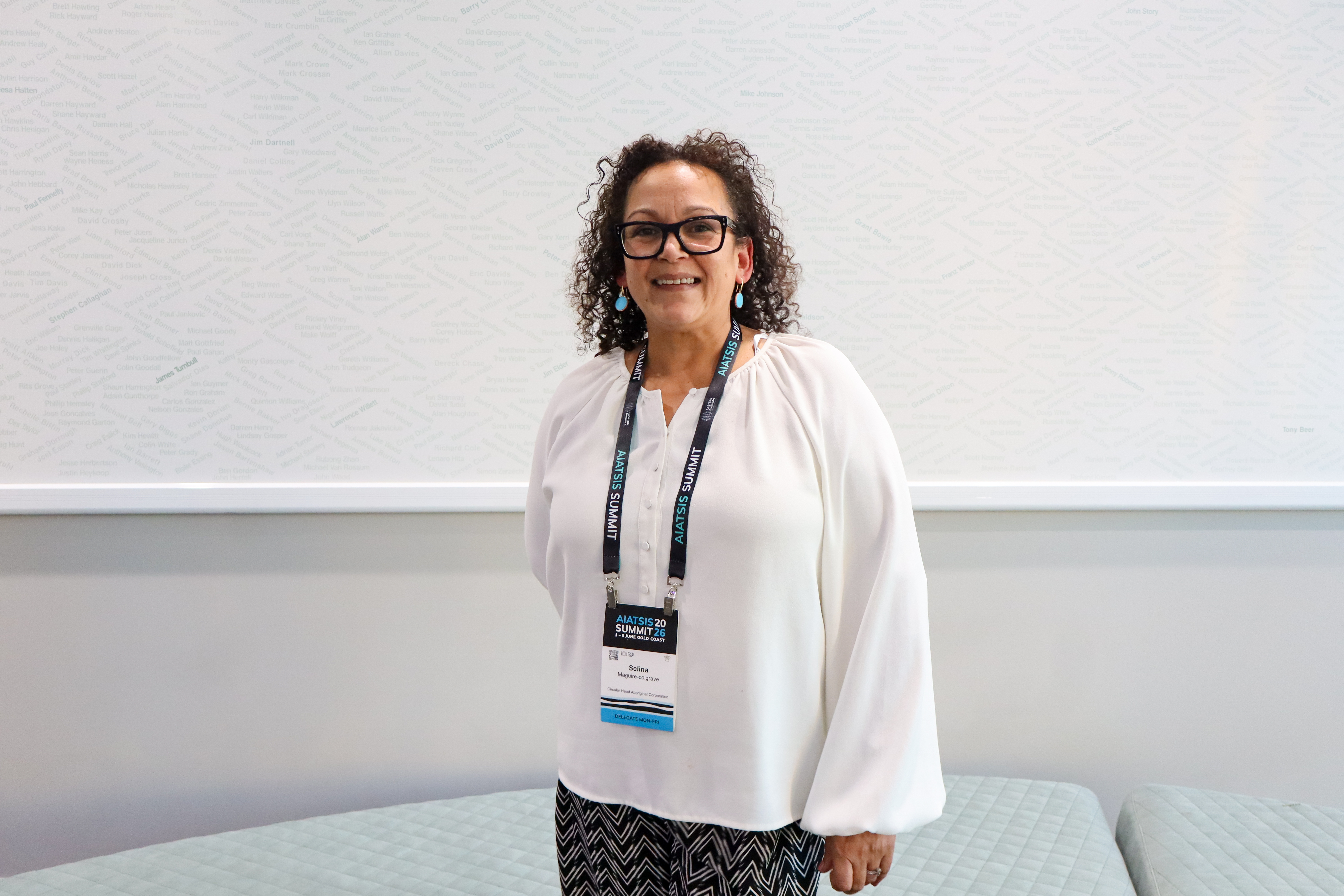
Speaking at the 2026 AIATSIS Summit, CHAC chairperson, Selina Maguire-Colgrave, and communications and engagement manager, Rochelle Godwin, spoke about the inspiring story of what self-determination can look like when culture and commerce are intertwined.
"It's not just a product, it's a statement, it's a strategy, but most importantly, it's self-determination in action," Ms Maguire-Colgrave said.
tarkiner was created to turn cultural knowledge and a resource long tied to community on Peerapper Country — bull kelp — into long-term economic strength, with profits flowing back into community programs and culture.
Rather than being taken from the ocean, tarkiner sustainably harvests bull kelp after washing ashore along Tasmania's north west coast.
"It's a 100 per cent Aboriginal-owned product... It's a perfect example of the circular economy - it comes from the ocean and goes back into the land," Ms Maguire-Colgrave said.
The vision was born out of a desire to remain sovereign, empower community and become visible.
"Unfortunately, I found out something that really shocked me," Ms Maguire-Colgrave said.
"We were the first Aboriginal business ever featured during prime-time AFL finals and NRL finals advertising."
For Ms Maguire-Colgrave, success was never simply about mainstream presence or retail placement - it carried a deeper meaning tied to community impact.
"Success was never about being on the shelves for us; it was about what that shelf represents," she said.
She explained that every sale feeds directly back into community-led outcomes.
"Every bottle sale returns 70 per cent of profits back to our community. That means more jobs, school-based trainees, cultural programs, educational pathways," Ms Maguire-Colgrave said.

"It's the self-determination of choosing how we spend that money. How do we invest that? We don't have to be told by a contractor where that money goes."
Ms Godwin said tarkiner is being used as a commercial venture and a practical tool for shifting how success is defined and measured in Aboriginal communities.
"For a long time our communities have been asked to justify ourselves within systems that were never designed for us," Ms Godwin said.
She said the business allows CHAC to move beyond government-imposed frameworks and demonstrate real, community-led outcomes in employment, education and cultural connection.
"We are asked to measure success through government-imposed KPIs that don't reflect our realities or our priorities," Ms Godwin said.
"We're no longer speaking in hypotheticals. We can share real outcomes - we're saying it already works," she said, adding that the model challenges the idea that communities must rely on rigid external systems to create change."
Speaking on the impact of tarkiner, Ms Godwin emphasised cultural authority, knowledge and governance can and should sit at the centre of decision-making.
"We're building something different, a model where revenue is invested into community in the ways we need it, and decisions are made locally, and culture drives innovation, not the other way around," she said.
"We want it to empower other Aboriginal communities... to go for it - using what they have on their Country. It's an extremely empowering space to be in."
Following the establishment tarkiner in 2024, CHAC purchased 262 acres of land in Peerapper Country in January last year.
The purchase, made possible through the support of the Indigenous Land and Sea Corporation, is an example of the corporation fulfilling its desire for a deeper connection to Country.
As momentum builds for CHAC, plans are underway for a future Centre of Excellence focused on kelp research, innovation and creating job pathways for community.



