

Two ākonga (students) from Toihoukura, EIT Tairāwhiti's School of Māori Visual Arts and Design, have been named joint recipients of the Ruanuku Award.
Presented annually to the top all-round final-year undergraduate student at Toihoukura, the Ruanuku Award recognises excellence across a range of artistic and academic requirements.
This year's award was shared between Georgia Latu and Elspeth Leggett in recognition of the quality of their work.
EIT lecturer of Māori Visual Arts Erena Koopu acknowledged both recipients as examples of what it means to be a ruanuku (an expert or master of their craft).
"They have both worked hard throughout their Toihoukura journey," Ms Koopu said.
"They have not only produced amazing artworks and exhibitions but are also active members of their communities and committed, passionate emerging artists."
Ms Latu drew inspiration for her exhibition from her upbringing in kōhanga reo (Māori-language early childhood education) and kura kaupapa (Māori-medium schooling), alongside a whakataukī (proverb) that holds personal significance.
"My biggest inspiration for my exhibition was my upbringing within kōhanga reo and the kura kaupapa movement, and also the whakataukī 'He kākano i ruia mai i Rangiātea, e kore e ngaro', which speaks to the seed sown from greatness that will never be lost," she said.
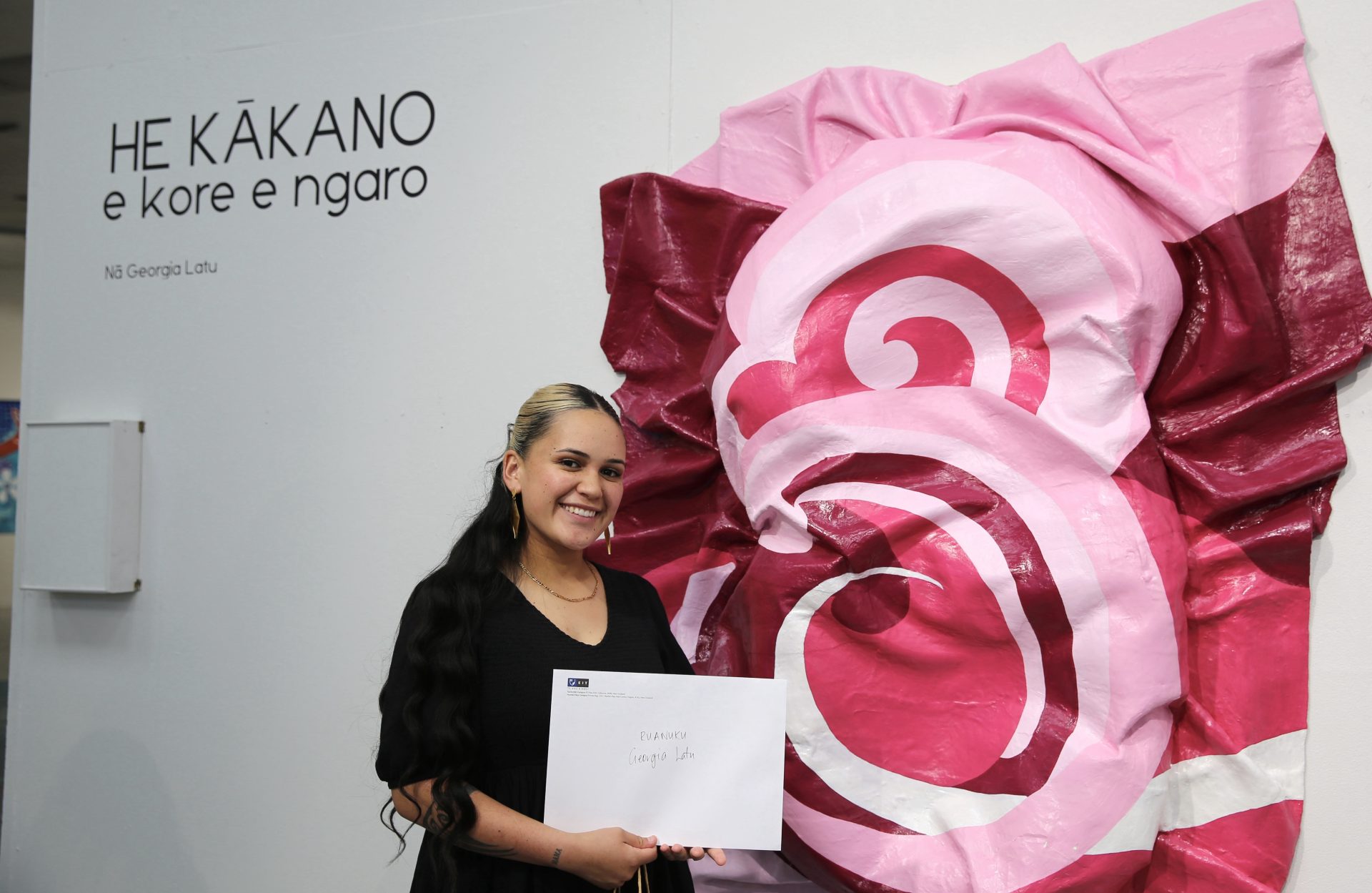
Following three years of artistic studies, Ms Latu hopes to continue developing her practice through wānanga (learning gatherings) while creating opportunities for emerging artists, particularly young Māori wāhine (women).
"I hope I can keep growing and learning in different wānanga, and create pathways for our young people too, especially our young Māori wāhine," she said.
"I hope that my art can be a vessel for me to go into places to create."
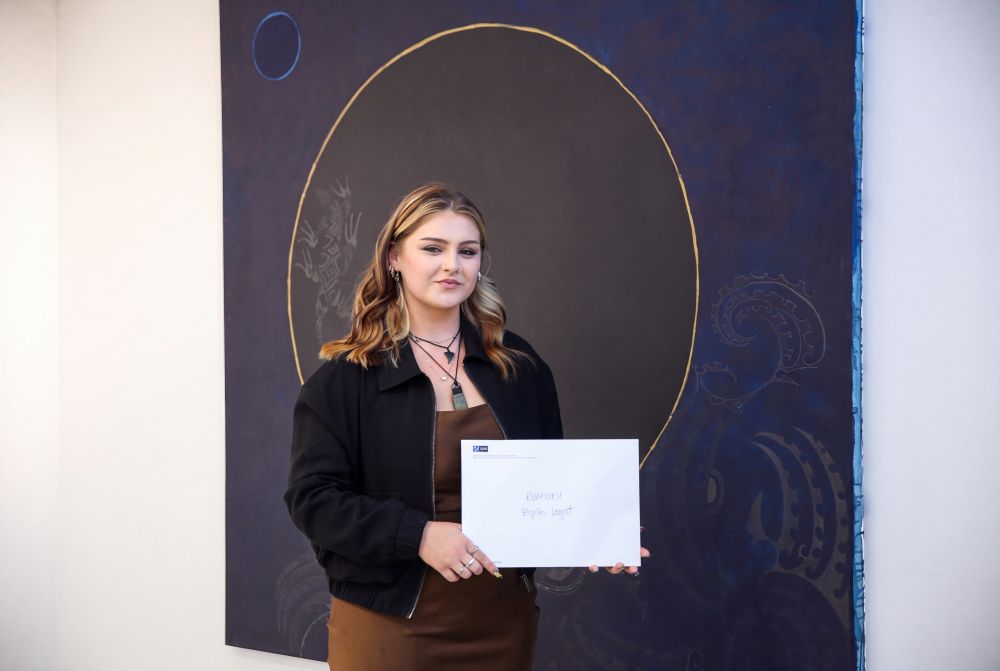
For Ms Leggett, the award marked the culmination of three years of artistic development and learning at Toihoukura.
"Winning the Ruanuku Award has been the cherry on top of an amazing time here at Toihoukura," Ms Leggett said.
"My experience here has been such a blessing, it has meant the world to me.
"My tutors, my friends, my family, they've all been a huge part of this experience, and I'm just so unbelievably grateful."
Both recipients will join more than 30 Toihoukura artists represented in Tairāwhiti Museum's permanent fine art collection, with the museum acquiring at least one major artwork from Ruanuku Award recipients each year.
Three Rokihau Scholarships were also presented to BRokk, Duke Hauiti and Rahui Takoko, who will return to Toihoukura in 2027.
Ms Koopu acknowledged the scholarship recipients' dedication to their studies and the school's kaupapa (purpose and guiding principles).
"These students are hardworking and have shown growth and a commitment to the Toihoukura kaupapa across the year," she said.
Community sponsors continue to support the school's awards and scholarships, providing opportunities for students to develop their artistic practice and share their work across Te Tairāwhiti and beyond.
Founded by Ivan Ehau in 1990, Toihoukura has established itself as one of Aotearoa's (New Zealand's) leading Māori visual arts schools, supporting generations of artists whose work is exhibited and collected across the motu (country) and internationally.
Its kaiako (teachers) have included kōwhaiwhai (traditional Māori painted patterns) artist Sandy Adsett, painter and Associate Professor Steve Gibbs, and Ahorangi (Professor) Sir Derek Lardelli.
Sir Derek, a tā moko (traditional Māori tattooing) artist, carver and composer of the All Blacks' haka Kapa O Pango, was the school's founding principal tutor and continues to mentor students.
Grounded in te reo Māori me ōna tikanga o Te Tairāwhiti (the Māori language and customs of the Tairāwhiti region), Toihoukura remains committed to the development and continuation of Māori art forms more than 35 years after its establishment.