


Environmental protection groups say the Minister for Environment, Tanya Plibersek is in a position to demonstrate a commitment to truth-telling following the referendum outcome by supporting the protection of sacred land along the Minnimurra River, located in the Illawarra region of New South Wales.
A number of First Nations lives were lost in the area due to a grim massacre took place during the Australian Frontier Wars in 1818.
Due to the historic and cultural significance of the land, Traditional Owners along with environmental groups such as Gerroa Environmental Protection Society and Friends of the Minnumurra River along with other cultural groups have opposed the Independent Planning Commission (IPC) approved expansion of a sand mine project owned by Boral Dunmore, a sand and concrete company.
They have criticised the approval process suggesting that further research is needed.
The expansion area is referred to as 5B and would include clearing of 7.5 hectares of vegetation, 38 threatened Bangalay Sand Forest trees bearing 100 hollows.
The Gerroa Environmental Protection Society said the IPC based it's approval on information provided by the NSW Department of Planning and felt that due diligence was not applied to its assessment of what is considered Aboriginal Heritage.
They said the department didn't adequately investigate the probability of the mining site being in proximity to the highly sensitive Minnamurra Massacre site and that advice given was speculative and irrational.
The history of the Minnamurra Massacre has been shared orally through generations of First Nations people and is officially documented as a Frontier War location by esteemed Professor Lyndall Ryan, a leading academic on Aboriginal, Australian and Feminist history, in her body of work mapping the hundreds of massacres of Aboriginal people throughout colonisation.
Aunty Gwenda Jarrett, a Dharawal Elder previously told National Indigenous Times of her work alongside historians documenting true history.
She said the word Minnamurra means plenty of fish and the area was a popular place for camping, hunting and gathering for hundreds of years before colonisation.
Historic records have revealed that the Minnamurra attack was led by a local property owner, Lt. William Frederick Weston and his site overseer Cornelius O'Brien.
Both men were accompanied by a group of convicts and labourers. Early one morning, the group of men launched an attack, firing heavy large calibre firearms on the unsuspecting members of an Aboriginal campsite that sat peacefully alongside the pristine Minnamurra River.
Although Professor Ryan's work accounted for at least six deaths, Aunty Gwenda believes there were two hundred deaths that took place that day.
The spiritual connection to land and knowledge of history is strong for the Wodi Wodi and Dharawal people, who she said know the dark history of that place and refuse to work on the land.
Aunty Gwenda told National Indigenous Times conversations and planning around Minnamurra must always include Traditional Owners to that land.
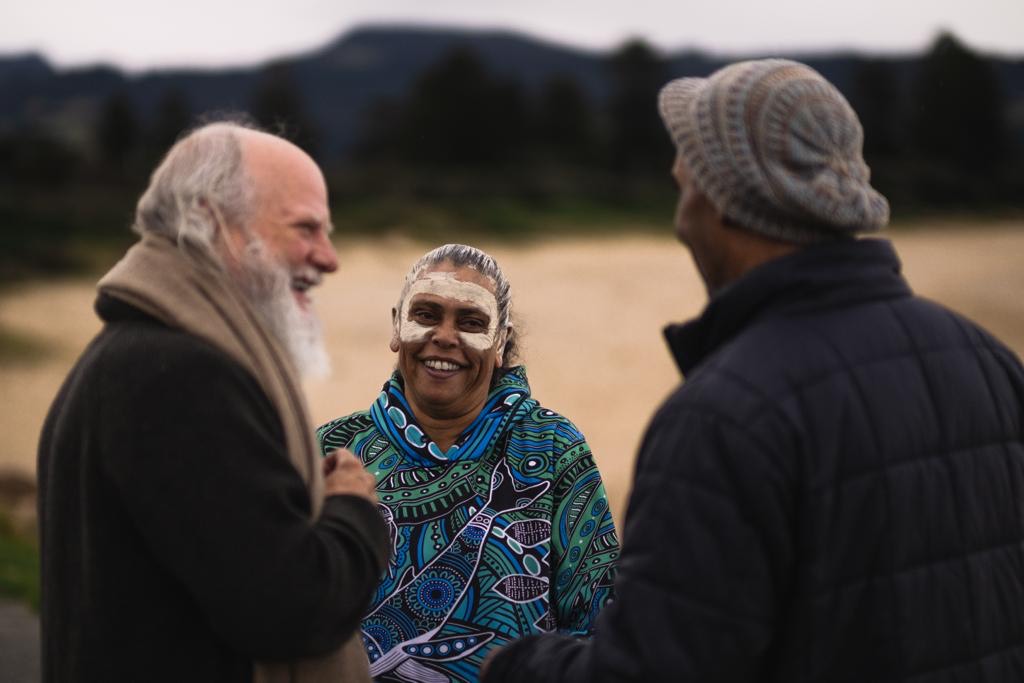
Mr Garry Caines and Sharralyn Robinson, a former Chief Executive Officer of the Illawarra Local Aboriginal Land Council, together with the Gerroa Environmental Protection Society have stated the land is culturally significant and falls under the Aboriginal and Torres Strait Islander Heritage Protection Act 1984.
Furthermore, Boral Dunmore's own Archeological Assessment report revealed evidence of large numbers of artefacts, supporting the thesis of a prolonged occupation site in the vicinity of the mine site.
The Woronora Plateau Gundangara Elders Council responded to this evidence, commenting "the intactness and distribution of artefacts clearly show that occupation and activities at this site occurred during a prolonged period of time and on a repeated basis and it has a high potential of containing burials".
Referring to the discovered artefacts, Gerroa Environmental Protection Society emailed Minister Plibersek, saying "This evidence should have warranted further investigation by the Department to determine the significance, extent and intensity of habitation of the archaeological sites investigated, and this didn't happen".
"Sadly, after the IPC approved the mine, Aboriginal custodians refused to continue to work in the salvage of artifacts in preliminary excavations at the site because of the significance and number of artifacts coming to light."
In June this year environmental group Friends of the Mirramurra River spoke with the ABC, with Graham Pike said the project was environmentally obscene.
"They are going to allow the total destruction of it (the area) ... levelling the trees and all the animal and bird habitats, including the sea eagle, but they are also going to dig a hole 27 metres deep," Mr Graham said.
A spokesperson from the Department of Climate Change, Energy, the Environment and Water told National Indigenous Times that there are currently four applications concerning an expanded sand mine at Minnamurra in NSW under the Aboriginal and Torres Strait Islander Heritage Protection Act 1984 (ATSIHP Act).
As the four applications are being progressed the Department was not able to provide further comment at this stage.



