




Indigenous Ministers have urged Australians to vaccinate amid the nation's largest recorded diphtheria outbreak, with growing concern over the spread of the disease through remote Aboriginal communities.
On Friday, Indigenous Ministers from across Australia gathered in Western Sydney for a Joint Council meeting to discuss the next phase of the National Agreement on Closing the Gap.
A key point of discussion was the worsening diphtheria outbreak impacting parts of the Northern Territory, Western Australia, Queensland and northern South Australia, as governments face increasing pressure over preparedness in remote communities and access to healthcare.
Australia has recorded 230 diphtheria cases this year — the largest outbreak since national record-keeping began. According to the Australian Centre for Disease Control, the majority of cases have been among Aboriginal and Torres Strait Islander people.
"What we are seeing in terms of the Northern Territory, Western Australia, parts of Queensland, and the top of South Australia is of national concern," Minister for Indigenous Australians, Malarndirri McCarthy, said on Friday.
"It is important that we not only communicate with First Nations families, but this is about our whole country being aware."
The comments come after Federal Health Minister, Mark Butler, announced a $7 million response package on Thursday, aimed at assisting the Northern Territory Government and the Aboriginal Community Controlled Health Sector to deliver vaccines and culturally safe, on-the-ground support.
"I've gone and got my booster shot to make sure that we as adults — this isn't just about children — are responsible as well. This is important that Australians take note, and the more that we can get vaccinated, the better," Senator McCarthy said.
"I just urge Australians everywhere, please get vaccinated."
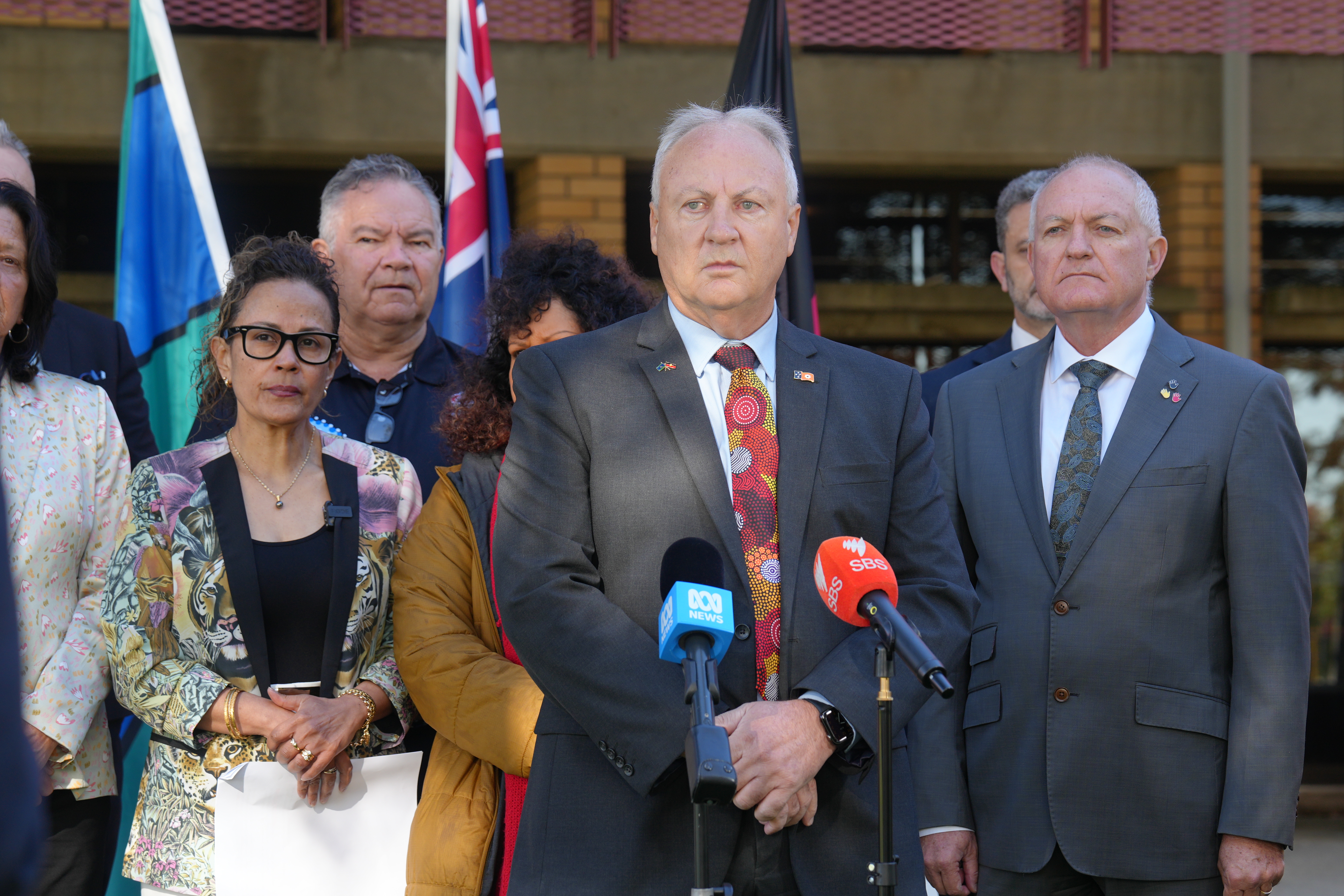
Attendees also questioned Northern Territory Minister for Health, Steve Edgington, on the NT Government's handling of the diphtheria outbreak, citing response times and preparedness in remote communities.
Responding to claims the NT Government did not request federal assistance until weeks after a public health alert was issued in April, Mr Edgington said health authorities and Aboriginal community-controlled organisations were working closely together on the ground.
"Well, we work very closely with the Aboriginal community-controlled sector in the Northern Territory, talking to the federal government," he said.
"We have been working very closely, putting out communication material and working through not only our main hospitals but our health clinics in remote areas."
Mr Edgington rejected suggestions the NT Government had failed to communicate effectively with residents, reiterating its efforts to contain the outbreak through public awareness and vaccine delivery.
"We are working in partnership through NT Health, the Aboriginal community-controlled sector right across the board. And this is critical to get the messaging out right across the Northern Territory," he said.
"We've established pop-up clinics in Alice Springs, Darwin, Palmerston and Katherine, and those health clinics out in the bush are doing everything they can to work with the community to identify those that not only require the vaccination but the booster as well."
More information about diphtheria is available online.



