



Gamilaroi and Wadawurrung artist Amelia Jean O'Leary embodies grief, loss, colonisation and international trauma with her new contemporary dance, Sitting Gnaay, at Sydney Fringe.
Sitting Gnaay weaves different stories that focus on First Nation Yinarr [woman] not as a ghost but as a woman made invisible while fully experiencing reality, a feeling that Ms O'Leary has felt herself.
With this work, she wanted to pay homage to these women and show that Indigenous women are still being treated as ghosts, and she hopes it doesn't keep happening.
"These women who are mostly still alive are still being treated like ghosts, like they're not real. Myself, I feel like a ghost quite often in the industry, being who I am," Ms O'Leary said.
The inspiration for her dance came from a conversation with her Aunty, when discussing women's stories, and one of a lone woman intrigued her.
The story follows a mother who is travelling through corroboree that is far from where she is, along with her are her small children. As she travels, she asks for help, but she gets ignored by her community. Unfortunately, neither of her children don't make.
When the woman reaches the ceremony, she steps into the circle and curses them all. Screaming that the community is supposed to take care of everyone, but she felt abandoned.
Ms O'Leary said that there is a space on Gamilaroi Country that has trees that are shaped like people, and when you hear the trees whistling, it's coming from the spirits who were cursed.
"It's quite a sad and intense story, but overall it talks about what it actually means to be mob, what it means to be community and to care for each other," she said.
With Sitting Gnaay, Ms O'leary, wanted to take parts of the story told by her Aunty but contextualised it into her own reality as a way of dealing with culture, adding it's important to relate it to yourself and the world you're in now.
"I was trying to access the story in a way that felt authentic to me. I didn't want to re-enact the story, but more so, 'how does it relate to me? How do I experience it?'," she said.
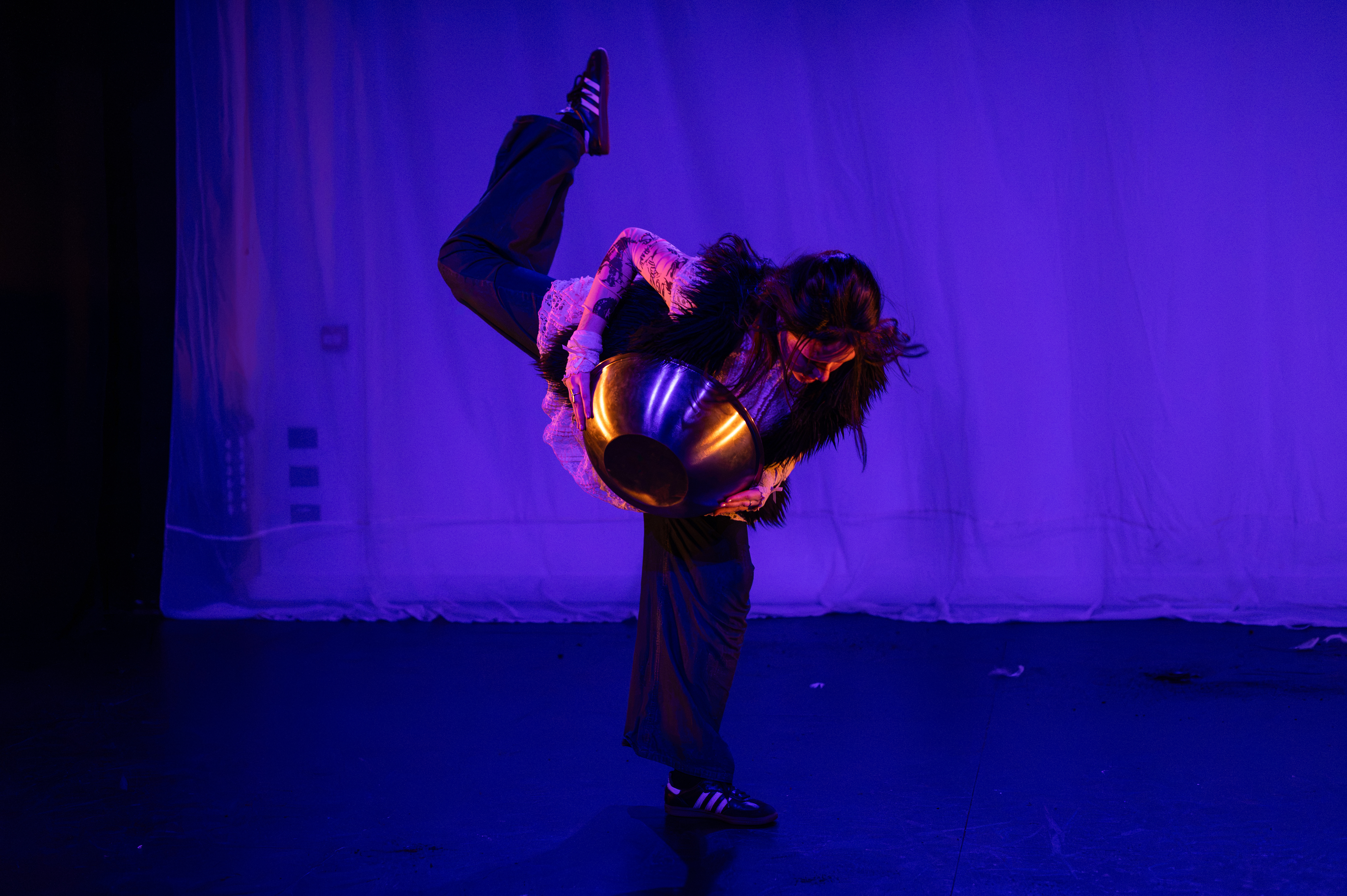
For the performance, movement, sound, layered imagery, and storytelling help Ms O'Leary with moving between a ghost-like dissociative of the body and then returning to a rich strength understanding.
Having the opportunity to switch between those two modes allows her to choose when she wants to become invisible and when she wants to remain seen in the story.
"I like to be honest about what's happening; if these women that I relate to are having their power taken from them, then I want to show the truth of what that looks like in the body and pure emptiness," said Ms O'Leary.
The title, Sitting Gnaay, is also a Gamilaroi slang that gets unraveled during the performance. It refers to when women sit with their legs open, "Sitting Gnaay". Ms O'Leary said once her family started unpacking the word, they found a deeper meaning for the story and herself.
"They realised it means digging stick...They were saying, what does a digging stick have to do with how you are sitting? Well it has to do with the action of using the digging stick, searching for yams," she said.
"It's interesting to me how the body carried language, carried movement, and carried story with it, through slang and through colonial ideas and manners. My ancestors kept this word that actually has thousands of stories with it.
"This inspired me to become interested in First Nations women's body autonomy and how that relates to the lone woman.
"Making it [the dance] has been quite a sad experience but not a foreign one. There's nothing that I haven't felt or seen, and that's kind of interesting and sad to me, but it does mean that it's still relevant."
Putting on a show can be overwhelming, but Ms O'Leary, who has performed at Adelaide and Melbourne Fringe, says support from older Indigenous creatives goes a long way for a young performer, and she's grateful they saw and believed in her.
"I myself see new, younger First Nations artists and I'm hyping them up so much, because we need it. Especially our Black women and queer Black women. We need you to keep making things, because we're a minority within a minority."
Sitting Gnaay will be performed at UNSW until Sunday.



