


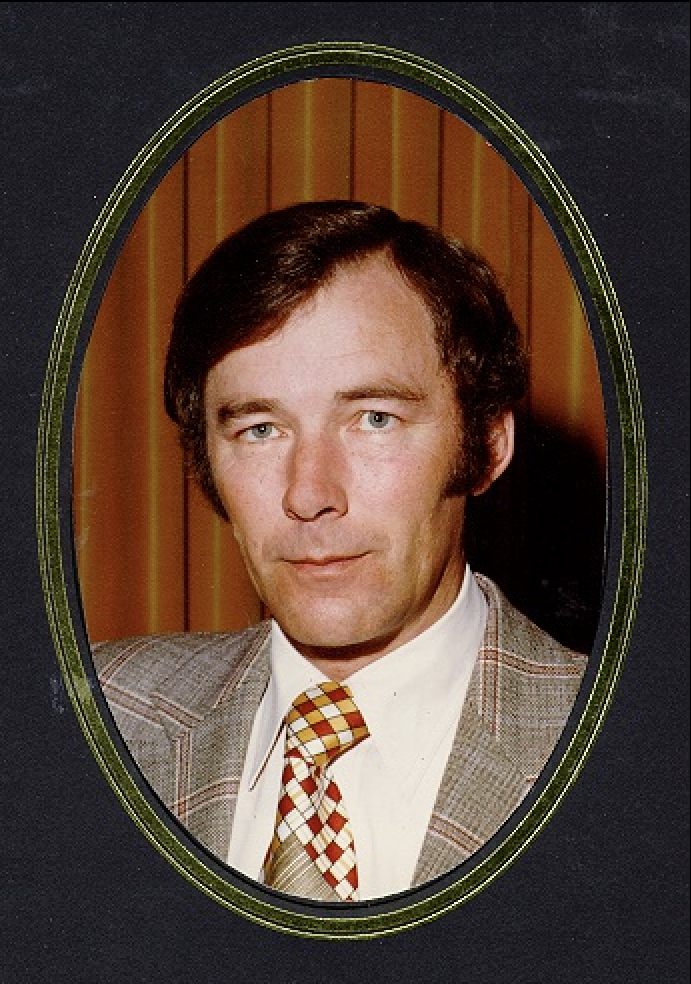
Alan Ridge, the parliamentarian who represented Australia's remote northwest as enormous political change swept across its pastoral stations and the nation, passed away earlier this year at the age of 91.
From 1968 to 1980, Mr Ridge was the State member for the Kimberley in the Western Australian Parliament. Though he was born and raised in Perth, he knew the far north's wildness better than anyone in the Western Australian Parliament at that time. He became a minister in the Liberal State Government led by Sir Charles Court, the architect of the resource state's first iron ore boom.
Ridge's election in 1968 was significant politically as it ended a long Labor reign in the Kimberley. However, it was Ridge's defeat in 1980 that was seminal; on that day, Aboriginal people in remote Australia announced they were ready for a new, fuller participation in our democracy.
I never knew Mr Ridge and I offer my condolences to his family who no doubt celebrate his long life.
This is not about one man or his political views. Ridge and the Sir Charles Court government would, in effect, represent the last vestiges of a time when pastoralists controlled the Kimberley and successive WA governments were overt in their efforts to exclude Aboriginal people from politics and power.
The history of States supervising and dominating Indigenous Australians is well documented, but in WA - the last colony to be granted self-government in 1890 - the Imperial Parliament was worried in advance.
It did not trust WA's first government to look after the welfare of Aboriginal people.
This is why the inaugural WA Constitution placed responsibility for Aboriginal people outside of the State Parliament: it required payments from the State Treasury to the Aborigines Protection Board for the 'preservation and well-being of the Aborigines'.
The creation of the Aborigines Protection Board resulted from an inquiry commissioned by Governor Broome in 1883 into the treatment of Aboriginal prisoners in the then colony. Leading that inquiry was then Surveyor-General, John Forrest.
With the abolition of slavery in the United States by way of the 13th amendment in 1865, and global anti-slavery forces making their presence felt in the Empires meant that Broome was under pressure from London to ensure that the 'Aboriginal natives' were being treated appropriately. The Aborigines Protection Board was thus established in 1886.
When considering the desire of the colony for self-government, the then Colonial Secretary, Lord Knutsford, shared Broome's concerns about the treatment of the Aboriginal people of the colony and, in 1888, stipulated that 'some measure would be necessary for placing the aboriginal inhabitants under the care of a body independent of the Parliament of the day'. That care passed to the Aborigines Protection Board.
A later dispatch from Colonial Secretary Chamberlain noted that "Mr Parker, the senior delegate from Western Australia, stated before the Select Committee of the House of Commons: 'We have accepted responsible government on the special understanding and arrangement that this Aborigines Protection Board...shall continue'".
While the Board was a creature of his own inquiry, Forrest set out to abolish it when he became WA's first Premier in 1890. He succeeded in 1897 and the State Government - ultimately, the WA Parliament - took control. As Forrest argued: "why all this outward show of sympathy for the aborigines and, at the same time, want of confidence in the colonists of Western Australia, who have alone done whatever has been done for their welfare?"
Eighty years later, in 1977, pilot and entrepreneur Ernie Bridge attempted to become the first Aboriginal person elected to the WA Parliament by challenging Alan Ridge for his seat of Kimberley. On the eve of the election the Liberal Party flew five young lawyers from Perth to the Kimberley and placed them in polling booths in Kununurra, Turkey Creek, Halls Creek, Fitzroy Crossing and Derby. Behaviour during the election triggered a high-profile challenge to the electoral result in the Court of Disputed Returns.
Sir Charles Court's government was expected to be returned in 1977 - and it did win with an increased majority - but the Liberals had been concerned during the election campaign that the seat of Kimberley was vulnerable. Bridge - Labor's candidate - was a born-and-bred local and the popular Shire President of the Kimberley town of Halls Creek. The Liberals became alarmed when they realised that Labor had helped register significant numbers of Aboriginal people to vote on the strength of Bridge's profile. There was outrage that Labor might win this way. More than 40 per cent of the Kimberley's population was Aboriginal in 1977 - as it is today - but not many were voters.
The Court of Disputed Returns examined the 1977 election that involved illiterate Aboriginal voters not being able to cast their vote. Justice Smith found that the outcome 'was the commission of numerous errors by such [electoral] officers and the effective disenfranchisement of a large number of illiterate voters'. The Court listed the names of Aboriginal people prevented from voting that day - among them were Queenie McKenzie and Rover Thomas, names now listed as two of Australia's most iconic and recognised artists.
Alan Ridge was declared the winner of the 1977 election in the Kimberley seat. However, Ernie Bridge was aggravated by the fact that many Aboriginal people were not able to exercise their right to vote and his challenge in the Court of Disputed Returns was successful, the court declared the result void and both sides prepared for a rematch.
On the day Sir Charles Court's government declared that the by-election for Kimberley would be held on 17 December 1977, it attempted to pass legislation to amend the Electoral Act to make it more difficult for illiterate voters to direct how they would like their vote cast.
Sir Charles wanted to ensure that illiterate voters could not influence the outcome and put legislative intent to Ridge's complaint, expressed in a post-election letter to supporters that 'it is indeed a travesty of justice that a comparative handful of such ill-informed people who can be used like pawns in a game by unscrupulous opportunists, should have the right or power to determine the future of our State"
The WA Government had the numbers to pass this contentious Bill or so it thought. The Liberals' coalition partner, the Country Party, with their four Legislative Assembly members, voted against the legislation believing that many of their constituents may be snared under the illiterate voter definition. As a result, the vote in the Legislative Assembly was tied requiring the Liberal Speaker, Ian Thompson, to use his casting vote. Saying that a by-election should be held under the same conditions as the original election, Thompson voted down the Bill.
Ridge won the by-election easily but the signals for the next State election were clear.
At the next WA Election in 1980 Ernie Bridge won the seat of Kimberley from Ridge. It has been held by an Aboriginal person ever since. And in 1984 all Aboriginal and Torres Strait Islanders were finally required to enrol and vote at elections like other Australians.
The emergence of Aboriginal voting power in the mid-1970s took the conservative side of politics by surprise. It did not turn the contest for the seat of Kimberley into a contest for Aboriginal voters - the Liberal Party had apparently conceded that most Aboriginal people would be Labor supporters and instead focussed their efforts to disenfranchise as many Aboriginal people as possible.
On one level this episode is about the rough and tumble of Western Australian northern frontier politics. But what makes this story fascinating is its context. In the late 1960s the Kimberley was fundamentally a feudal society with most Aboriginal people subject to the patriarchal authority of white masters on pastoral stations or church missions. Very few were paid wages and those who were received income far less than non-Aboriginal people doing the same work. They had no real trade union or mainstream political support. Very few were on the electoral roll. In 1971 an enquiry commissioned by the State Government showed that more than five thousand Kimberley Aboriginal people lived on pastoral stations and missions. And then, almost overnight, the Kimberley's entrenched colonial system collapsed. The global forces of decolonisation and recognition of civic and human rights that had been sweeping the world after the second world war impacted the Kimberley decisively in the early 1970s.
Ridge's defeat can be seen in the broader context of the emancipation of the State's Aboriginal people. It also coincided with a turning of the political mood in a State that had long held onto controlling its Aboriginal natives.
While it is easy to critique Ridge from a position of time, the reality is that Ridge represented a government that had not adapted to these broader global movements that were also sweeping through Australia. During Ridge's tenure, Australians voted at the 1967 referendum to finally remove the states' legislative monopoly on Aboriginal people, the Argyle Dam was completed in 1972, and in 1975 the Racial Discrimination Act passed the Commonwealth Parliament and Prime Minister Whitlam poured sand into the hands of Vincent Lingiari.
Importantly, one of the main events that allowed for the mobilisation of Aboriginal people at the polling booths was the 1965 Arbitration Commission's equal pay decision for pastoral industry workers. The impact of this decision continues to be debated, but the feudal system that had underpinned Australia's vast pastoral rangelands was removed and its Aboriginal workers were, by and large, moved off country and into missions and onto the fringes of towns.
Ridge's passing in March is worthy of reflection because he served a region with an unusually high proportion of Aboriginal Australians as social and economic turbulence changed their lives forever.
The Liberals' hard-fought 1977 win in the Kimberley was the last gasp of a politics that had lost its institutional foundations. Since the defeat of Ridge, the Kimberley has always been represented by an Aboriginal person in the State Parliament.
Three years since our most recent national conversation about the position of Aboriginal people - the debate that preceded the failed Voice referendum - common themes are clearer. Like so many other debates before it in Indigenous affairs, this was about power and control.
WA's first Parliament was forced to accept that it could not control the welfare of its Aboriginal people as a condition of self-government until Forrest wrested this power back. Power was again the subject of the 1967 national referendum - the Commonwealth Parliament asked for and received permission from Australians to take on Aboriginal policy.
These events tell us the Voice referendum was up against the trend of Australia's history. Our Parliaments have tended to take on power rather than cede it back to Aboriginal voices.
I saw the Voice as an opportunity to break the bureaucratic control on Aboriginal policy, to allow outside challenge to the power of this monopoly. I saw this as an opportunity for conservative favour. When you see moments in their historic context, it often becomes much clearer on how difficult reform, embedded in such history, can be. As to the outcome of the referendum, perhaps it is not disappointment those of us who supported an Aboriginal perspective being embedded in our national Constitution should feel but celebrate that so many Australians supported the idea.
The Hon. Ben Wyatt is the former Treasurer, and former Minister for Aboriginal Affairs, Finance, Energy and Lands of Western Australia. He served as the Member for Victoria Park for 15 years, retiring from politics in 2021.



