



A new art exhibition in Mparntwe / Alice Springs is using one of Central Australia's most damaging invasive weeds to highlight the disappearance of traditional bush foods.
Western Arrernte artist Carita Coultard is among the artists featured in the Iltja Ntjarra/Many Hands Art Centre exhibition, which opened at Olive Pink Botanic Garden this week.
The exhibition features paintings on handmade paper produced from buffel grass, transforming the invasive species into a material used to tell stories about its impact on Country.
Coultard's Country is around Kings Canyon, while her father's Country is Pertama and her mother came from Ntaria (Hermannsburg).
She has lived in Mparntwe / Alice Springs for more than four decades and began pursuing art around seven years ago.
More recently, she has expanded her practice by experimenting with watercolour techniques.
Her watercolour works in the exhibition depict bush foods she remembers collecting while growing up around Hermannsburg, about 130 kilometres west of Alice.
She told the ABC many of the foods that were common during her childhood are now difficult to find.
"I think about in childhood we used to just go around, walk around and get all these bush foods, but we can't see it now," she said.
"We don't see them anymore around, especially around in the Alice area, like maybe way, way from town area, way up bush you might find some.
"It's just no good at all - buffel grass is everywhere growing."
Buffel grass was introduced into Central Australia decades ago to help control erosion and provide food for cattle. However, it has since spread across large areas of the region, where it can outcompete native plants and significantly increase fuel loads during bushfires.
The grass was declared a weed in the Northern Territory in 2024.
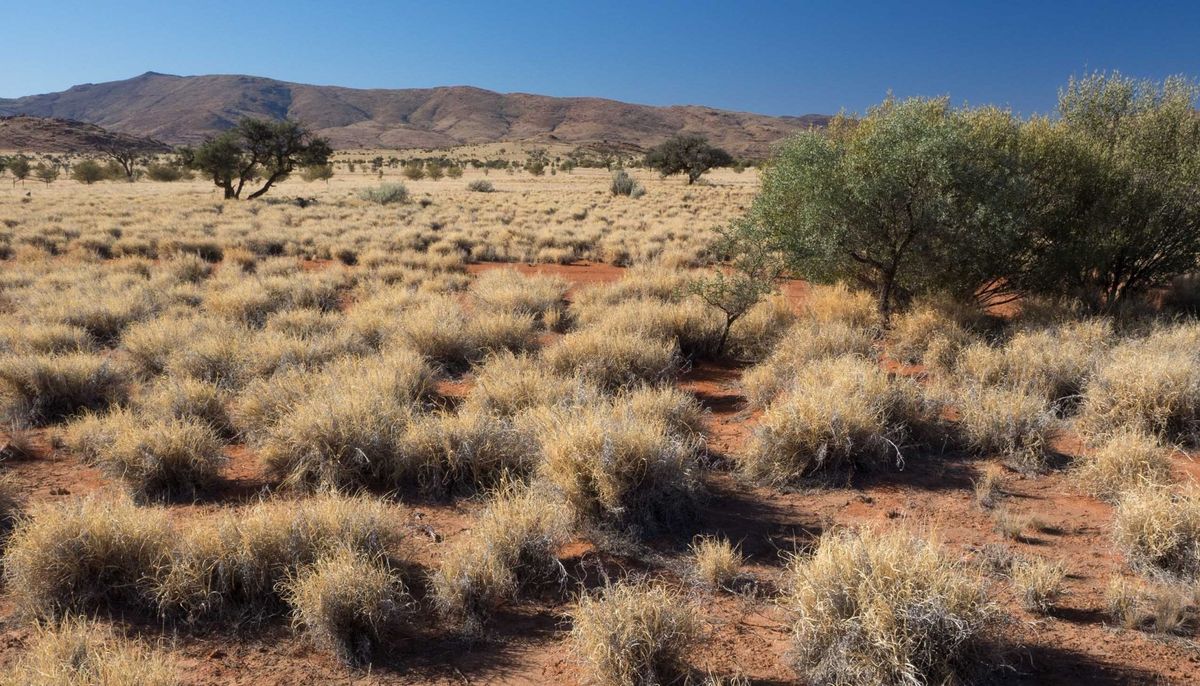
For the exhibition, artists have taken buffel grass and converted it into handmade paper at the Many Hands Art Centre studio.
Coultard told the ABC the process involved cutting down the grass before boiling, soaking and blending it, with the mixture then spread across mesh and left to dry.
"The first lot was so rough, it was testing, trying to bring it smooth," she said.
"We don't have a proper machine (so) we can just do what we can do here."
The exhibition comes as community groups and environmental organisations continue efforts to control buffel grass around Mparntwe / Alice Springs.
An economic impact assessment commissioned by the NT Government has also found the wider costs associated with buffel grass could be about 60 times greater than the benefits it provides to the pastoral industry.
Charles Darwin University professor Kamaljit Sangha said its continued spread could create significant environmental and financial challenges.
"The costs are going to be huge because there is no natural barrier for buffel not to spread to other places," she said.
"It's not just the cost with the spread of buffel for biodiversity, the most important thing is the public costs for managing fire in the landscape."
The exhibition runs at Olive Pink Botanic Garden until September 30 and is supported by Alice Springs Town Council and ArtsNT.



