




The federal government's "entirely untrue" response to calls for an urgent national youth justice summit has been slammed as ignoring legal advice.
This week, more than 200 lawyers, academics, advocates and Indigenous organisations signed an open letter to Prime Minister Anthony Albanese, urging him to treat the mass over-incarceration of Aboriginal and Torres Strait Islander children as a national emergency.
Aboriginal and Torres Strait Islander children remain dramatically over-represented in detention, with incarceration rates more than 25 times higher than those of non-Indigenous children nationally. On an average day in 2025, 734 children are detained across Australia, with almost 62 per cent identifying as Indigenous.
Despite commitments under the Closing the Gap agreement, Labor and Coalition governments alike have continued to introduce tougher laws and harsher penalties for children and young people.
Entirely untrue
Responding to the open letter, a government spokesperson told the ABC "only states and territories can set justice policies" and that "where we can, we are working to support early intervention diversion and, importantly, reduce recidivism".
The position appears to contradict legal advice obtained last year by the Justice and Equity Centre from barristers Kate Eastman AM SC and Emma Dunlop, which found the Commonwealth can intervene under section 51(xxix) of the Constitution to meet its international human rights obligations.
Nerita Waight, acting chair of the National Aboriginal and Torres Strait Islander Legal Service (NATSILS), which organised the open letter, said the government's comments were false and amounted to an attempt to shirk responsibility.
Pointing to the senior counsel's advice provided to the Prime Minister last year, Ms Waight said the "Federal Government has Constitutional authority to override state and territory justice systems to enforce international human rights obligations".
"Not only does Prime Minister Albanese have the power to act, but he also has the moral obligation," Ms Waight said. "Our children are languishing behind bars because of political point-scoring, and the Prime Minister is trying to pass the buck.
"Hundreds of organisations are today urging the Prime Minister to call an emergency summit on youth justice to address this growing crisis. Is the Prime Minister really saying he will do nothing?"
When the advice was obtained last year, Justice and Equity Centre CEO Jonathon Hunyor said: "This advice makes clear that the Commonwealth has the power to keep our children safe — it is now up to the Prime Minister and his government to make it happen."
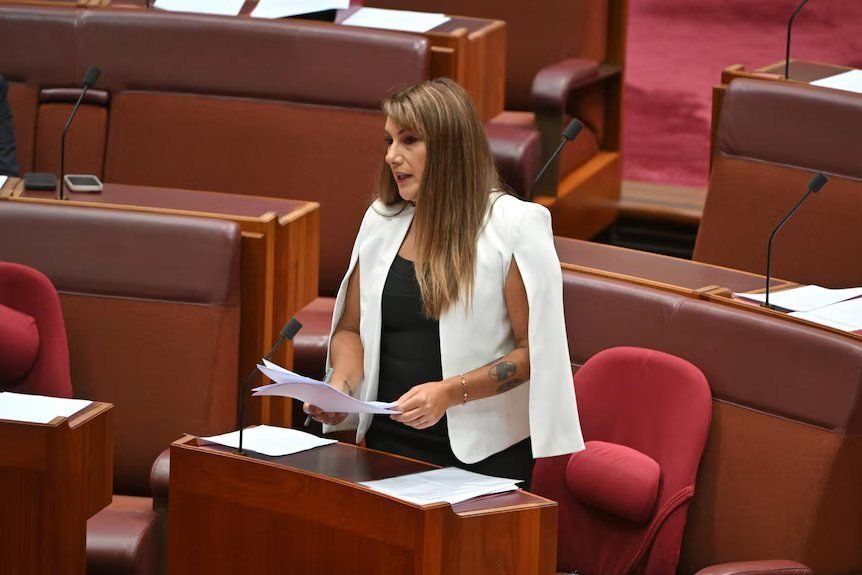
Independent Senator Lidia Thorpe told National Indigenous Times the Government's response to the open letter was "absolutely disrespectful and condescending".
"He knows that the Commonwealth has [the] power to bring the states and territories into line. He is gaslighting Aboriginal people and legal experts, and hiding behind this tired old excuse that has been proven to be untrue," she said.
The Senator — a vocal critic of the government's handling of youth justice issues — said the Commonwealth has used the external affairs power to "international human rights commitments into Australian law all the time" — citing the Racial Discrimination Act, the Sex Discrimination Act and the Disability Discrimination Act.
"So when the Prime Minister says only states and territories can make decisions about the criminal legal system, it is weak political spin, and it is a lie," she said.
"I asked the Attorney General's department about this during Senate Estimates in August last year, and they confirmed they had reviewed the advice from NATSILS and provided it to Attorney General Rowland. But the Attorney General hasn't responded to this advice. If the government disagrees with this expert legal advice, they should say why. Repeating the same spin isn't good enough."
The Commonwealth has faced repeated criticism from Indigenous, human rights and legal groups for effectively giving states and territories a free pass on their Closing the Gap commitments.
During his Closing the Gap address in February, the Prime Minister appeared to back the jurisdictions' approach — including policies that allow life sentences for children as young as 10 — saying they "have every right to put the safety of their communities first".
The Productivity Commission's latest Report on Government Services shows youth detention now costs an average of $1.3 million per child each year — more than $3,600 a day — a figure described by the former National Children's Commissioner as a "devastating policy failure".
Failing Indigenous children
Signatories to the open letter urged the government to confront the "emergency," arguing Indigenous children are being "criminalised and imprisoned at alarming rates because of political point-scoring rather than evidence-based reforms".
They argue the Prime Minister and his government had "promised to be a government that supports reconciliation with, and a more just society for, First Nations people".
"But when 36 per cent of the prison population is Aboriginal and Torres Strait Islander people, and with the continuing and shameful lack of progress on justice outcomes under the National Agreement on Closing the Gap, it is not possible for you to achieve this vision without urgent and meaningful action to change the justice system."
The youth justice system has come under sustained criticism — both domestically and abroad — as governments have adopted punitive policies to combat supposed youth crime waves.
Over the past two years, children as young as 11 have been held in adult watch houses, the Northern Territory has reintroduced spit hoods in youth detention facilities despite explicit recommendations from the Don Dale Royal Commission, and state premiers have publicly championed life sentences for children.
In January, the United Nations Human Rights Council criticised Australia's youth detention practices during its Universal Periodic Review, noting children had been "subjected to verbal abuse and racist remarks and restrained in ways that were potentially dangerous", while solitary confinement remains in use.
Late last year, delegates from the UN Working Group on Arbitrary Detention were denied access to both Unit 18 and Banksia Hill Detention Centre in Western Australia, as well as all Northern Territory prisons. The group described Australia's youth justice system as a "stain on Australia's reputation".



