




Australia's spending on youth detention has increased by $400 million in five years, with the former National Children's Commissioner describing the system as a "devastating policy failure".
Released days after the United Nations criticised Australia's youth justice record and urged it to raise the age of criminal responsibility, the Productivity Commission's latest Report on Government Services shows youth detention now costs an average of $1.3 million per child each year — more than $3,600 a day.
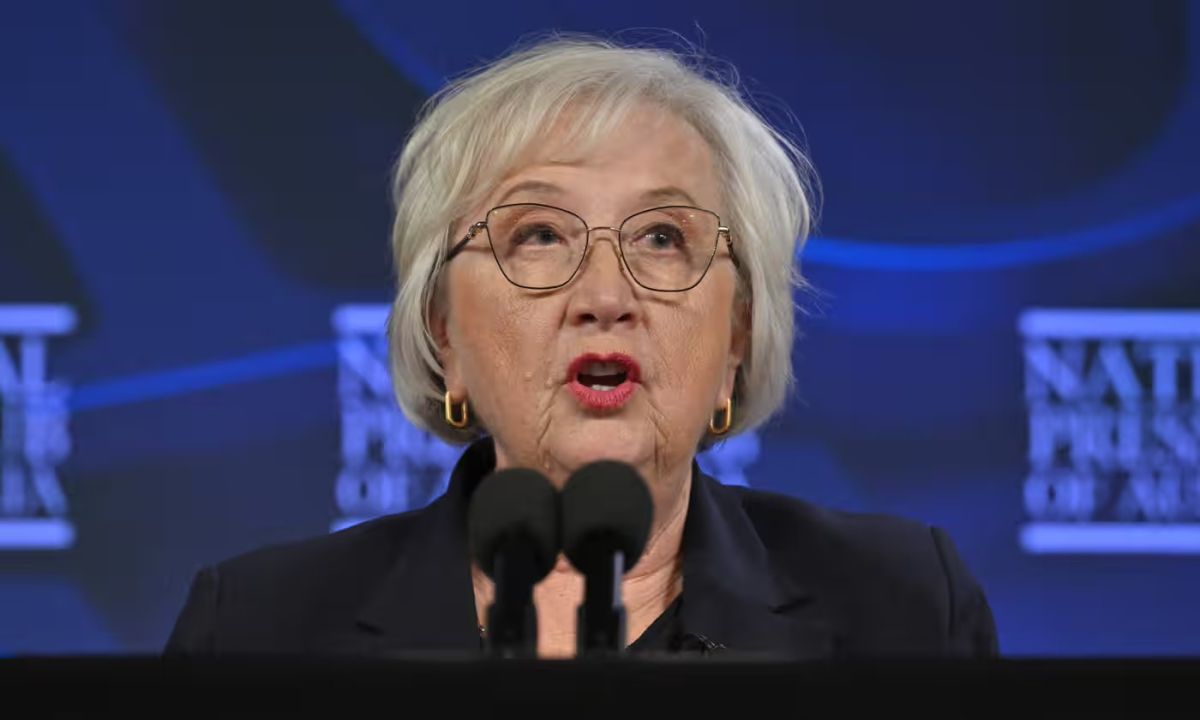
Despite the high cost of a system intended to rehabilitate, former National Children's Commissioner Anne Hollonds says outcomes remain poor. Eighty-five per cent of children released from detention return to sentenced supervision within 12 months.
"That is not success," said Ms Hollonds, who is now spokesperson for the Justice Reform Initiative. "It is a devastating policy failure that we continue to pay a growing premium for."
More children are being detained
The report found about 860 young people were in detention in 2025, up from 792 in 2020. On an average day, 734 children are detained nationwide, with almost 62 per cent identifying as Indigenous.
Australian Institute of Health and Welfare data shows First Nations young people were 21 times more likely than non-Indigenous peers to be in detention in the June quarter of 2025.
The number of Indigenous children detained has risen sharply in several jurisdictions. In New South Wales it has increased by 86 per cent since 2020-21, while in the Northern Territory — where 95 per cent of detained children are Indigenous, and many Central Australian children have "disappeared" off the street and been taken to Darwin, 1500km away — numbers are up 74 per cent since 2019-20.
"Instead of reducing crime or promoting community safety, detention compounds trauma, disconnects children from education, family and community, and increases the likelihood they will continue to commit crimes," Ms Hollonds said. "Yet governments are doubling down on the most expensive and least effective response."
View this post on Instagram
A post shared by National Indigenous Times (@natindigtimes)
Punitive policies under scrutiny
Australia's youth justice system has long faced criticism for its punitive approach, with children able to be incarcerated from age 10 in most jurisdictions. In Queensland, some offences carry life sentences for children as young as 10.
Writing in National Indigenous Times, National Aboriginal and Torres Strait Islander Legal Services acting chair Nerita Waight said that across the country, "Aboriginal children are policed earlier, charged more often, refused bail more readily, and held on remand in conditions that do damage".
"The pipeline is not an accident," she wrote. "It is the predictable result of laws and decisions made by governments, parliaments and courts."
Change the Record chief executive Jade Lane said Australia could not ignore international condemnation of its treatment of children.
"Our kids are having their fundamental rights violated daily, arbitrarily detained, exposed to torture and inhumane conditions as young as 10 years old," Ms Lane said. "Kids belong in their communities — thriving, not in cages, and the international community agrees."
Although the federal government has said the minimum age of criminal responsibility is a state and territory matter, legal advice obtained by the Justice and Equity Centre found the Commonwealth could intervene under its constitutional powers.
"The Prime Minister cannot pretend this is only a state and territory issue," Ms Waight wrote this week. "The Commonwealth has power. It has influence. And it has responsibility. It's time it did something with it to protect Aboriginal children and young people and their communities."
International criticism and rising numbers
View this post on Instagram
Earlier this week, the United Nations Human Rights Council criticised Australia's youth detention practices during its Universal Periodic Review, noting children have been "subjected to verbal abuse and racist remarks and restrained in ways that were potentially dangerous", and that solitary confinement remains in use.
In Victoria, the introduction of "adult time for violent crime" laws has allowed children as young as 14 to receive life sentences, while bail laws have tightened. The state has recorded the largest annual increase in youth detention, with numbers up 37 per cent. The cost per young detainee exceeds $2.6 million year, the highest in the country.
"These figures show the spread of 'tough on crime' politics into states that had been moving in a smarter direction," Ms Hollonds said. "In Victoria, youth detention numbers were falling just two years ago. Now we are seeing a rapid reversal as punitive policies take hold. This is the same failed path we have already seen elsewhere."
Ms Hollonds said investment should shift from detention to prevention and early intervention. Evidence-based programs can reduce crime at a population level by between 5 and 31 per cent and halve reoffending rates.
"If even a fraction of this $1.1 billion was invested in prevention, early intervention and community-led solutions, including those led by First Nations groups, we would see far better outcomes for children and for community safety," she said.



