



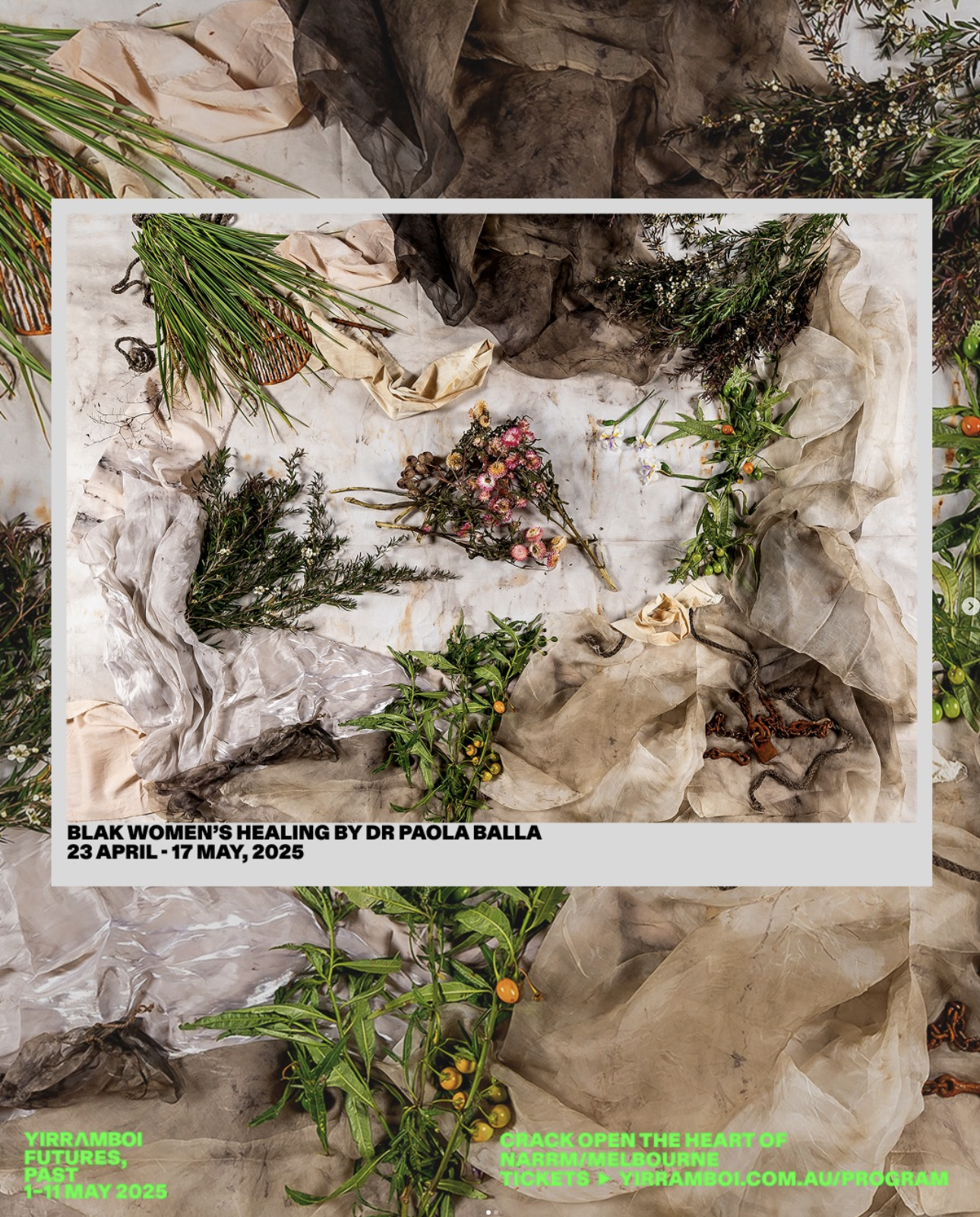
Curated by Wemba-Wemba and Gunditjmara artist Dr Paola Balla, Blak Women's Healing is a new exhibition exploring the expressed and lived experiences of trauma, as well as self-determined desires for justice, peace and wellbeing for Aboriginal women, their children, families and communities.
Taking place as a whole-building takeover at Arts House, visitors will be able to walk through the exhibition and immerse themselves in featured works.
Throughout the four-week exhibition, the mixed-media installation and space will host a suite of communal gatherings including yarning circles, artist talks, live-weaving, workshops and more. Informed by ongoing community research, healing arts practices and cultural collaboration, Blak Women's Healing platforms ongoing injustices alongside a space of unconditional Blak love, softness and respite.
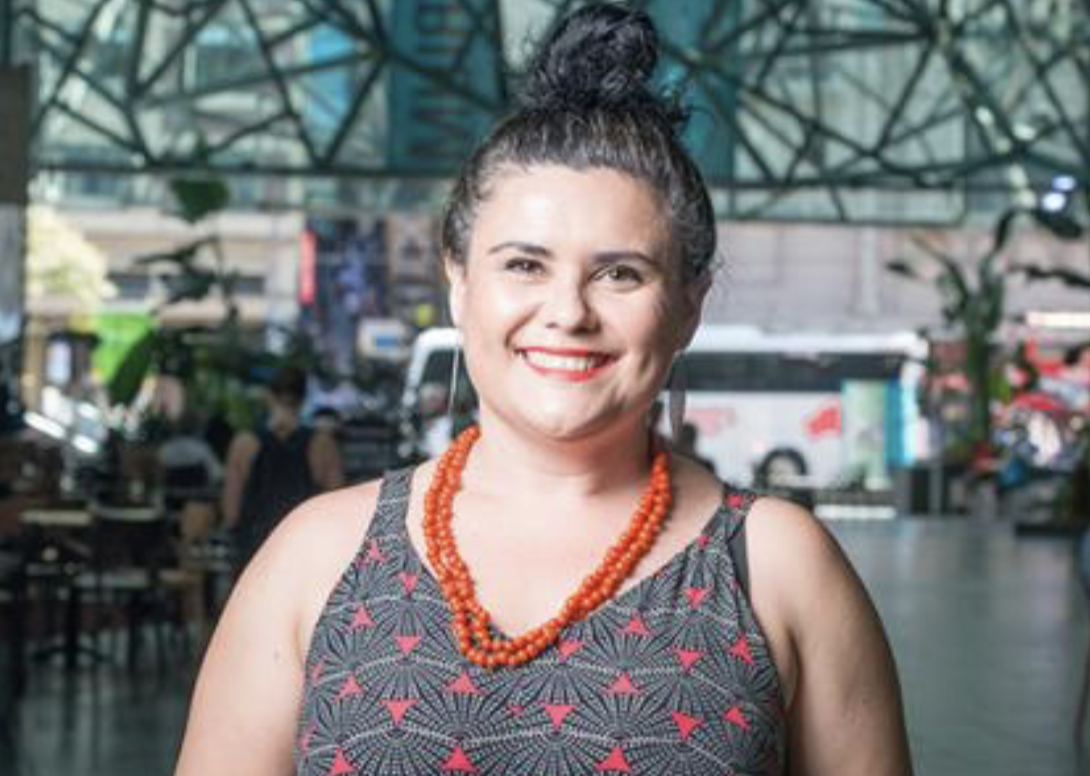
With the centrepiece of Blak Women's Healing being Balla's 2021 work Murrup (ghost) Weaving in Rosie Kuka Lar (Grandmother's Camp), Style Up spoke with the talented curator on how the exhibition came into fruition.
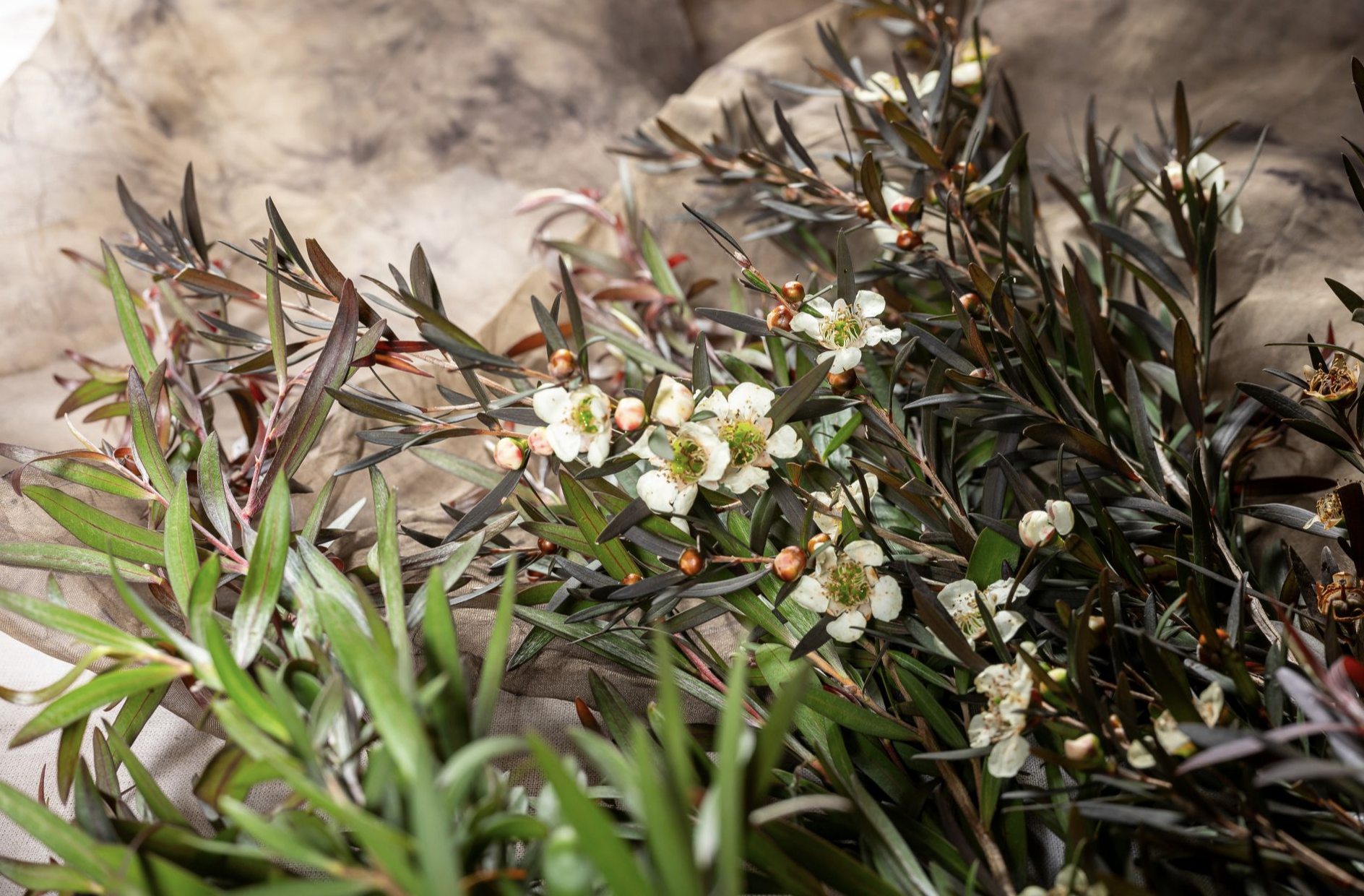
"The exhibition is an outcome of a number of processes and relationships coming together. I completed my PhD about Aboriginal women's resistance in healing in 2020 and in my PhD research, did bush dyeing as a healing and creative practice to bring issues, stories and emotions to the surface, and literally to the surface of the fabric using gum leaves, bush flowers and bush medicine to create beautiful, dyed pieces and patterns that often appear as animals, and spirits in the fabric," she said.
"Artshouse invited me to do a Curatorial Takeover and I accepted and invited the Blak Women's Healing program women participants to see if they would like to be part of a big exhibition-happily, they accepted! This work was developed by myself and the amazing research team from Moondani Balluk Indigenous Academic Centre at Victoria University where I work."
Balla said the women who contributed to the exhbition shared their own lived experiences and personal insights from the Blak Women's Healing program.
"The amazing women who have contributed so much of their lived experiences, knowledge and insights from the Blak Women's Healing program we do at Moondani Balluk, Victoria University and have worked with our research team over the past few years, being interviewed in yarning circles, doing Wayapa practice and bush dyeing to discuss traumas and violence experienced from institutions and harmful experiences with child protection," she said.
"Very importantly, the women also named the changes to policies and practices they want to see happen to reduce harm to Aboriginal families and create better future practices for well-being and justice. Their contributions were shared in workshops impacting policies and practices at DHS and will directly inform a new Social Work unit at Victoria University for 2026.
"We created large bush dyed banners together on site at Artshouse and screen printed the fabrics at SpaceCraft Studio to share our stories and knowledge through text and story about healing and thriving through trauma and violence, that life can be good and we can heal with support and collective care."
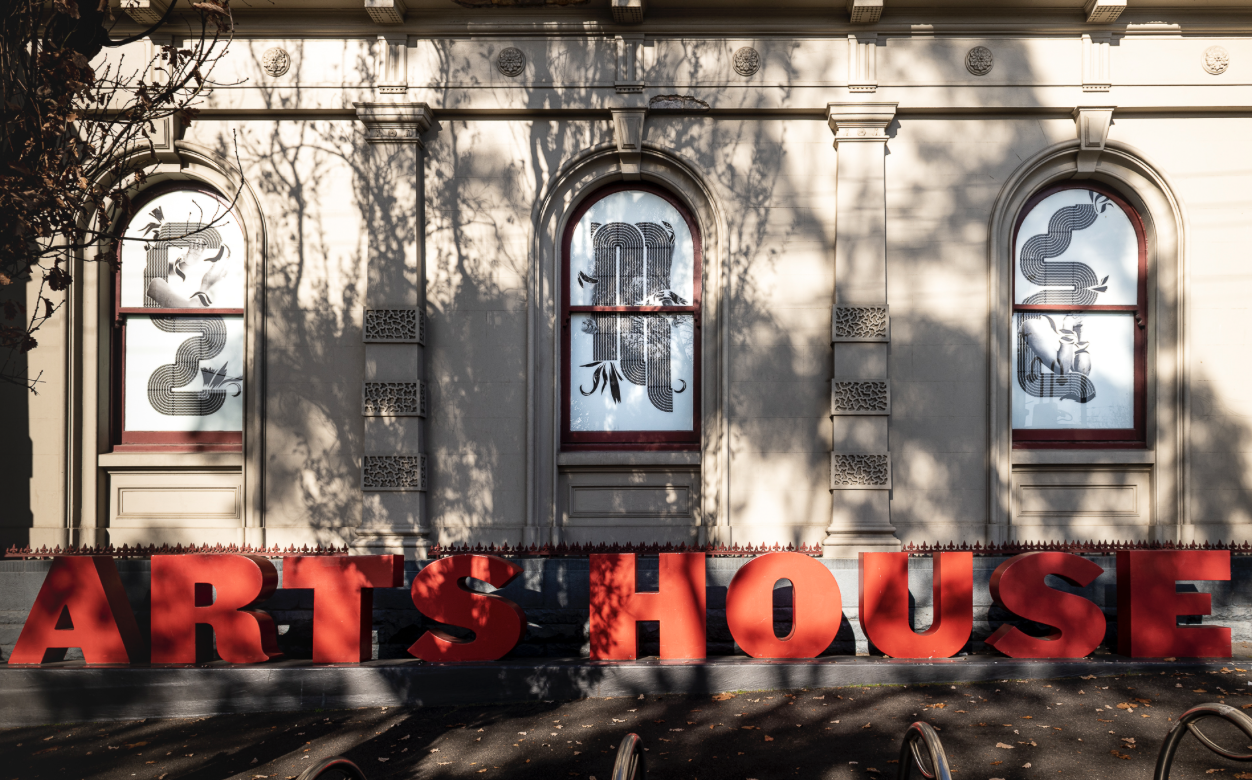
Balla said she would love to see attendees engage with the interactive feature piece of work within the exhibition.
"One of the feature pieces in the exhibition, is a work I was commissioned for originally for Wilam Biik, curated by Wurundjeri curator Stacie Piper in 2021, Murrup (Ghost) Weaving in Rosie Kuka Lar and the installation is fully accessible and is a soft, immersive artwork that visitors can look at from the outside but can also go inside of to look closer at the bush dyed fabrics, smell the eucalyptus and bush flower scent embedded in the fabrics, and take a moment or two to be mindful, peaceful and have a moment of respite," she said
"It is an interactive artwork that you can sit, lay or stand inside of, essentially it is a soft, fabric-based tent. Community that have visited the tent have described it as nostalgic, healing, gentle and reminiscent of the past while giving space to feel present. 'Murrup' means ghost in my language, Wemba-Wemba and 'Kuka' is grandmother and 'lar' means place, the installation also features a four metre wide fabric print of a painting by my late grandmother, Rosie, who the installation is a tribute to.
"The centrepiece is a space to be mindful about healing, and all the works in the exhibition have been made by Aboriginal women who are committed to healing, for themselves and for their families and communities. Some of the bush dyed banners were created with the women's daughters and were created collectively on site at Artshouse."
Balla also invited Mum Margie Tang, Aunty Donna Mitchell, Aunty Denise Morgan-Bulled and Aunty Greta Morgan from Echuca and Kyabram to show some of their weaving and paintings within the exhbition.
"I also invited my matriarchs, Mum Margie Tang, Aunty Donna Mitchell, Aunty Denise Morgan-Bulled and Aunty Greta Morgan from Echuca and Kyabram to show some of their beautiful weaving and paintings in the show as they are my inspiration as artists and community women, my late grandmother Rosie is present through her spirit and art work, and my mother is present as she features in the short film, Mok Mok Murrup Yakuwa, (originally commissioned by Yorta Yorta curator Kimberley Moulton for Shadow Spirit 2023) and Mum and two of my Aunties are showing their beautiful weaving and paintings in the Aunties Lounge," she said.
"It also includes a fantastic film called Apma Dreaming by Dr Kath Travis, an uplifting, heartfelt, and honest film that It shows the possibilities available to First Nations People who embark on the journey of owning their family story. I wanted to bring together my matriarchs, the women I work with and my work in one place telling collective and individual stories of healing together.
"We are acknowledging our collective work, efforts, research, artwork and contributions and that visitors can experience, learn and be immersed in what community research with creative and arts based methods with, by and for Aboriginal community can look like and feel like."
Presented by Arts House and YIRRAMBOI Festival in association with the Moondani Balluk Creative Research Collective, Balla expressed how the collaboration between Arts House, YIRRAMBOI Festival and Balluk Creative Research Collective will also create further opportunities to teach and share First Nations culture to a wider community.
"It's also so wonderful to collaborate between Blak Women's Healing program and YIRRAMBOI and Artshouse, it shows that Aboriginal led festivals, and programs can have such powerful and transformative contributions to our own healing, joy and wellbeing," Balla told Style Up.
"It creates opportunities to teach and share about First Nations cultures to the whole community, for education and for knowledge sharing and to inspire our young people to make art, learn cultural practices and be creative.
"These outcomes and processes can and do inspire and encourage others who are struggling with mental health, trauma and stress from impacts of colonization; racism and violence and demonstrate that healing is possible and things can get better if we are heard, respected and with support, and resources, we can be heard and heal."
Presented by Arts House and YIRRAMBOI Festival in association with the Moondani Balluk Creative Research Collective tickets to Blak Women's Healing are now on sale.
For more fashion, culture, arts and lifestyle news subscribe for free to the Style Up newsletter.



