




A permanent replacement of southern Tasmania's controversial William Crowther statue has been unveiled in Hobart's Franklin Square.
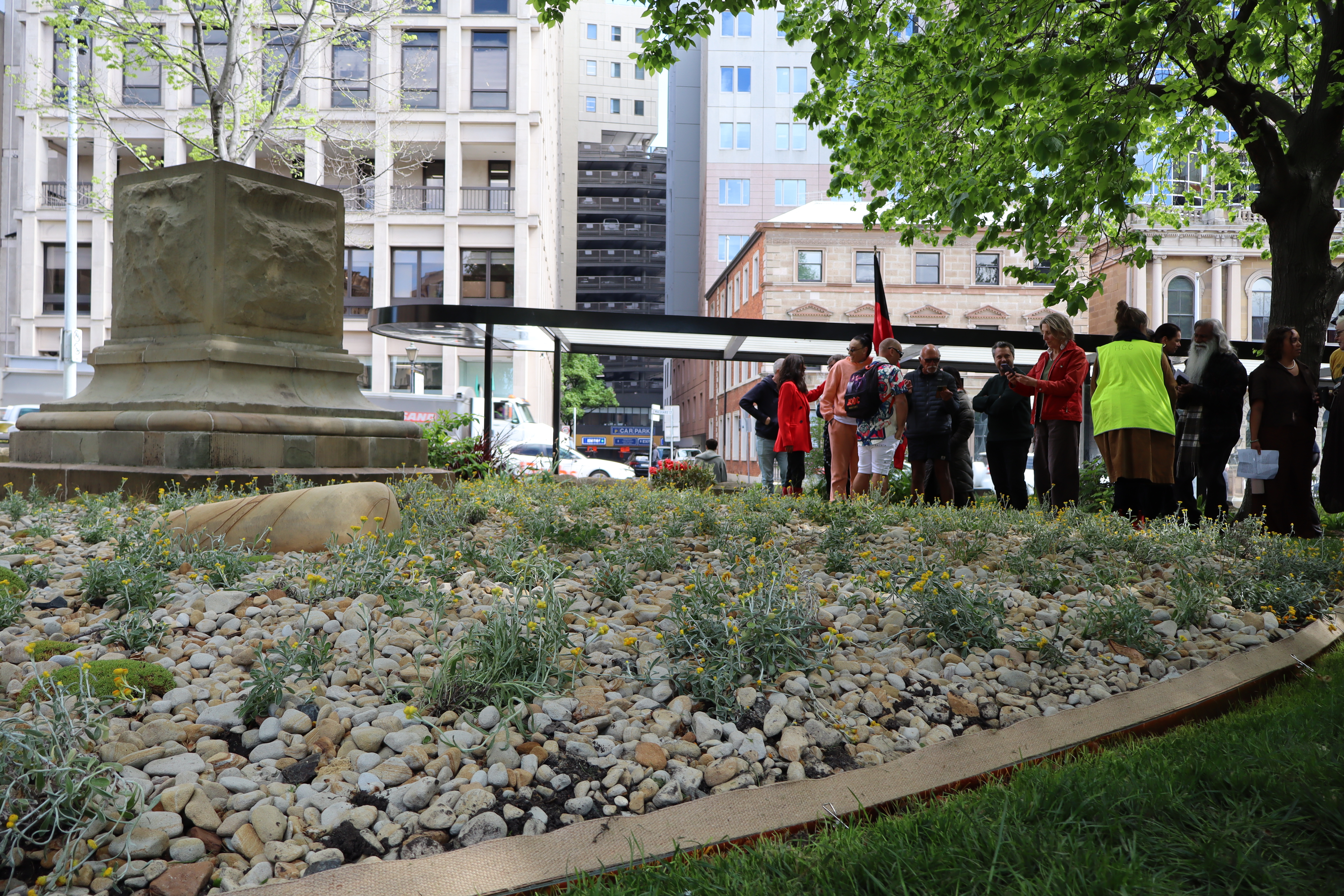
The architectural instillation, which includes a native garden surrounded by a "ring of truth-telling" replaced the statue of Crowther — a surgeon and politician during the 1800s — which was toppled in 2024 shortly before a tribunal upheld a Hobart City Council decision to arrange its removal.
According to most historians, Crowther broke into a Hobart morgue and stole the skull of Aboriginal man William Lanne, who was also known as King Billy, following his death in 1869 for the purpose, Crowther claimed, of scientific examination.
Crowther's actions and the statue — which was erected in 1889, four years after his death — has long distressed Aboriginal people, with calls for the its removal growing louder in recent years.
The Hobart City Council voted to remove the Crowther monument in 2022, with the Crowther Reinterpreted project guiding the process.
After multiple temporary truth-telling artworks were displayed at the statue site over the last five years, Tuesday's ceremony marked the completion of the project's fourth and final stage.
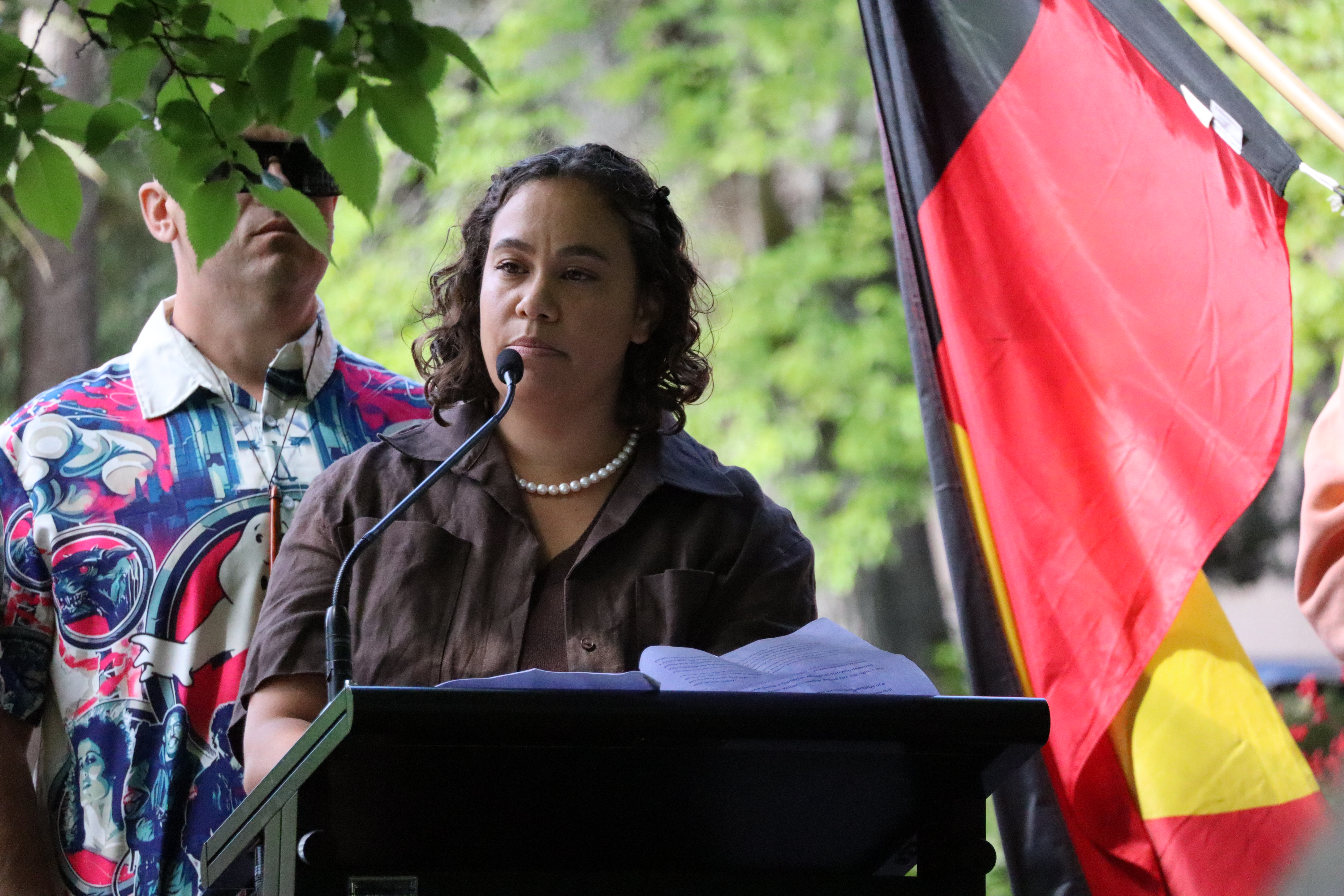
Hobart Lord Mayor Anna Reynolds said the project intended to provide "a more honest and complete understanding of Hobart's history".
"It's not about erasing history, but rather providing even more information, context and a broader range of perspectives that have often been absent from public spaces," she said, The Mercury reports.
"This installation recognises a history that hurt Tasmanian Aboriginal people and culture. It also creates a place for reflection, discussion and truth-telling in the heart of Hobart."
Replacing the monument is a native garden and a circle of bronze around the vacant plinth which once held the statue.
Nunami Sculthorpe-Green, who has Tasmanian Aboriginal and Warlpiri heritage, was one of three writers who contributed to the ring's inscription along with history writer Alison Alexander and arts writer Andrew Harper.
Ms Sculthorpe-Green wrote about William Lanne and life for Aboriginal people in Tasmania during the 1800s.
She said the project provided her with an opportunity to "centre the humanity" of Lanne within the story.
"It's not about changing our history, it's about widening the narrative of what's included in our history," she said, the ABC reports.
"This marks a great first step on how cities and spaces can be more inclusive of their own history and of Indigenous people that live in these spaces still."
The architectural installation was designed by local firm Taylor & Hinds Architects.
Architect Matt Hinds said the bronze ring was in reference to the material of the original Crowther statue, and to Lanne's work on whaling ships, on which bronze was an essential material.
"It's been repurposed as a ring of truth-telling, effectively like a halo of light, and the three narratives run in that," Mr Hinds said," the ABC reports.
"What it requires is that people walk in a circular way, almost meditatively, around the perimeter of the garden and take in the messaging of what's been written."
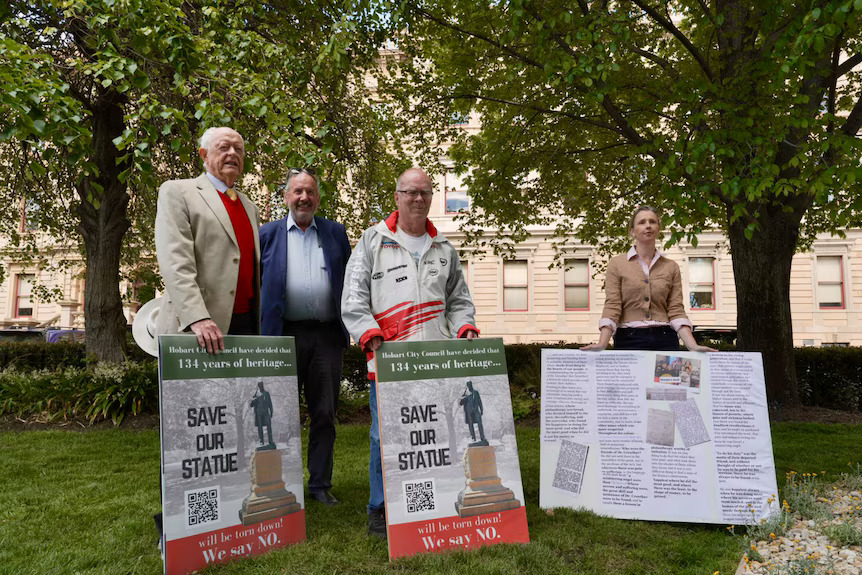
In addition to the dozens of attendees at Tuesday's unveiling ceremony, a small group of protesters held signs in opposition to the project.
They included Hobart councillor Louise Elliot, who said she did not support the "erasure of history".
"Dr Crowther was a really good person, he was loved by thousands across Tasmania ... and I think it's wrong his memory has been used as an outlet for anger," Cr Elliot said.



