



Aboriginal and Torres Islander readers are advised that this article contains the names and images of people who have died, used with the permission of their family.
Indigenous leaders and other community members around Australia have been paying their respects to Arnhem Land Elders Mr and Mrs T and C Yumbulul, following their deaths in September.
They leave an extraordinary legacy for the artistic world and beyond.
Mrs Yumbulul migrated from Italy with her family as a child, later moving as a young woman to Galiwin'ku / Elcho Island, off the coast of Arnhem Land.
She married Mr T Yumbulul, who became a world-renowned artist and played a key role in standing up for the rights of Indigenous artists.
"Terry and Clely were both strong-willed people who were very firm in their beliefs," family members said in a statement to National Indigenous Times.
"Clely was fierce, steadfast and elegant. Terry was witty and often used humour to navigate a conversation. But when something really mattered, he would go very quiet, as if he were looking deep into your soul, finding your truth.
"They came from opposite sides of the world. Terry was born on Marchinbar Island in the Wessel Islands, and Clely was born in Trieste, Italy. Neither gave up their own world for the other. Terry stayed proudly Warramiri and Clely stayed proudly Triestina, and together they found a way to live in both."
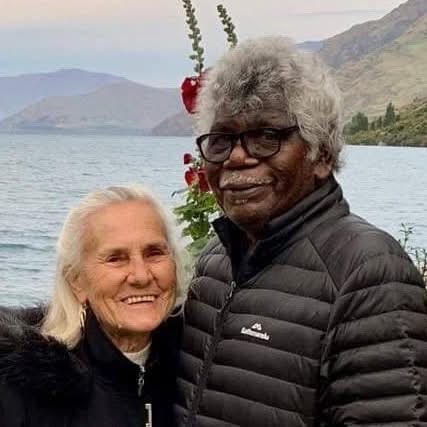
The family noted that wherever Terry was, Clely wasn't far away.
"If you wanted to meet with him, as people often did, you came into their family home, and Clely would host. Their door was always open to family, community and anyone who needed help," they said.
"Behind his public life, Terry worked in the background, spending hours on the phone and in conversation with all kinds of people. He coordinated ceremonies, advised on business and mediated family disputes. He shared stories of Arnhem Land and, more importantly, of the Wessels, and in quiet conversations he educated people about the Yolŋu and Warramiri world and worldview."
Vince Wangurra, a family member, said of Terry: "I witnessed no equal to him."
"I heard stories of my grandfather from the old people and can only imagine he also commanded this level of authority and respect as well," Mr Wangurra said.
He worked tirelessly, the family noted, "believing that you earn your keep".
"He was proud, and I think that pride came from knowing exactly who he was: the Warramiri chief of the Wessel Islands, a title given to him by his father, philosopher and diplomat David Burrumarra MBE. That pride was something they shared.
"In the earlier years they were active in the community, often present at community meetings, and they travelled to meet and exchange with other mobs from around the country. They both had a very clear idea of how the world should be. They fought for it and advocated for it, and they established, built and founded the programs, committees and organisations to carry out that vision."
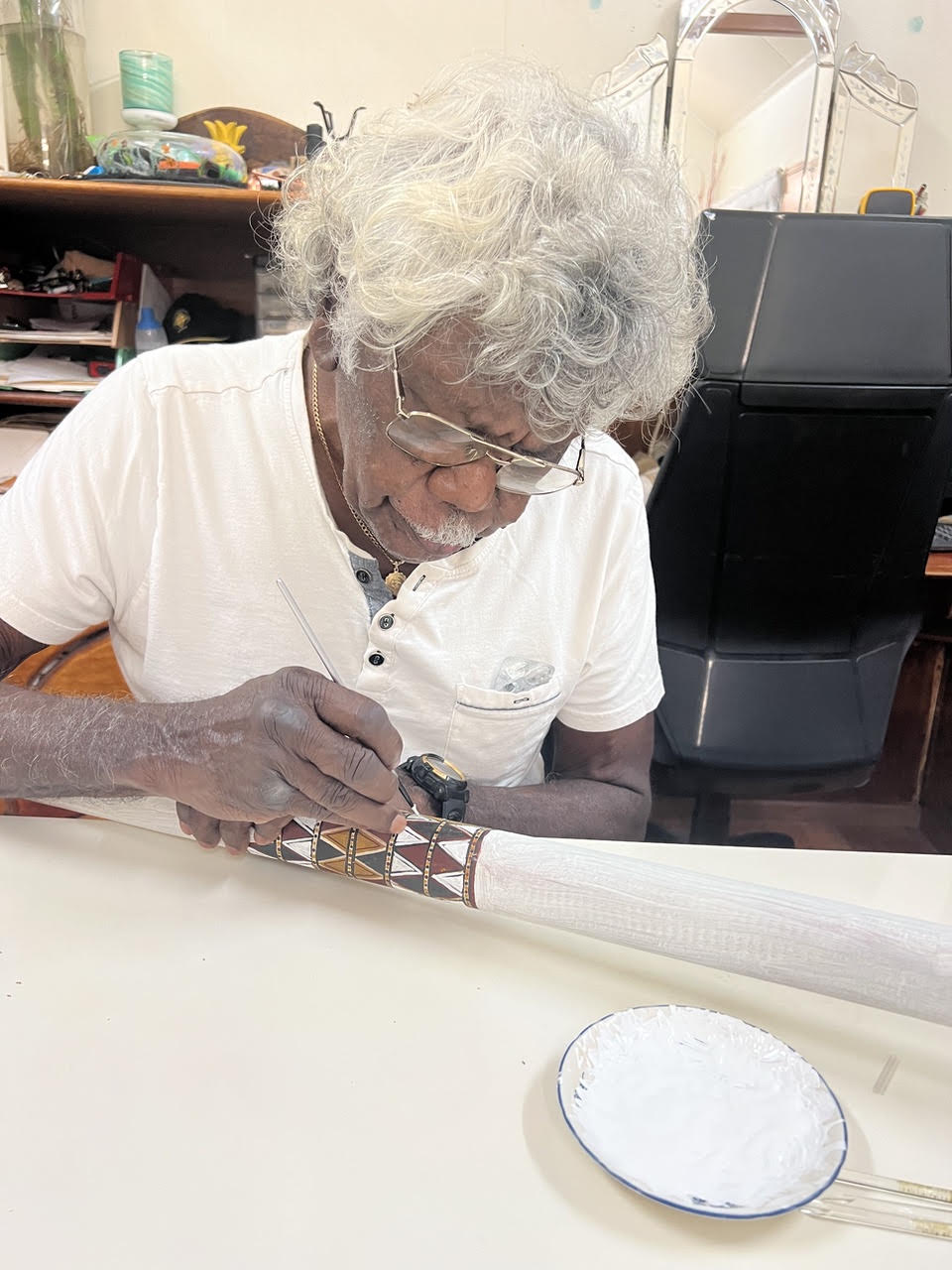
The family noted that art held a profound significance in Mr Yumbulul's life.
"For Terry, art was never decoration. It was Country, law, story and ceremony, and it carried responsibility. His work was exhibited across Australia, the United States and Europe. He took Warramiri stories and ancestral knowledge far beyond East Arnhem Land, across bark, canvas, sculpture and ceremonial poles," they said.
"Following in his father's footsteps, Terry utilised his art and his culture as an invitation for reconciliation. David Burrumarra believed Yolŋu people could walk confidently in both worlds, and Terry carried that belief forward. His art invited people to come to know us, to respect us and to meet us on equal ground. You can still see that invitation at Bondi Pavilion, on the other side of the country."
In 1983, Mr Yumbulul created a floor mosaic there at the pavilion with local artists. When the Pavilion was set to be restored, he went to see it himself and called Waverley Council to raise his concerns.
"The mosaic was kept as part of the building's heritage. Even decades later, he stood up for his work and what it carried," the family noted.
"What made his impact lasting was the purpose behind it. His whole life was about education and recognition. Through his art, people outside the Yolŋu world could come to understand it, on Yolŋu terms. Clely travelled with him to those exhibitions, and she was often the intermediary between Terry, his art and culture, and the audiences. Terry carried the knowledge, and Clely helped people understand it, without that knowledge ever leaving where it belonged."
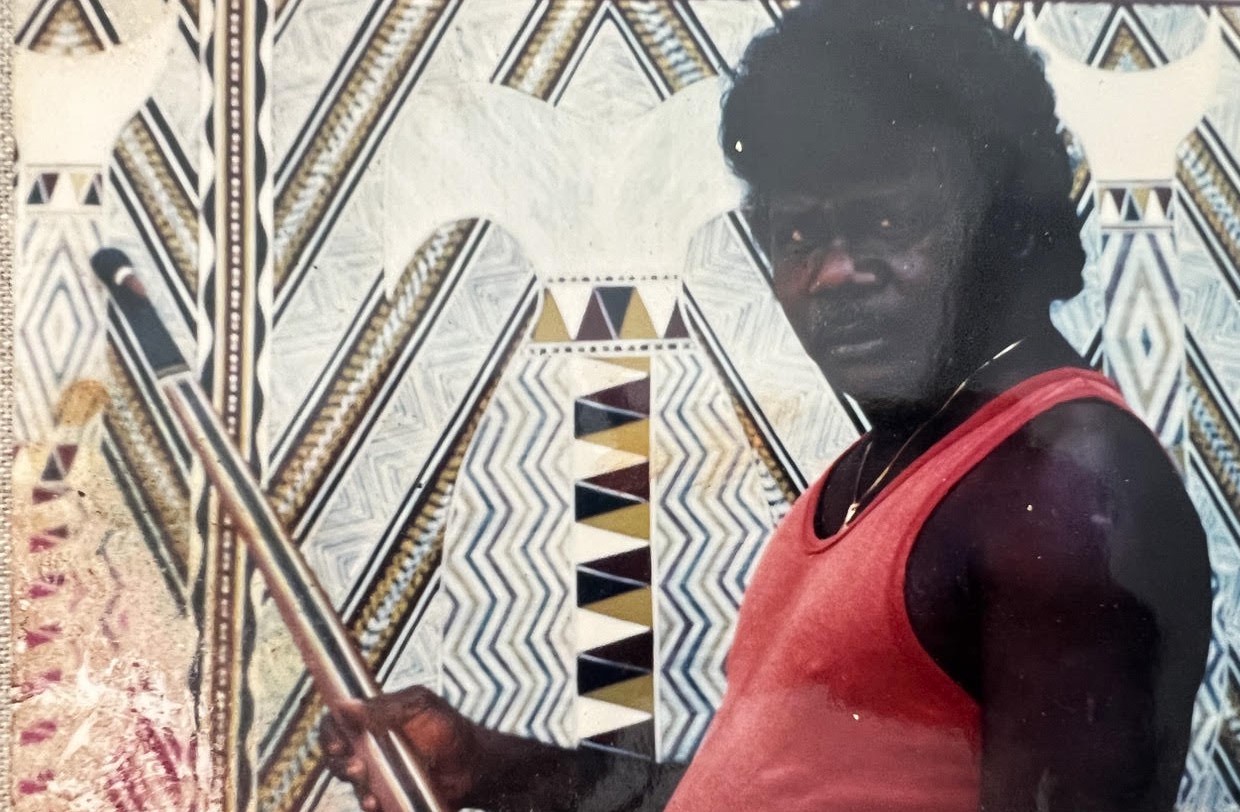
In 1988 the Reserve Bank of Australia used one of Mr Yumbulul's artworks - without permission - on a special edition $10 note commemorating 200 years of European "settlement" in Australia.
The image depicted the sacred morning star poles, which Professor Marcia Langton notes were "only seen at ceremonies".
While Mr Yumbulul's legal action against the Reserve Bank was ultimately unsuccessful, the judge's comments set a new legal precedent.
"The Reserve Bank case put Terry at the centre of a national conversation about who owns culture," his family told National Indigenous Times.
"On one side was the Western idea of individual copyright. On the other was the Yolŋu understanding of collective ownership, responsibility and authority.
"That conversation mattered for every Aboriginal artist who came after him. It challenged the assumption that our designs and stories are there for anyone to use. And it made space for a much broader recognition of Indigenous cultural and intellectual property."
They noted that Terry's authority "never came from a court or a gallery".
"It came from his family, from ceremony, from the people who taught him, and from Country. The case was one more place where he stood up for that," they said.
Dr Terri Janke, a leading authority on Indigenous cultural and intellectual property, shared the following tribute.
"Terry Yumbulul was a trailblazer. A Yolngu Warramiri man, and a world renown artist. He who stood up for his culture. In 1988, his sacred Morning Star Pole was reproduced on the Reserve Bank's $10 bicentenary note. Its use on money was not respectful of his culture, and he took a copyright action in the Federal Court," Dr Janke said.
"These were the early days of Indigenous copyright law, when its implications for culture were not widely understood by Aboriginal artists or the broader creative community. His case was a landmark case that helped set change in motion. It exposed the gap between copyright law and Aboriginal customary law.
"I read about his case in my final year of law school. It gave me focus and courage to work in Indigenous arts and copyright law. I have often referred to and written about his case, including in my book True Tracks. I am saddened by his passing, but I will always remember his courage and lasting legacy."
Mr and Mrs Yumbulul also made a massive and enduring contribution to public health in their community.
"Their work in health spanned decades and took many forms. In Galiwin'ku, they helped establish the community night patrol, and they patrolled together. Terry also served as Town Clerk there, during a time of enormous change," their family noted.
"At Miwatj, Terry was part of the executive team and was instrumental in the negotiations to regionalise its health services. For a time, there was also a clinic in Darwin so that Yolŋu in transit could access health care in their own language. He advocated for the health and wellbeing of Yolŋu people right across East Arnhem, and Clely was right beside him, working in the local clinic and transporting patients."
Mr and Mrs Yumbulul were both founding members of Mikan, established in 2017 as the Mikan Child Protection Reference Group.
Mikan brought Yolŋu Elders and senior community members together to work alongside the child protection system, one of the first groups of its kind in the region.
Mr Yumbulul saw that "culture and kinship needed to stand alongside a child within the child protection system, and be present throughout a child's life".
Through Mikan they worked on kinship care models, so that caring for Yolŋu children's wellbeing would never cost them their cultural identity.
They also worked tirelessly to protect the environment and cultural heritage, two things they saw as strongly connected.
"For Terry, cultural heritage meant land and sea as much as story and ceremony. He worked on Manbuyga ga Rulyapa, a sea country management framework that went on to inform the work of the Dhimurru rangers, the Blue Mud Bay case and the Marthakal rangers. On the Marthakal board he kept advocating for sea rights and Yolŋu self-determination. On the Dilak council he upheld his authority as a senior Warramiri chief," the family said.
Later in life, Mr and Mrs Yumbulul established their home on Wigram Island.
"For Terry, returning to island and sea Country carried deep meaning. He was a saltwater man, and he knew Country can't be cared for from a distance. You have to be present on Country to care for its spirituality, to keep its stories, songs and responsibilities alive. Wigram Island was where they lived that belief," the family said.
"Sea rights were also about Yolŋu people building an economy from our own waters. Terry and Clely were both founding members of Garrngirr Aboriginal Corporation, one of the earlier ventures in East Arnhem around aquaculture and Yolŋu people operating fishing licences. Terry negotiated pearling ventures on Warramiri Country. He maintained relationships with politicians, business owners, CEOs and cultural leaders, so that Yolŋu people had a seat at the table when decisions about our sea Country were made.
"He also advised on the Past Masters expeditions. Together, Terry and Clely worked with historians and researchers looking into early contact across the Wessel Islands. They didn't simply let people come in and interpret Country however they liked. They stayed part of the process and kept Traditional Owner authority at the centre."
While Mr Yumbulul's exhibitions and art "put him front and centre", much of the other work and advocacy they did together happened out of the spotlight, the family told National Indigenous Times.
"People may not know the origins of what we see in our communities today. Dig a little deeper, though, and you'll likely find both of them there.
"Everything they did, whichever way you look at it, was done with the greater good in mind. Whether it was art, health, sea Country or community, the principle was the same. Yolŋu people should have a voice over our own affairs, culture should be respected, and Traditional Owners should never be outsiders in decisions about our own land, sea and communities.
"Their goal was never fame or notoriety. It was simply what was right, and at its core it was always about genuine acknowledgement and respect.
"The biggest lesson they leave us is to fight for what you believe is right, and to be fearless in its pursuit. They didn't wait for permission. What they built lives on in their family, in the organisations they founded, in the rangers caring for sea Country and in the children growing up connected to their kin. It is now up to us to carry that forward with the same courage and conviction."



