




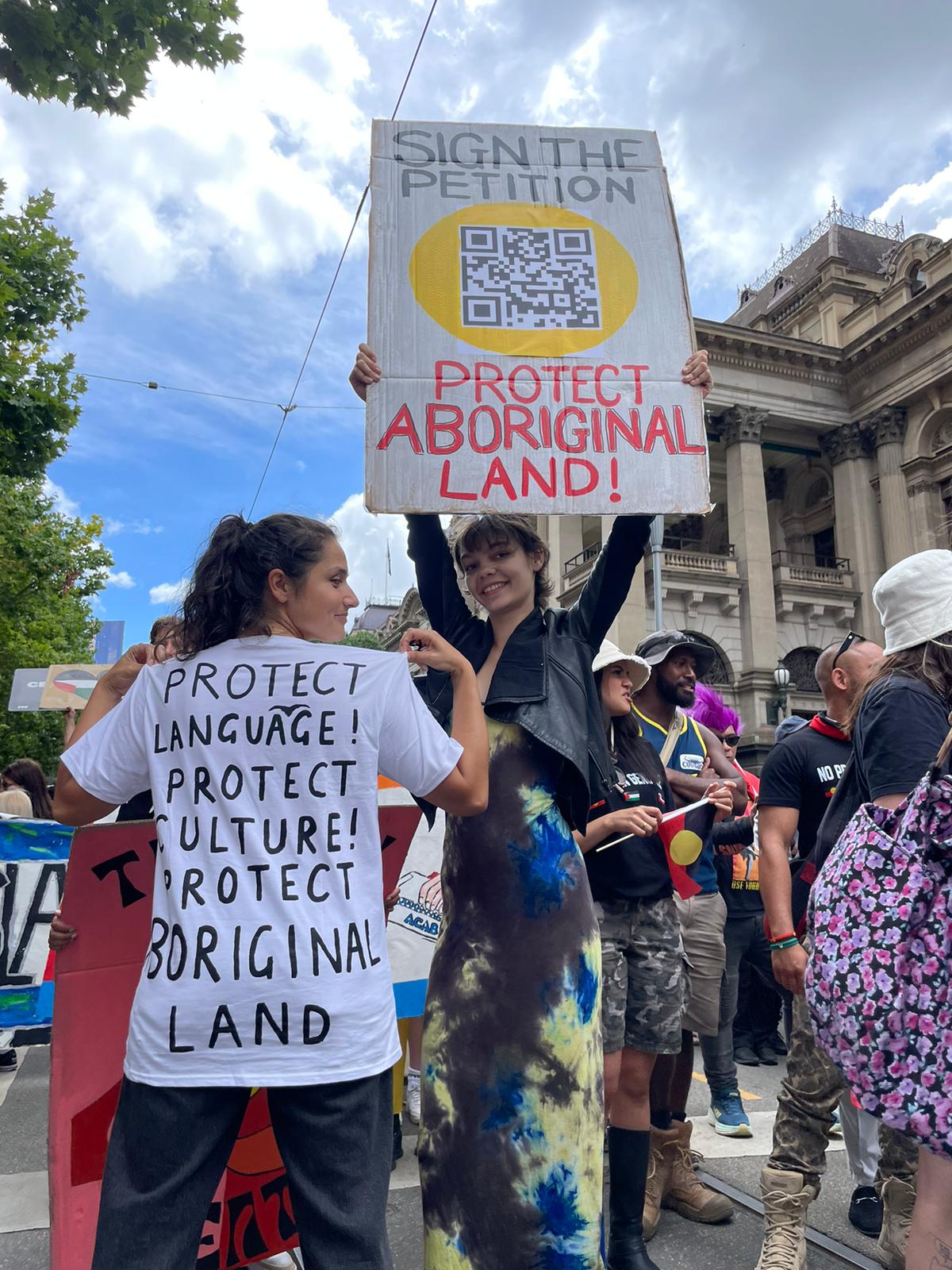
A Larrakia local has started a petition to return Lee Point back to the Larrakia people, as locals wait to see if their efforts to stop a Defence Housing Australia (DHA) project will be successful.
Laniyuk, who grew up on Larrakia country in Darwin, and has a "long standing relationship with lee Point," said the campaign was about the "continuation of Larrakia people".
"This campaign means a lot to me personally," Laniyuk said.
"What this campaign is about for me; it's about language, it's about culture, it's about family…Without that land and without being able to rest easily knowing that the land is safe; we stand to lose quite a lot.
"Even in the time that we've been spending at Lee Point; recording videos and interviewing family…there's such an abundance of culture in the landscape. We have our native foods, we have our weaving materials, we have memories".
In July last year, DHA said works - which would create 800 new dwellings for defence personnel - would be paused until March 31, 2024. The controversial development at Binybara - as it is known to its traditional owners - is set to bulldoze more than 100 hectares of rainforest.
In response to questions from National Indigenous Times concerning an update on the development plans, the DHA referred to a statement on their website from August, 2023 which reiterated the "voluntarily" pause of proceedings until the end of March.
"We will be using this time to work with relevant Government agencies and respond to the application regarding Aboriginal cultural heritage at the site," the statement said
Community members began protesting, blockading the site and calling for protection for resident native species, including endangered Gouldian finches. Last year, Environment Minister Tanya Plibersek approved the project, despite acknowledging there would be "significant" impact to the Gouldian finch.
"We can say that X amount of birds were saved or X amount of trees were saved, but we're talking about the privatisation of Aboriginal land," Laniyuk said.
"We're talking about ceremonial locations; we're talking about blocking off Larrakia people from being able to access our ancestral lands to enact our lore and maintain our family connection through ceremony."
https://www.tiktok.com/@natindigtimes/video/7327899118678969608
The Larrakia Nation Aboriginal Corporation withdrew their support for the project in July 2023, citing concerns raised by Elders regarding the project's impact on areas of cultural significance, having previously provided a letter of support in 2021.
"Recently, important, and prominent Elders of our Nation, Aunty Lorraine Williams, Uncle Tibby Quall and Uncle Eric Fejo, raised concern regarding the project, identifying significant areas of cultural heritage on the site," Larrakia Nation said in a statement last year.
Laniyuk says the campaign is about ensuring that Larrakia children and their descendants will be able to "engage with their land, their ancestors, their culture and their language forever."
"Sitting with family there, it means so much more than just tees and bush. It means connection to each other, it means connection to our ancestors," she said. "It means the future of our language and our people."
"We're talking about ceremonial locations; we're talking about blocking off Larrakia people from being able to access our ancestral lands to enact our lore and maintain our family connection through ceremony."
Laniyuk told National Indigenous Times Lee Point is a small example of the broader implications of how Indigenous land is 'valued.'
"There are a lot of things that are coming to a head when we're talking about Lee Point," she said.
"There's a disconnect and understanding of what the value of land is: The government is seeing money and we're seeing future."
Furthermore, at the core is a housing project not designed for the people of Darwin, but for workers who have arrived for work. During a rental crisis which has made Darwin expensive for residents, Laniyuk argues this only creates further exacerbation.
"Families are being pushed further away from resources and from the centre," she said.
"What Defence Housing Australia is wanting to do at Lee Point does not benefit Darwin or the people of Darwin at all. It benefits an elite population; people that have money and upholds the militarisation of Darwin in general".
"It brings into question who Darwin is being built for."



