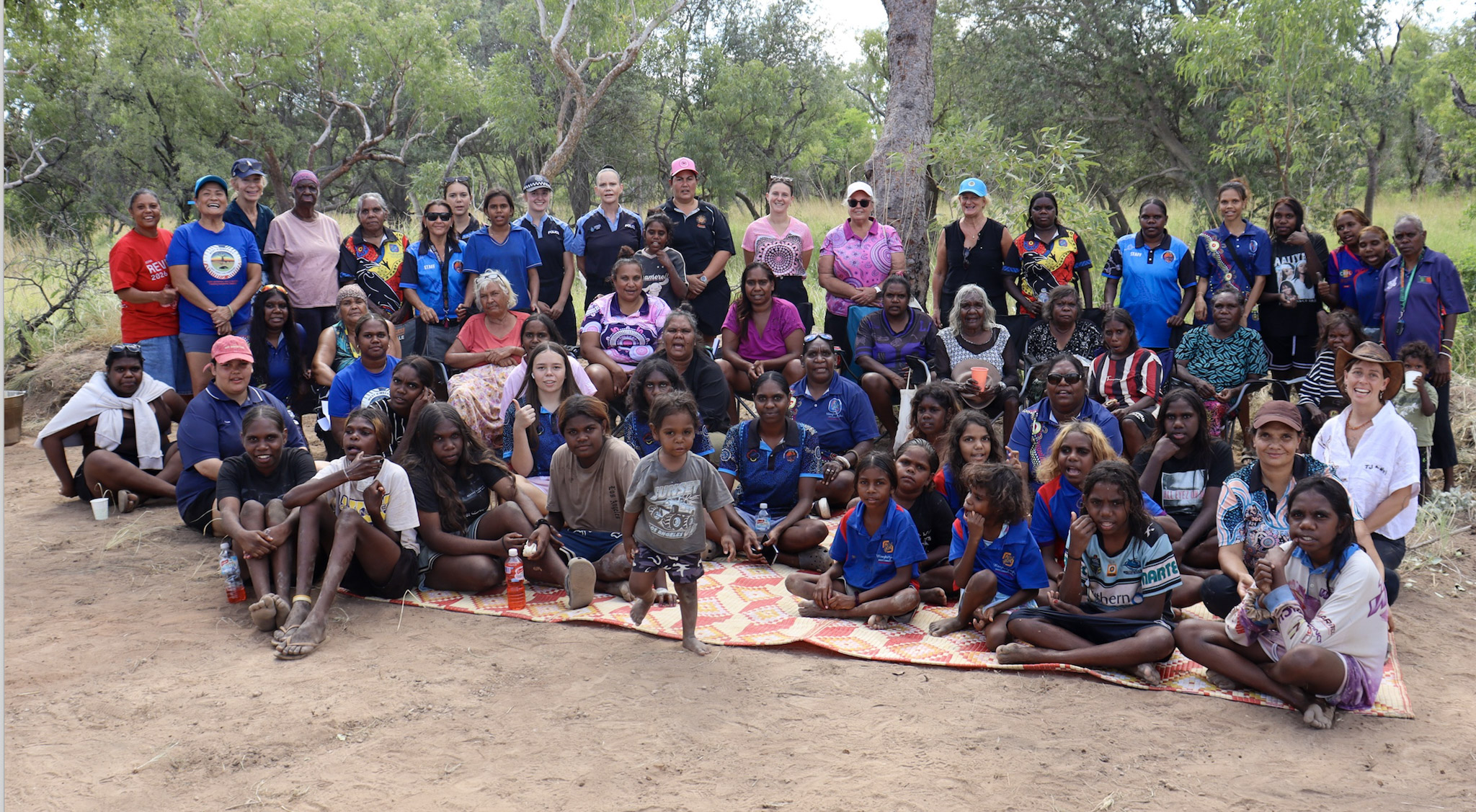

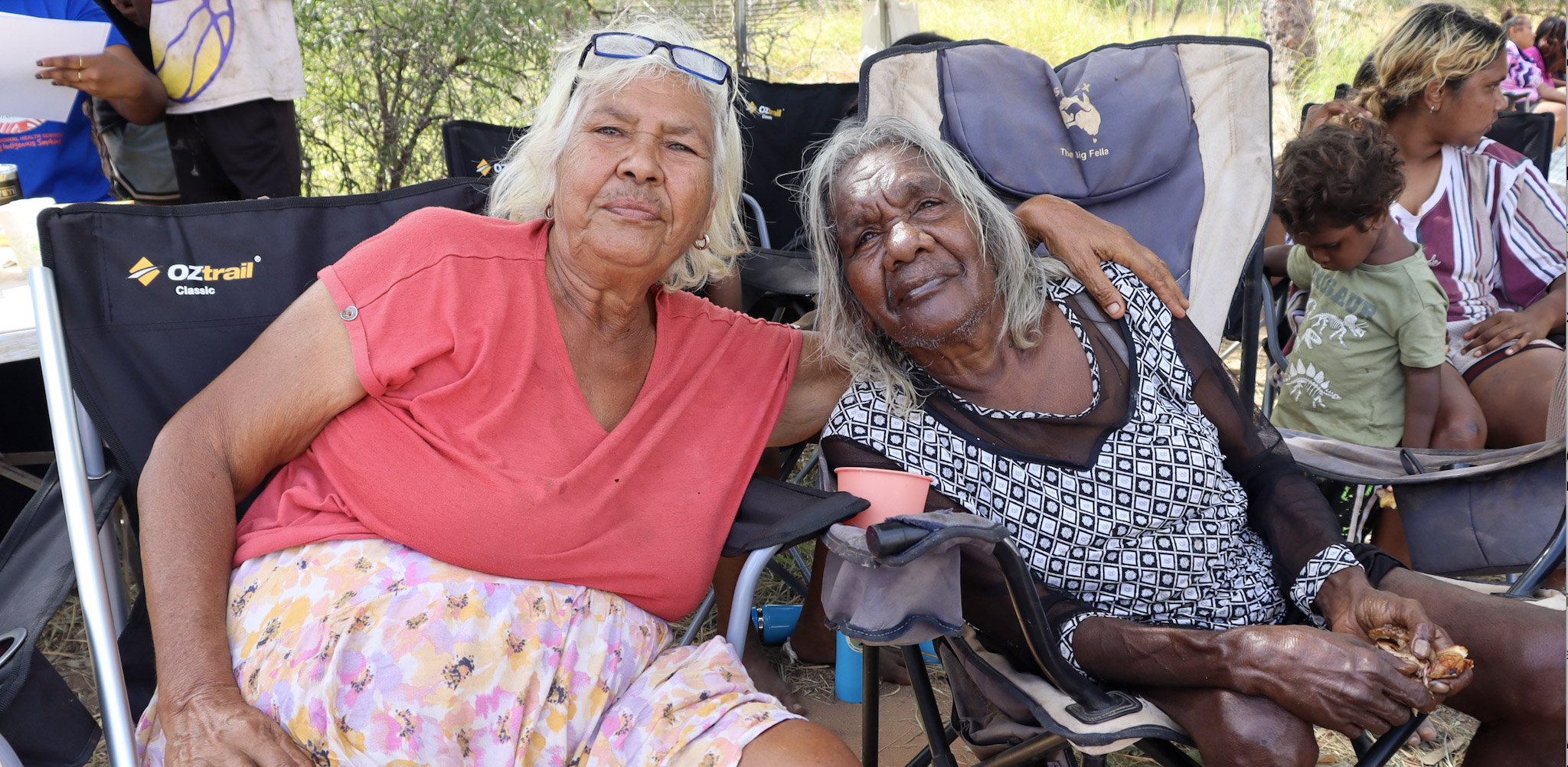
Walmajarri woman Lorraine Yungabun scans the bushland around her, where women and girls have gathered at an Aboriginal women's camp in northern Western Australia.
Shrubs, plants and trees grow thick, fed by a nearby spring.
But in the dense bush, Ms Yungabun says each plant carries its own meaning.
She and other elder women at the Kimberley Aboriginal Law and Culture Centre (KALACC) camp in the Ngumpun community, outside Fitzroy Crossing, are passing bush medicine knowledge down to the next generation.
Ms Yungabun points to a slender vine, its fine green leaves sparkling in the light. Her mother — a Walmajarri woman who preserved the language by speaking only Walmajarri to her children — taught her to chew it for toothaches.
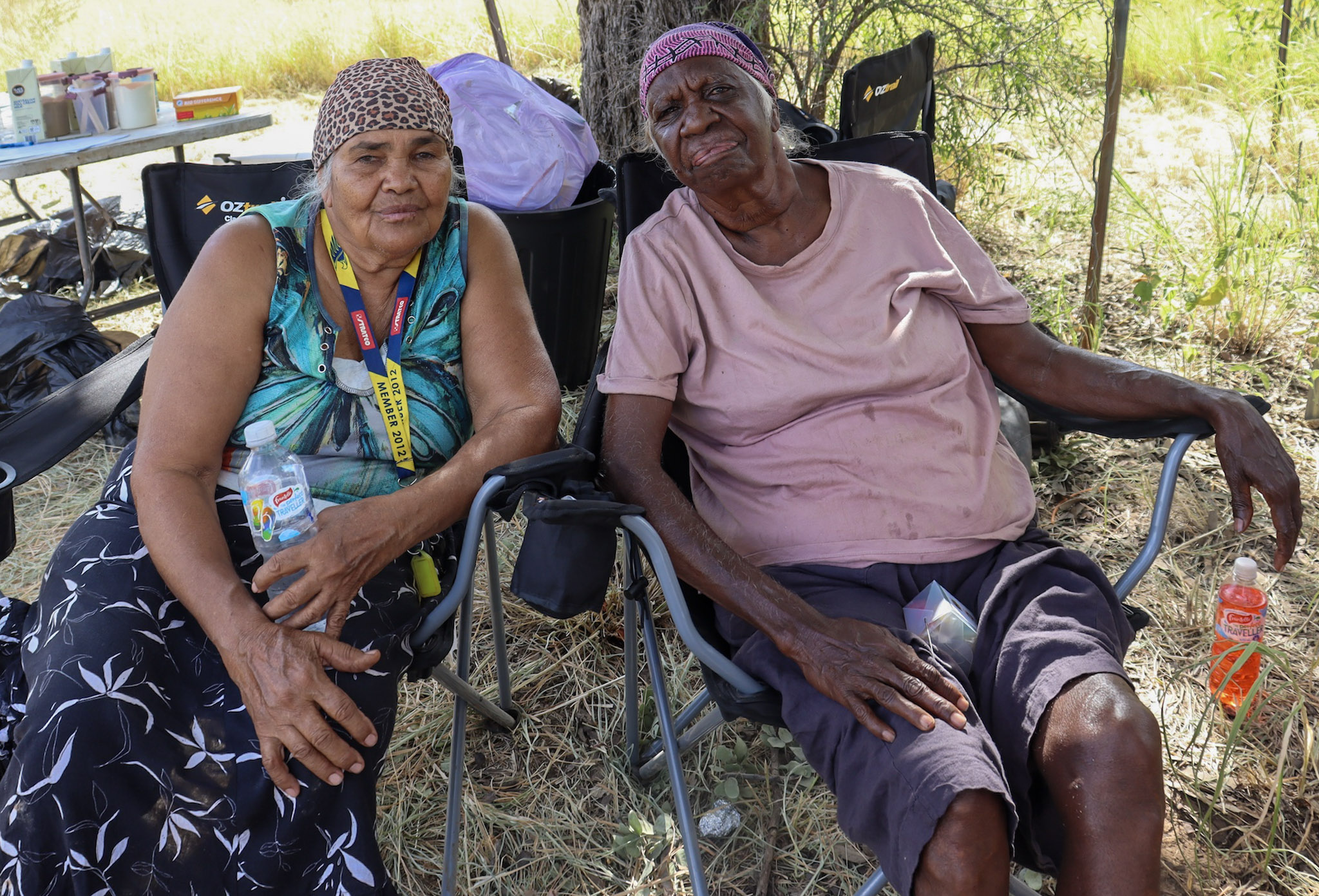
"She cut all the roots from it and gave it to me to chew — it healed my toothache," Ms Yungabun said.
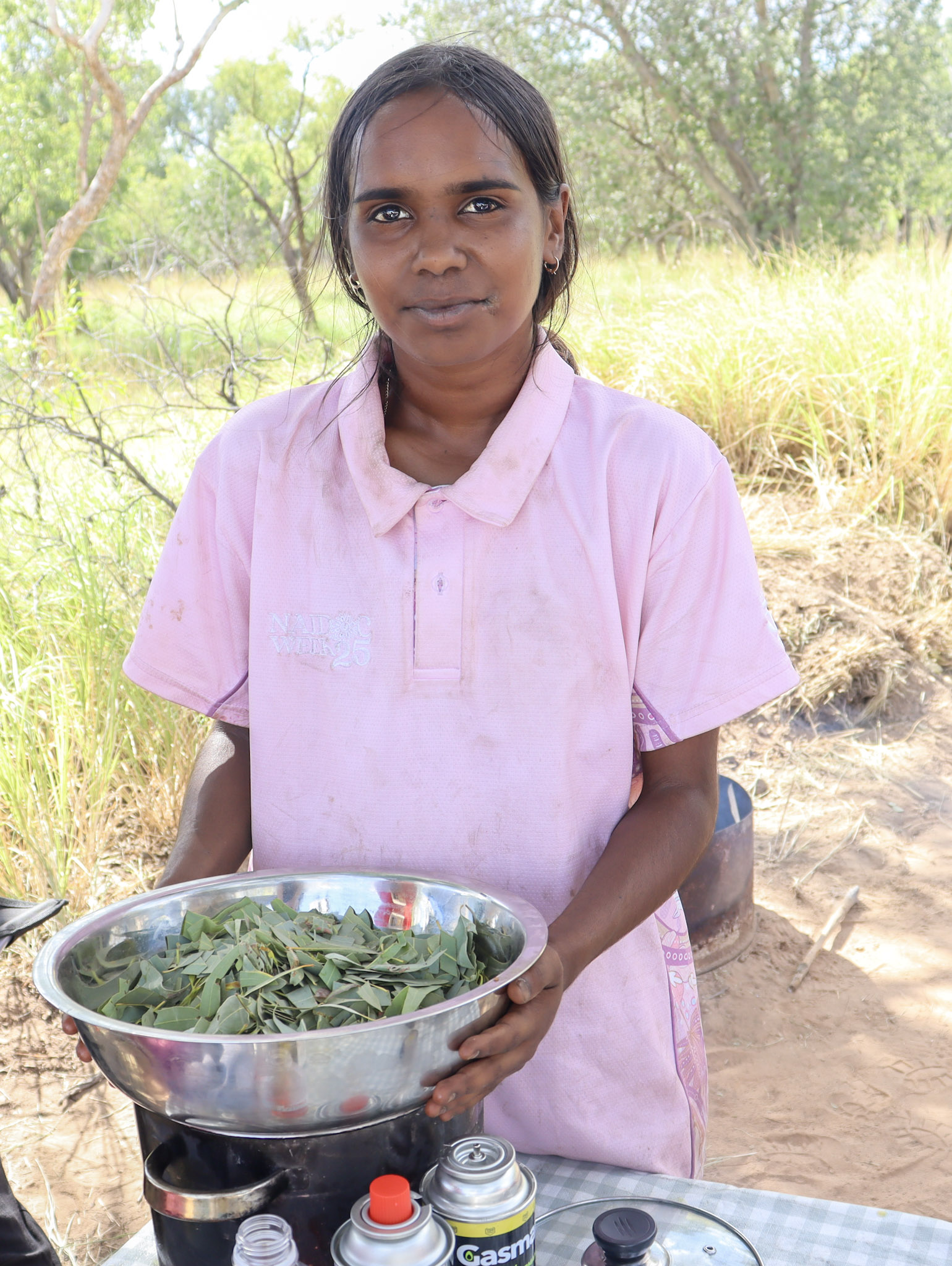
Since sunrise, elders have been collecting bush medicine ahead of the arrival of busloads of students travelling from across the region to take part in the workshops.
"We collected the bush medicine from Ngumpan cliffs, we collected purripun and Lumpi Lumpi. We also went to Six Mile Creek and collected Jirparri and Yarpinlyi," Walmajarri woman Hazel Hobbs said.
"We are going to boil it and prepare it and show the girls how we use the bush medicine."
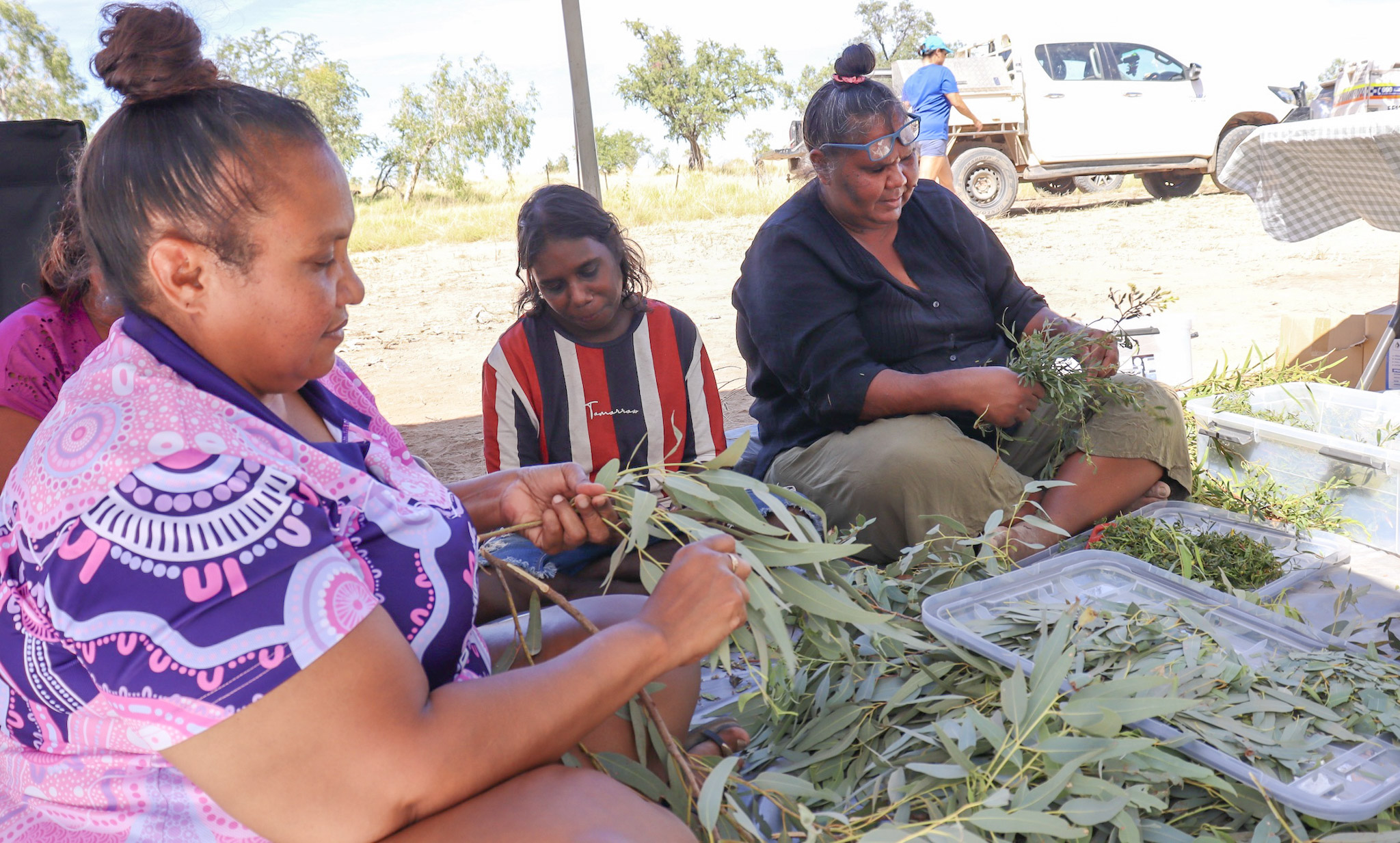
As the boiling, stirring and blending begin, young girls watch carefully as the plants are transformed into a medicinal liquid.
The liquid is poured into jars, and everyone at the camp can take some home.
"I just really like seeing how it's made," a six-year-old girl from nearby Wangkatjungka Primary School says.
She takes her jar and skips off to another tent, where a different workshop is underway.
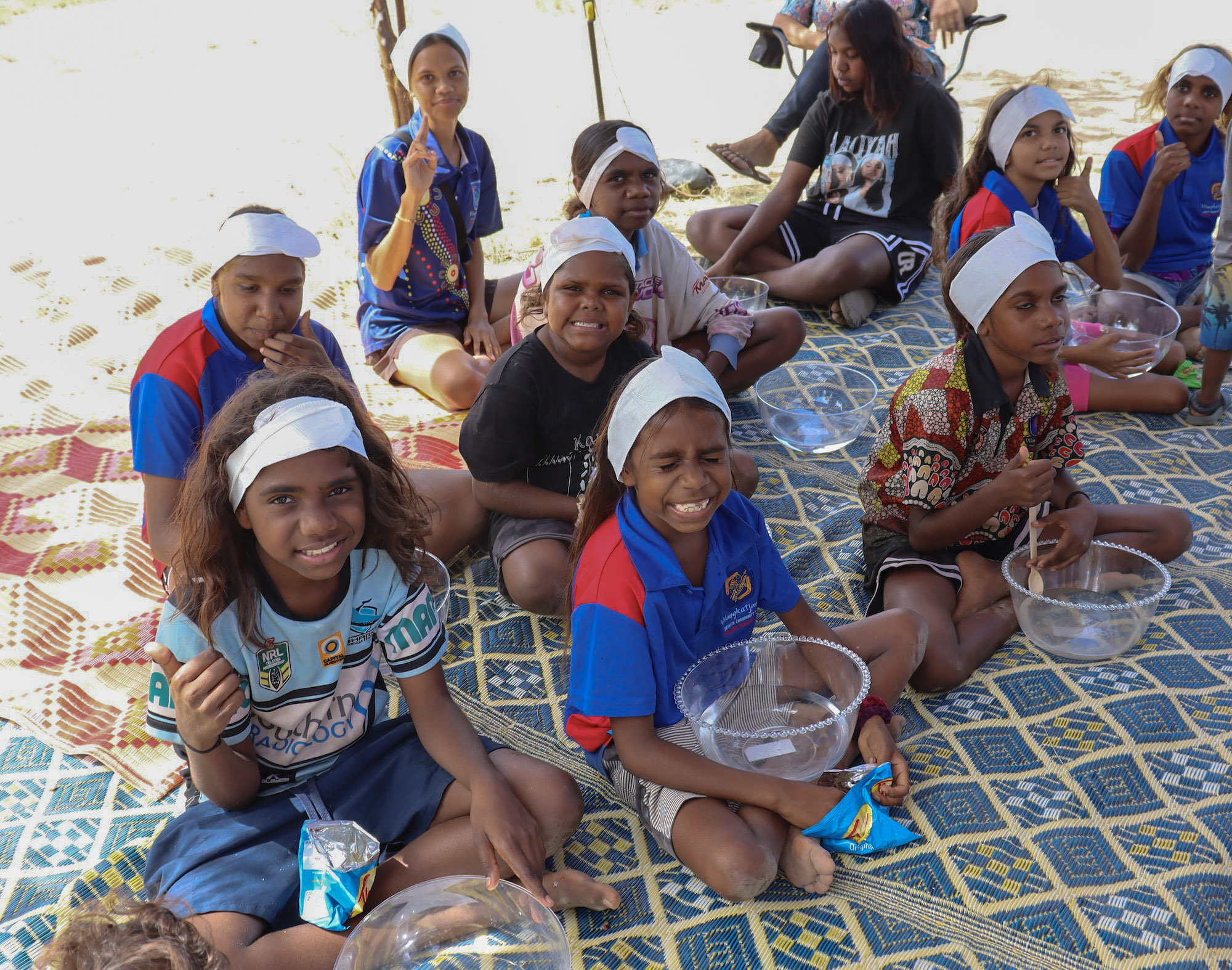
Sitting among girls aged 3 to 18, she is handed a bedazzled bowl.
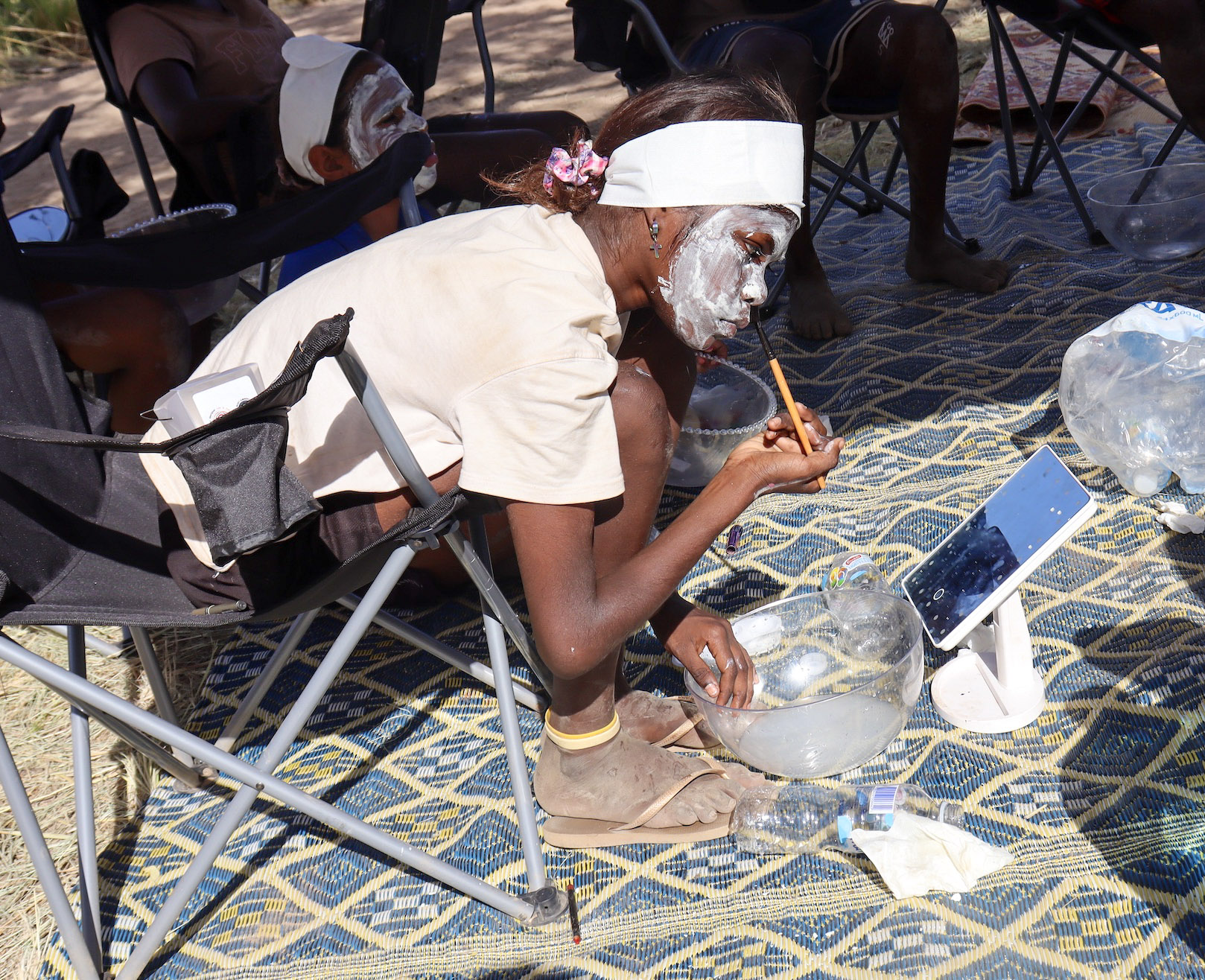
The girls are taking part in a skincare workshop as part of the camp's self-care program.
Face masks, cleansers, toners and moisturisers are applied, as older women speak about the significance of self-care and confidence.
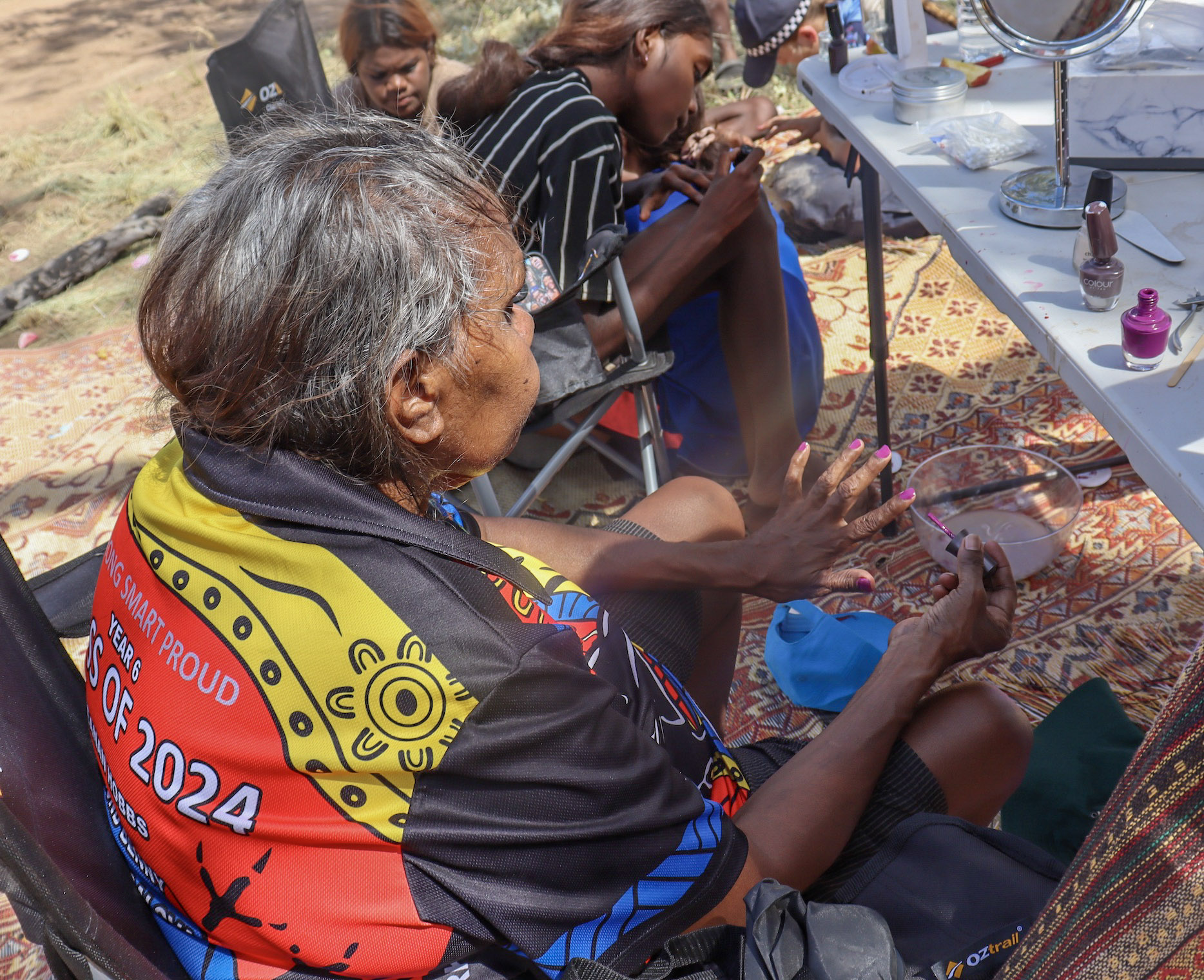
Nearby, below a canopy of gum trees, others gather at a nail-painting station.
Jeneaqua, 10, from Fitzroy Crossing, says the camp has a calming effect.
"I just like being here with the girls, being able to have a yarn and do our nails," she said.
"It's fun here."
But while the camp is grounded in Country, culture and care, it is also creating space for conversations about the realities facing women and girls in the Fitzroy Valley.
According to WA Police data, the Kimberley has recorded 2,413 family assaults so far in 2025-26 — nearly 13 times the rate in Perth, about five times the regional WA rate, and close to 10 times the statewide average.
Local Fitzroy Crossing policewomen Alyssa White and Charmaine Randall joined the camp to connect with the community and speak with young girls on consent, coercive control and domestic violence.
The local police force has sponsored the camp.
The policewomen outline the early signs of coercive control, reinforcing that girls do not have to accept that behaviour, and how it can develop into family violence.
"It's important young girls understand that family violence isn't just physical," Ms Randall said.
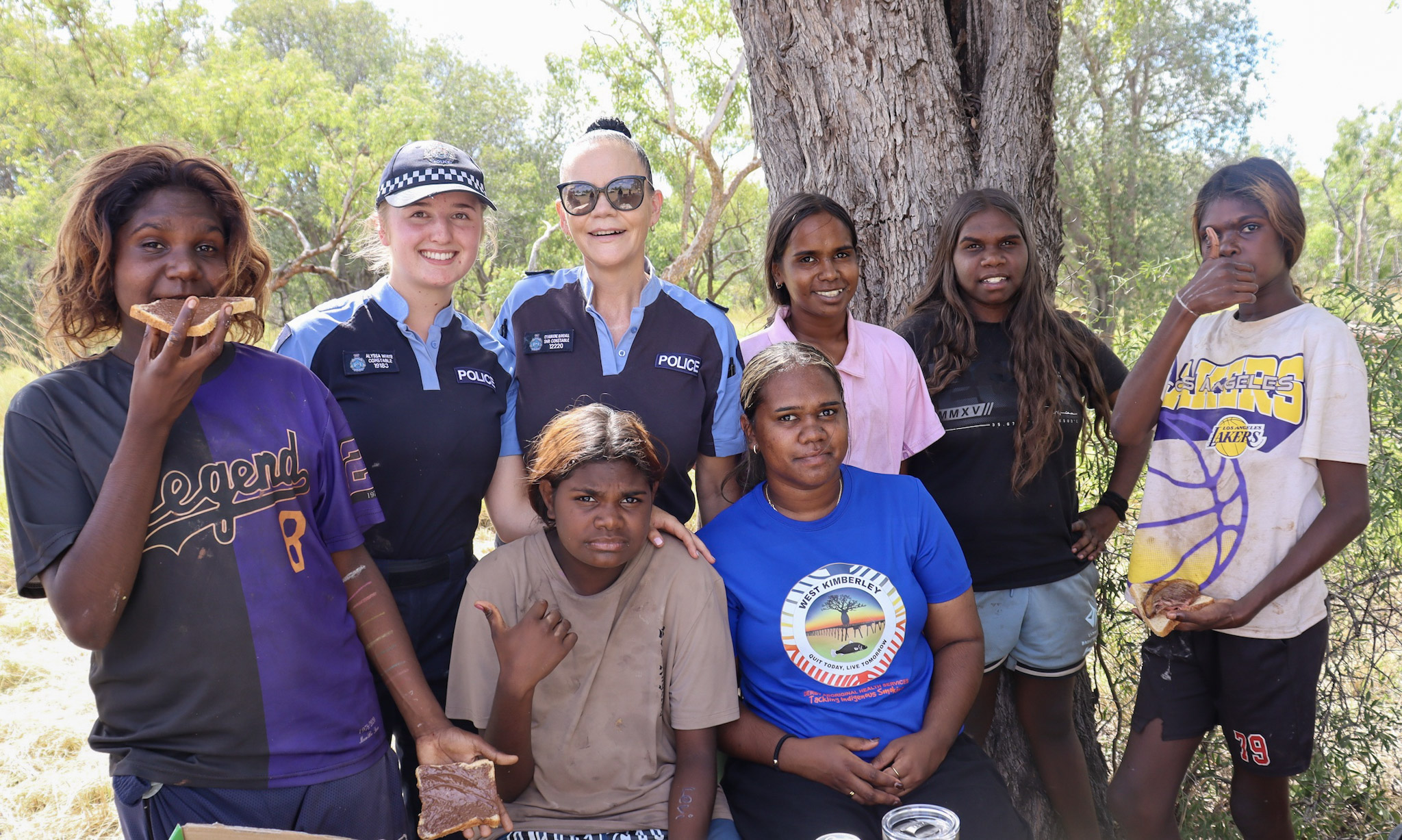
"It is also the coercive control and the mental abuse."
As the session ended, the officers left the girls with a final message.
"If something is happening to you that you feel uncomfortable about, you can come and see us women at the station — you know where to find us," Ms White said.
Women begin packing up cooking gear as the blue skies above the camp are becoming drenched in streaks of coral, a hallmark of the Fitzroy Valley - signalling the afternoon slipping into night.
Elders gather around the campfire, as girls can be heard giggling in their tents.