



The United Nations has "expressed concern" over the blocking of two bills calling for a ban on the shackling of women during childbirth and the strip-searching of children.
Earlier this month, a Senate inquiry recommended rejecting a private member's bill — introduced by Senator Lidia Thorpe — to ban the shackling of women during childbirth.
A second bill to ban the strip-searching of children under the age of 18 was also blocked by both major parties before it could go to a vote in the Senate.
View this post on Instagram
In a statement overnight, two UN experts said it was "disappointing" that Parliament could not ultimately decide on "reforms aimed at protecting the dignity, bodily integrity and rights of women and children deprived of liberty".
Reem Alsalem, the Special Rapporteur on violence against women and girls, and Ashwini K.P., the Special Rapporteur on contemporary forms of racism, racial discrimination, xenophobia and related intolerance, said the bills "reflected well-established international human rights standards" and came in response to "concerns that have been repeatedly raised" by human rights and legal groups.
Passing the two bills would have brought Australian law closer to internationally recognised standards, they said.
Both noted shackling and strip-searching disproportionately affect First Nations people because of their over-representation in the criminal justice system, as well as the intersecting effects of discrimination and intergenerational trauma.
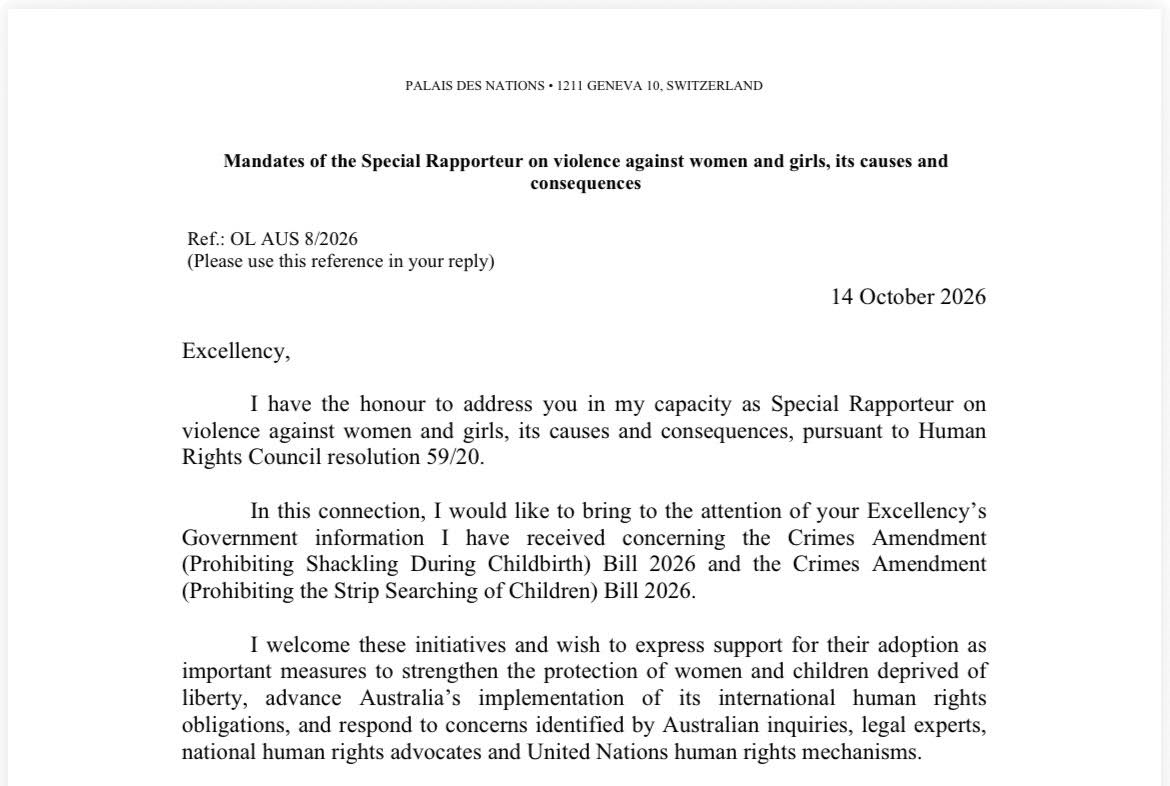
Ms Alsalem wrote to the Australian government on October 14, saying the "harmful" practice of shackling is "particularly severe for women in custody, many of whom have experienced domestic or sexual violence, coercive control, childhood abuse, trafficking, or other forms of gender-based violence".
On strip-searching, she argued it "constitutes one of the most intrusive forms of State interference with a child's physical and psychological safety and well-being as well as dignity and privacy", which can "inflict significant psychological harm and may amount to a form of institutional trauma".
Senator Thorpe's bill received support from the Greens, members of the crossbench and Liberal Senator Paul Scarr, who told the Senate he was "deeply concerned" about the practice of shackling, having only recently learned that it occurred across the country.
He noted Australia and all UN General Assembly members unanimously adopted the Bangkok Rules in 2010, which state shackling pregnant women during hospital transfers, gynaecological examinations and childbirth breaches international standards.
"What I've heard deeply concerns me and I do hope, that this vote shouldn't be an end to this matter," Senator Scarr said this month. "We've got to do better than this and we've got to look at ways this issue can be addressed."
In rejecting the bill, the Government argued responsibility for the criminal justice system rests predominantly with state and territory governments, while the Coalition said that, although it "understands the intent" of the bill, it would not support it either.
At the time, Senator Thorpe said the government consistently handballed issues it considered difficult to the states. "The Commonwealth has clear constitutional powers to establish national minimum standards to protect children and people in custody," she said, arguing it was a political, not legal choice.
View this post on Instagram
A post shared by National Indigenous Times (@natindigtimes)
Last week, National Indigenous Times reported on the case of a 16-year-old Noongar mother who was shackled to a hospital bed after allegedly being taken "from her home without a top on and handled roughly by police", while earlier this month, Guardian Australia reported on an incarcerated pregnant Indigenous woman in Queensland who was allegedly shackled to a hospital bed while in labour.
At Senate Estimates on Monday, Greens leader David Shoebridge said the Attorney-General's Department putting the issue of shackling under the Department of Health's portfolio was an "extraordinary avoidance of responsibility".
"The shackles, the handcuffs, are not put on by health officials," he said. "In fact, it's my understanding that the shackling of women while they're giving birth is almost universally opposed by health officials, by the nurses, the doctors, anyone in that room."
In their statement overnight, the UN experts said the failure of the bills to pass should not mark the end of efforts to address the issues.
"We encourage Australian authorities and parliamentarians to continue pursuing reforms that prohibit shackling during childbirth and protect children from invasive strip-searching practices," they said.



