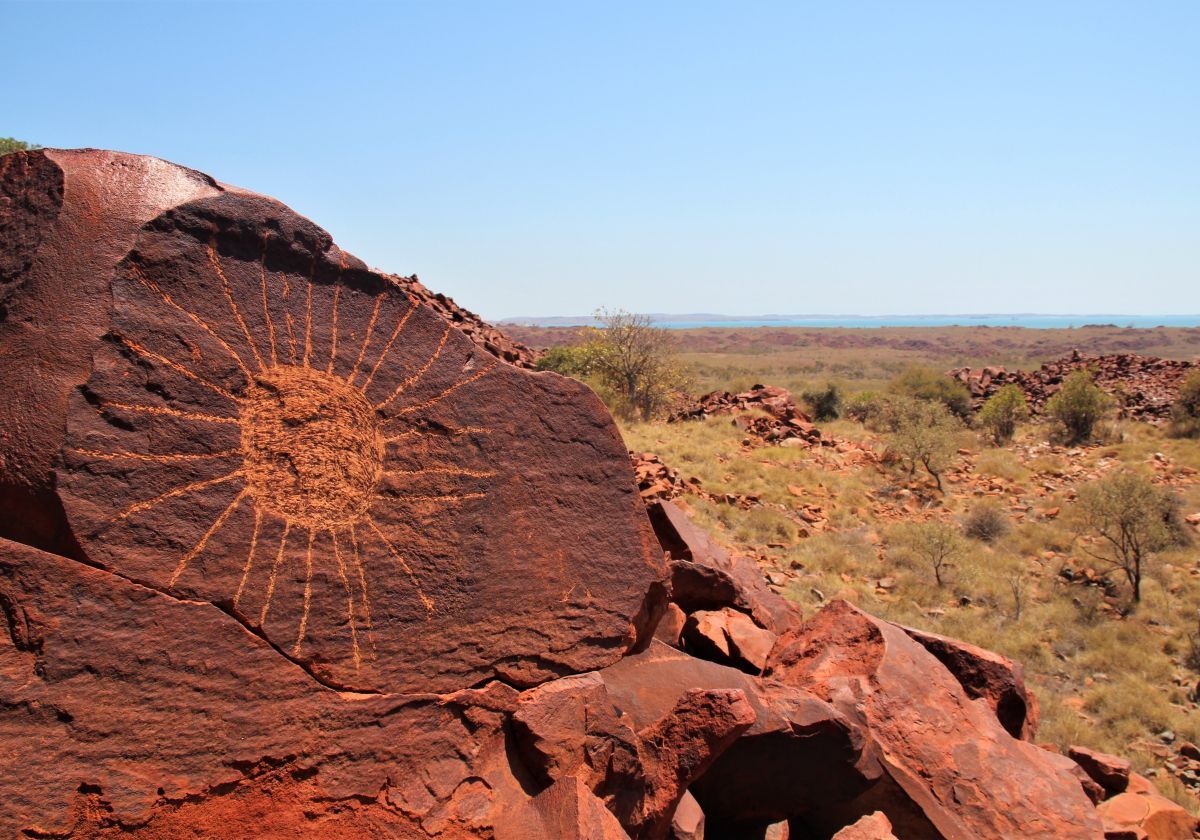
The WA Government released the third-year report from the Murujuga Rock Art Monitoring Program on Wednesday.
The government said latest report "reaffirms that current emissions from industry and mining activity are not impacting the rock art beyond natural rates of weathering and are not causing acid rain", with monitored gases "generally" remaining below the environmental criteria developed through the program.
However, WA Environment Minister Matthew Swinbourn conceded the study identified "a larger area of porosity" in the rock art site than reported in the previous year's report. He said the findings indicate "this is most likely due to historic emissions, rather than current".
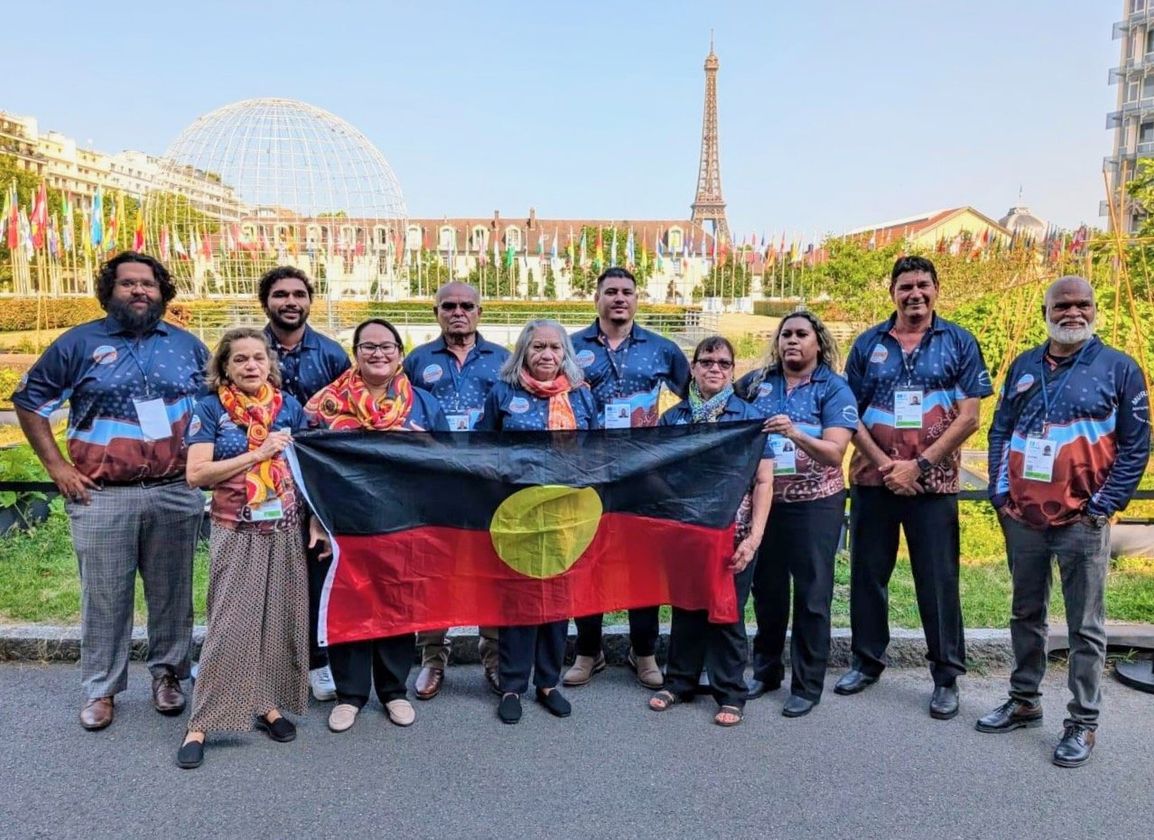
The Murujuga Rock Art Monitoring Program (MRAMP) was established to guide future protection of the Murujuga Cultural Landscape, an area of immense cultural and spiritual significance that was recognised for its Outstanding Universal Value on the UNESCO World Heritage List in July.
The Program is a partnership led by the Murujuga Aboriginal Corporation and WA's Department of Water and Environmental Regulation, with scientific work undertaken by Curtin University.
Over the past three years, there have been more than 186,000 measurements of rock art condition, more than 5,500 surface electrochemical tests and laboratory analysis of 87 rock samples. Over the final year, further studies and investigations will be undertaken to refine the environmental criteria that will ensure ongoing protection of the rock art. This will provide a scientific basis for long-term monitoring and management in future decades.
The full Year 3 Report and a Public Summary prepared by Curtin University are available online at Program: Murujuga Rock Art | Western Australian Government.
Murujuga Aboriginal Corporation director and cultural adviser Belinda Churnside said protecting Murujuga's cultural heritage "remains our highest priority".
"This latest report provides further confidence that the monitoring program is building the evidence needed to support the long-term protection of our rock art and cultural landscape," she said.
"As Traditional Owners and Custodians, we know that protecting Murujuga requires both cultural knowledge and robust science. These findings are an important step forward in helping us better understand the landscape and ensure it is protected for future generations.
"World Heritage recognition brings new responsibilities for all of us. MAC will continue working with government, industry, scientists, and our Elders to ensure Murujuga's outstanding cultural values are protected and cared for long into the future."
Minister Swinbourn claimed the latest report from the Murujuga Rock Art Monitoring Program "reinforces the findings from previous years that found no measurable impact on the Murujuga Rock Art from current industry and mining emissions".
"Curtin University and the Murujuga Aboriginal Corporation will continue to undertake monitoring and analysis in the final year of the program as it continues to inform how this extraordinary landscape is protected," he said.
The minister said program was a "critical" part of securing World Heritage status for the Murujuga Cultural Landscape.
"Ultimately, this work will provide a scientific basis for the long-term monitoring and management of this incredibly significant part of our First Nations' cultural heritage," he said.
There has been some controversy and debate around the reporting of emissions impacts at the site.
The major report released in May by MRAMP indicated there is evidence of concern and risk factors that warrant ongoing scrutiny, particularly in relation to airborne industrial emissions.
Among the key findings, the upper layer of granophyre, one of five rock types being investigated, has elevated porosity - open spaces in rocks - in a region close to Dampier. The authors of the report said this is likely a response formed over many years that may have been accelerated in the 1970s, particularly due to emissions from the former Dampier Power Station.
The May report identified higher-than-expected levels of ammonia (NH₃) and ozone (O₃) in the airshed, as well as significant black carbon (soot) levels. The pollutants are likely to be generated by human activity, with industrial operations being the major source. Ozone and formaldehyde are noted as potential risks to the microbiome on rock surfaces.
The authors of the report, the product of two years of fieldwork and analysis by the Program, said upon its release that there was no definitive conclusion gas giant Woodside's operations are directly damaging Murujuga's ancient and world renowned Indigenous rock art at this time.
The summary report of the full 800-page report was criticised, with some arguing it misrepresented the findings and alleging the Western Australian government interfered with its composition.
University of Western Australia professor of archaeology Benjamin Smith claimed the state government misrepresented the full report in the summary, which he described as "propaganda".
The lead scientist of a the May report, Professor Ben Mullins of Curtin University, said at the time that the group's findings suggest there has been some impact on the rocks, but that air quality has improved in the area over time.
"The evidence [is] that the effects we have measured, this increased porosity in the rocks, most likely happened in the past," he told Radio National.
"There's nothing in our report that suggests industry and the rock art can't coexist and the emissions can't be managed to an appropriate level."