


This report is the first in a series looking at the performances of Australia's state, territory and federal governments on Indigenous policy since October 2023. This edition looks at New South Wales, Victoria and Queensland.
Victoria B+
No other state or territory in the country has done more to move forward structural changes to the representation of First Peoples than Victoria.
The Voice was one of three aspects of the Uluru Statement from the Heart, along with Treaty and Truth. The failure of the first national referendum has not hindered the advancement of the latter two in Victoria.
In late 2025, after more than a year of negotiations, the First Peoples' Assembly — a democratically elected body of Traditional Owners set up during the Daniel Andrews Government — finalised a Treaty with the state government — the first of its kind in Australia.
"We do this not to divide Victoria, but to complete it," former Assembly Co-Chair Rueben Berg said at the time. "Not to take anything from anyone, but to make this place more whole for everyone."
Nonetheless, the fear that the achievement will be dismantled remains.
The Liberals, who latest polling shows are likely to win government in November's election, have vowed to tear up the Treaty within 100 days of taking office, arguing it is not the "best way to close the gap and deliver better outcomes for Indigenous communities".
Appearing at a racism inquiry this month, Co-Chair Djaran Murray-Jackson said First Peoples were raising concerns across the state.
"It's scary for our mob...every conversation with us they raise it," Mr Murray-Jackson said. "I was hopeful Treaty would stay above party politics."
Under Truth, the landmark Yoorrook Justice Commission — the first truth-telling body in the country — finalised its report last year. Over four years, it conducted 67 days of public hearings, heard testimony from more than 200 witnesses, engaged with over 2,000 people and received more than 1,300 written submissions.
"Our lands were taken, and with them, something deeper: the essence of culture, and the ability to continue traditional practices and maintain identity," wrote Yoorrook Chair, Professor Eleanor Bourke AM, in the report's foreword. "Death, violence, disease, dispossession and government control changed the landscape."
Recommendations included for the state government to consider redress for First Peoples through a range of measures, including land restitution, financial compensation, tax relief and other benefits.
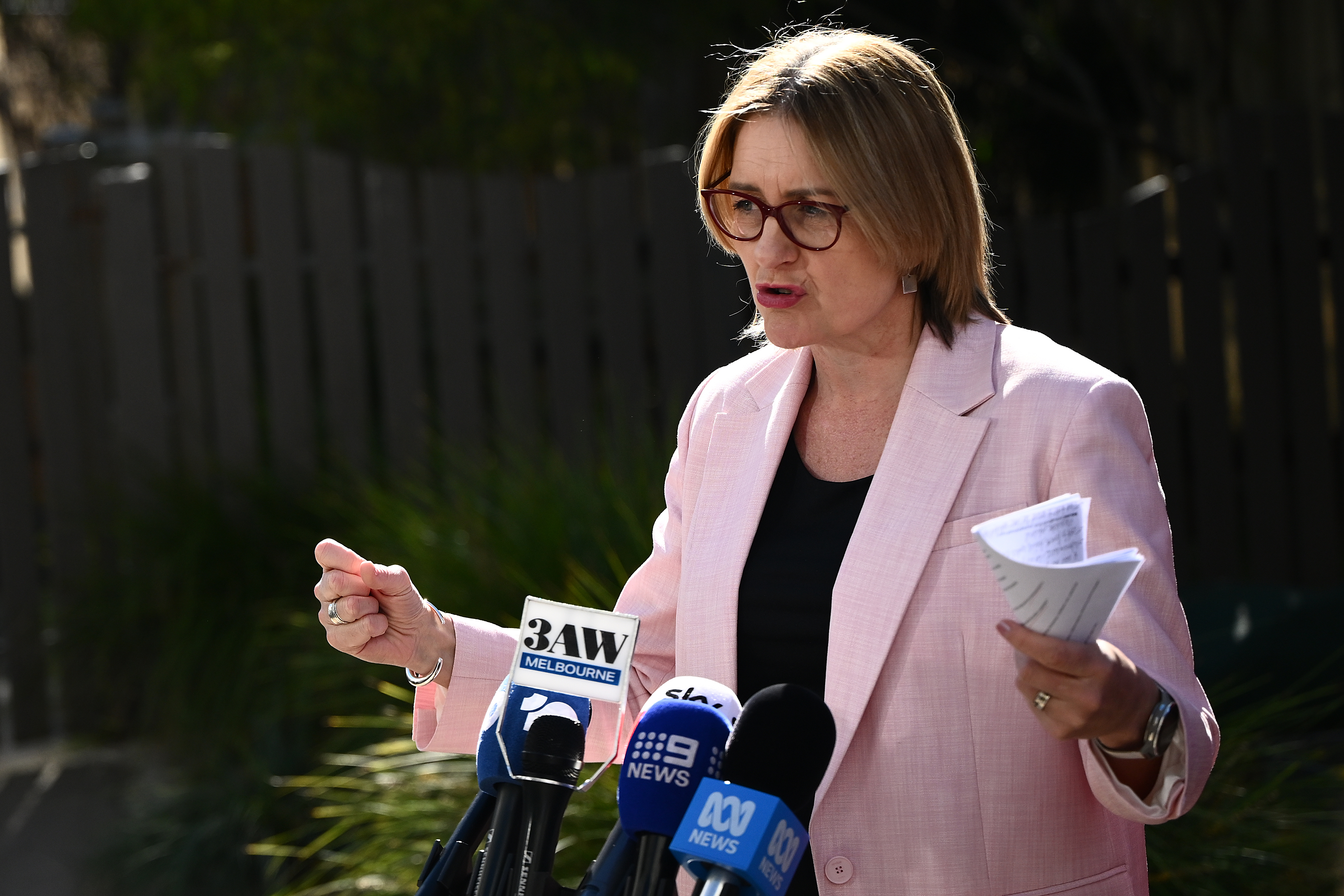
Last year the Premier, Jacinta Allan, formally apologised to First Peoples of Victoria for the "harm inflicted upon them through the actions and inactions of the State, and the colony that came before it".
Nevertheless, many have not been implemented, and with an upcoming election, the new Premier, Ben Carroll, has not shown a willingness to engage on them.
Despite the structural achievements of Treaty and Truth, failures across the board remain. The latest Closing the Gap report shows Victoria places Indigenous children in out-of-home care at a higher rate than anywhere else in the country — a rate that is only worsening.
Whilst the report shows improvement for most targets under the agreement, the state government has introduced several laws which Indigenous groups have criticised.
These include adult sentencing for children as young as 14 and stricter bail laws for youth offenders. The consequences, experts say, will be more people in prison and a regression on Closing the Gap targets.
Whilst these policy decisions remain — often in response to media reporting — Victoria's progress on First Peoples' rights post-voice will remain far from fulfilled.
Queensland - D
Nearly three years after Queensland recorded the strongest No vote of any state in the Voice referendum, the state's record on Indigenous affairs continues to slide backwards, with regressions on First Peoples recognition combining with a failure to address key Closing the Gap metrics.
Queensland voted 68.21 per cent No in 2023, compared with 60.06 per cent nationally.
The most significant reversal has been on Truth and Treaty. Labor's Path to Treaty Act passed with bipartisan support in May 2023, establishing a First Nations Treaty Institute and Truth-telling and Healing Inquiry, before the LNP withdrew its support days after the referendum and abolished both after winning government in 2024.
Inquiry chair Joshua Creamer learnt of the decision through the media before receiving any communication from the incoming government. The Waanyi and Kalkadoon barrister described the repeal as an "extraordinary act" after making repeated requests to meet the government.
"I was not advised in advance of the press conference and have not had any communication with the Premier's office following the announcement," Mr Creamer said at the time.
"My team were taken by surprise because the closure of the Inquiry was not included in the new government's 100-day plan."
Queensland also remains without the statewide Indigenous representative body contemplated under Labor, although the Crisafulli Government has established an accord with the state's 17 discrete First Nations local governments.
By the end of July, the accord committee had met once and had not yet met with the full State Cabinet.
.jpg)
The latest Productivity Commission Closing the Gap report found that whilst Queensland is improving in life expectancy, education, employment and several other areas, youth detention, adult imprisonment and the number of children in out-of-home care were worsening.
Of the 452 Indigenous children in detention nationally on an average day in 2024-25, more than 45 per cent were in Queensland. Across the state, First Nations children made up 71 per cent of the detained youth population.
Whilst the state's Indigenous youth detention rate fell slightly from 41.6 per 10,000 in 2023-24 to 40.6 in 2024-25, it remained worse than the Closing the Gap baseline.
Indigenous young people in Queensland also spent an average of 96.3 days in unsentenced detention — more than any other state and territory.
The failure of Indigenous affairs isn't just confined to the LNP. During their time in office, Labor twice suspended Queensland's Human Rights Act for youth justice measures, including criminalising youth bail breaches and allowing children to be held in adult watch houses, before supporting an expansion of the LNP's 'Adult Crime, Adult Time' laws.
The LNP laws now apply adult sentencing provisions across 47 youth crime offences, while detention as a last resort has been removed as a sentencing principle — against recommendations from the death in custody royal commission — whilst they have flagged further mandatory sentencing reforms for serious offending while on bail.
Whilst it can be said Queensland has made measurable progress in some of the Closing the Gap metrics, its dismantling of the Truth and Treaty — without consultation with First Peoples — its failure to deliver statewide representation, and its continued bipartisan shift towards increasingly punitive youth justice laws have shown that three years after the Voice, Queensland sits near the very bottom of the national report card.
New South Wales - C
New South Wales is home to more Indigenous people than anywhere else in the country.
After much promise, planning and years waiting, NSW, the last state to begin formal steps towards Treaty, began its early journey this time last year.
From August 2025, the State Government's commitment to a 12-month consultation process with First Nations people and communities began, led by NSW Treaty Commissioners Aden Ridgeway and Naomi Moran.
What comes of it is not yet known, despite continued broad vows for reconciliation efforts.
"The purpose of this process is to hear from Aboriginal people about their desire for a treaty or other formal agreement and explore what form this might take," the NSW Government states online on Treaty consultations.
"This consultation process belongs to the Aboriginal people of NSW, because it is up to Aboriginal communities to determine their own views about a treaty. It is not a question for Government."
Consultations come ahead of any negotiations.
In the lead up to their 2023 state election win, the then-opposition Labor committed to a state-based Voice, Treaty and Truth process, and later pledged $5 million towards the treaty efforts.
Despite their public support for a national Aboriginal and Torres Strait Islander Voice to Parliament ahead of the referendum, the Minns Government, like other jurisdictions, showed some semblance of hesitations on state-based aspirations following the results at the polls in October 2023.
In the wake of the Voice defeat, it was announced any progression beyond consultations was parked until the next state election, set for 2027.
Within much silence on the topic in the years between, a state-based Voice has, in theory, not been entirely ruled out.
July's Closing the Gap Annual Data Compilation Report from the productivity commission identified improvements on 'life expectancy; preschool enrolment; Year 12 or equivalent qualification; tertiary qualification; youth engagement; employment; appropriately sized housing; children in out-of-home care; and land mass subject to legal rights or interests' in NSW.
Childhood development, youth detention and adult imprisonment are where outcomes are worsening in the state.
In addition to the four national Closing the Gap key priority reform areas — formal partnerships and shared decision making, building the community-controlled sector, transforming government organisations, and shared access to data and information and regional levels — NSW has its own fifth priority; Employment, business growth and economic prosperity.
According to Corrective Services NSW data, as of August 19, 25 Aboriginal people have died in custody in the state since mid-2024. This includes 12 deaths between mid-2025-2026. Two Aboriginal men have died in custody in NSW since the start of July.
At present, NSW's Aboriginal Languages Trust is community consultations to inform its next five-year strategic plan. In 2017, the state parliament passed Aboriginal Language legislations, described as 'the first legislation in Australia to acknowledge the significance of First Languages', and leading to the establishment of the Trust.
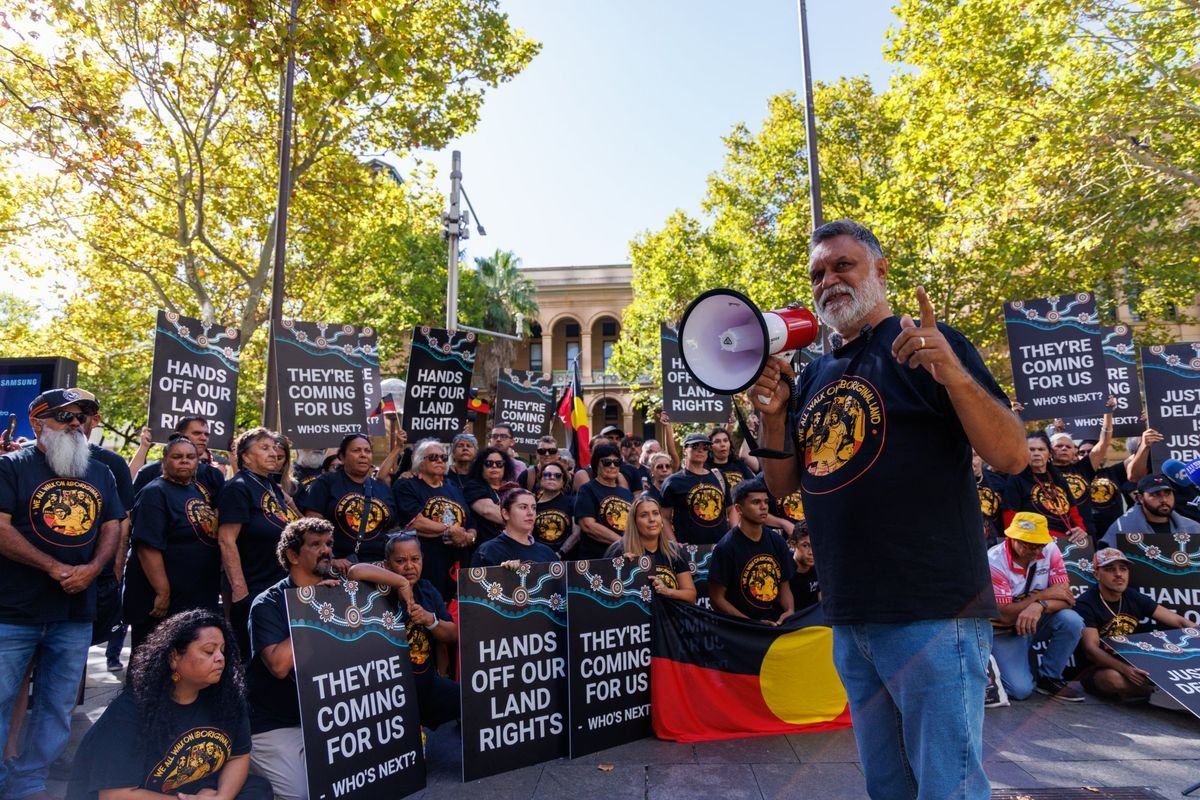
Proposed changes to Crown Lands legislation, first tabled in March, have been labelled as a major threat, even discriminatory, to Aboriginal land rights in NSW by the state's Land Council peak.
Crown Lands Minister Steve Kamper said the bill was only intended to address "edge cases that became claimable due to technical non-compliance, such as an invalid sub-lease", with significant pushback from the land rights network continuing for months.
An extended consultation window on proposed amendments to legislation closed on July 31.
A Crown Lands spokesperson identified commitment "to working closely and respectfully with Local Aboriginal Land Councils" on the matter.



