




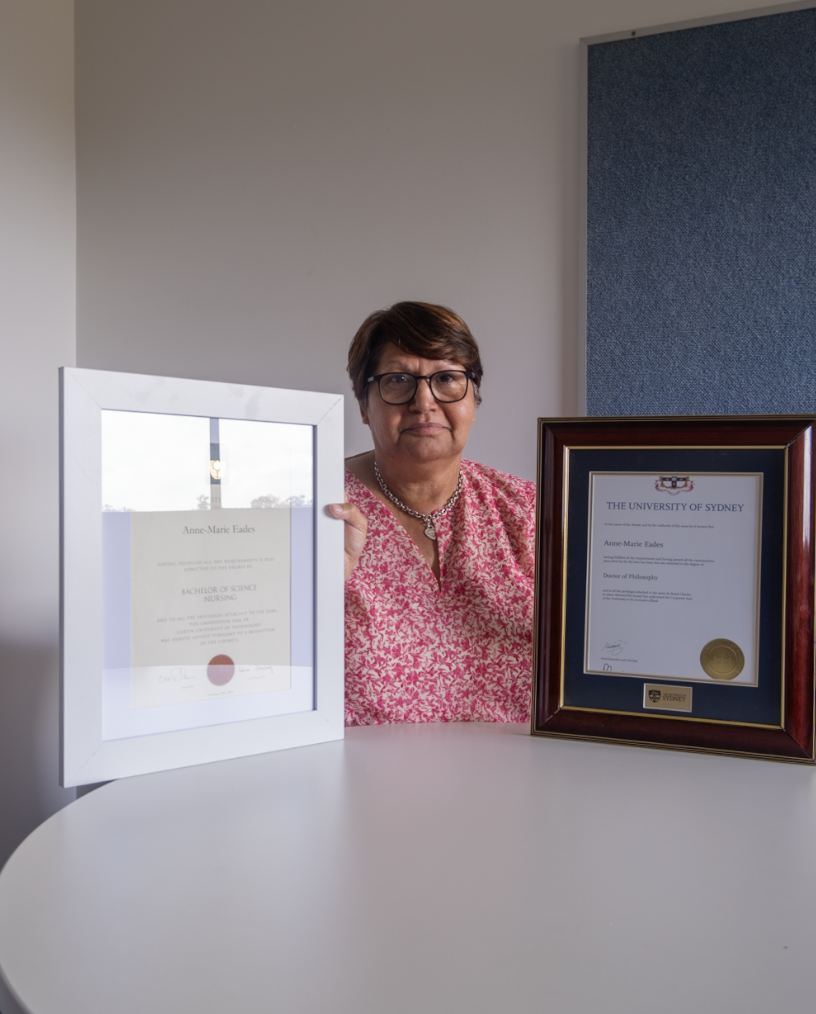
Professor Anne-Marie Eades made history as Curtin University's first Indigenous Professor of Nursing. Her appointment not only marks a personal achievement but also represents a significant milestone for Indigenous representation in healthcare leadership.
A proud Noongar (Minang/Kaneang) woman, Professor Eades has dedicated over two decades to improving health outcomes for Aboriginal people, focusing on chronic disease management and health equity.
Early in her career, Professor Eades worked in perioperative nursing, spending 12 years in both metropolitan and regional hospitals across Western Australia. It was during this time that she noticed a stark disparity between Aboriginal and non-Aboriginal patients undergoing the same procedures.
"I was seeing 30-something-year-old Aboriginal patients coming into operating theatres, having debridements of wounds leading to amputations," she said.
In contrast, she observed that non-Aboriginal patients undergoing similar procedures were often much older, typically in their sixties. This stark contrast underscored the systemic inequities that Indigenous communities face.
"There was this clear gap," she added.
This realisation sparked her transition from hands-on clinical work into the research sector, where she began working on projects aimed at addressing these health disparities. One such project focused on reducing amputation rates in Aboriginal communities, aligning with her desire to contribute to long-term solutions.
"I saw an opportunity to do something about it," Professor Eades said.
Her shift to research allowed her to address these issues on a broader scale and advocate for improved healthcare systems that better serve Aboriginal people.
Professor Eades has remained steadfast in her commitment to improving health outcomes for Aboriginal communities, particularly in the realm of chronic disease. Throughout her research career, she has worked on projects aimed at tackling cardiovascular disease, diabetes, and kidney disease—issues that disproportionately affect Indigenous Australians.
"We've made progress in some areas, but there are still many where things are not improving," she said.
"We need to do better."
Her research has also addressed pressing issues like vaccine hesitancy in Aboriginal communities. Speaking about her recent study on vaccine hesitancy among Aboriginal women, Professor Eades emphasised the challenges of communication and cultural safety during the pandemic.
"The mandates came down so quickly… services were playing catch up," she explained.
She stressed how this contributed to confusion and distrust within communities and highlighted the importance of delivering healthcare services in a culturally safe manner, which was often lacking during the rollout of COVID-19 vaccines.
As the first Indigenous Professor of Nursing at Curtin University, Professor Eades recognises the significance of her new role.
"It feels good… but I'm conscious of the responsibility that comes with it," she said.
One of her primary goals is to increase the representation of Indigenous people in the nursing profession.
"If we can bring more Aboriginal nurses into the schools of nursing and keep them there until graduation, we then improve our Aboriginal nursing workforce," she explained.
Professor Eades believes that greater Indigenous representation in healthcare can have a profound impact on patient experiences. She shared a personal story from her time working in recovery, where an Aboriginal woman, upon waking up, said, "Oh, you just don't see Blackfellas in this room".
This moment left a lasting impression on her, serving as a reminder of the importance of Indigenous healthcare workers.
"It makes you realise the value that's placed on you working in a hospital system," she said.
As Professor Eades embarks on this new chapter at Curtin University, she remains optimistic about the future of Aboriginal health and education in Western Australia. Returning to Perth after spending time in Sydney, she has been inspired by the growing leadership among young Noongar people in the region.
"It's really exciting to see where we're going with Aboriginal health and education in WA," she said.
With her wealth of experience and deep commitment to her community, Professor Eades is poised to make an even greater impact in the years to come. Her pioneering role at Curtin University will not only inspire the next generation of Indigenous nurses but also contribute to a more equitable healthcare system for all.



