




A serious health condition is quietly causing a major impact in Indigenous communities.
Huntington's disease is a genetic, degenerative, fatal neurological condition.
Huntington's Australia CEO Lenni Duffield told National Indigenous Times that despite the seriousness of the condition, it has not received the national attention or research funding it needs.
"In my view, government have not gone far enough in addressing the issue," she said.
"The other challenge that we have with Huntington's disease is that all of our medical terminology in Australia is based on European language. Huntington's disease in all of the medical journals, all of the medical information... it's abbreviated as HD. In Indigenous communities, that means leprosy, as they associate HD as being Hansen's disease.
"We were not kind, as European people, to Indigenous people around leprosy, so that has a huge connotation. It's not an Indigenous lack of understanding, it's our lack of understanding in regards to the impact and the language that we use."
'Almost like a ticking time bomb'
Ms Duffield said Huntington's disease is "almost like a ticking time bomb" in Indigenous communities.
"There's misdiagnosis, not willing to get diagnosed, not coming forward, or if HD was mentioned, Indigenous communities, individuals, families would not engage because they thought it was leprosy and there was such a terrible connotation around that," she said.
"This has been occurring in our regional or remote communities - a lack of information, lack of education, lack of awareness, and lack of services - for 40 or 50 years, in reality up to 70 years."
Ms Duffield said a stigma around Huntington's disease also stemmed from the idea it was a curse affecting families.
"At its core, the issue is one of inadequate communication, limited-service delivery, and a failure to meaningfully engage and work alongside Indigenous communities," she said.
"We need to start telling and sharing this story, and moving it away from the idea it is a curse, and we just haven't done that well."
'They're dealing with such an insidious and sensitive disease'
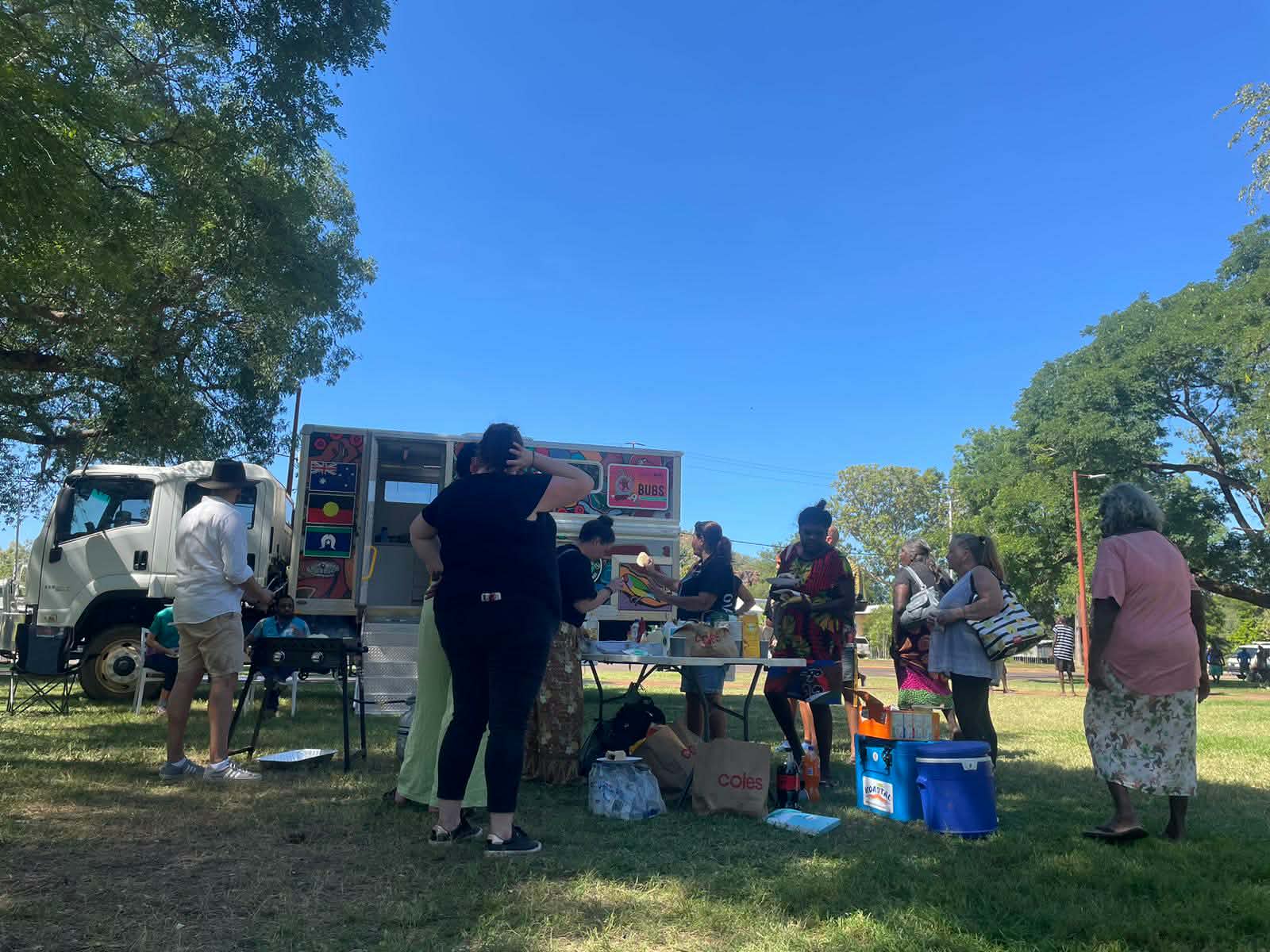
Deadly Neuro Navigators founder and Indigenous health advocate Shenane Hogg told National Indigenous Times she and others are working with little funding to provide the care and information that is desperately needed in communities.
"When we go in... we provide culturally safe, appropriate care for mob, when they're dealing with such an insidious and sensitive disease," she said.
Ms Hogg said she had reached out to government departments and agencies, and met with ministers and MPs to advocate for greater support to tackle the disease and its impacts.
"The government just don't seem to want to put a commitment to it, and the funding around it is, you know, at the moment we have to beg, borrow and stealing to be able to make these clinics go ahead," she said.
"We had funding that dried up and finished, and we've somehow been able to find another little pool of money to be able to go back up again, but that's the reality of it; we don't know when we're going to go back up, so you know it leaves mob with the question of 'is this continuous care or is this just ad hoc care? Huntington's Australia are really good in the sense that they're taking a stand and saying 'no that's not good enough'.
'We need a commitment from government'
"We need a commitment from government, whether it be Liberal or Labor, a commitment from either to say that this mob, these people are going to be looked after. It's a lifelong incurable disease. It's a genetic disease. It's definitely not going anywhere."
Ms Hogg said she is concerned by the lack of material support for caring with people with Huntington's, despite expressions of goodwill.
"We can't get any commitment from anyone. We get lots of pats on the back, my back's so sore because it's always, 'oh, you're doing a great job'. And then I'm pushed off to the next minister... But there's never any real hardcore commitment around it," she said.
"I think for families, it's very frustrating... It's an everyday thing. They're living it day to day. They're not getting the access that they need to the services that they need because of geographical distances."
'We've gone from knowing of 70 individuals with Huntington's to over 800 in the Indigenous population'
Ms Duffield said mapping of Huntington's Disease in Indigenous communities began two decades ago.
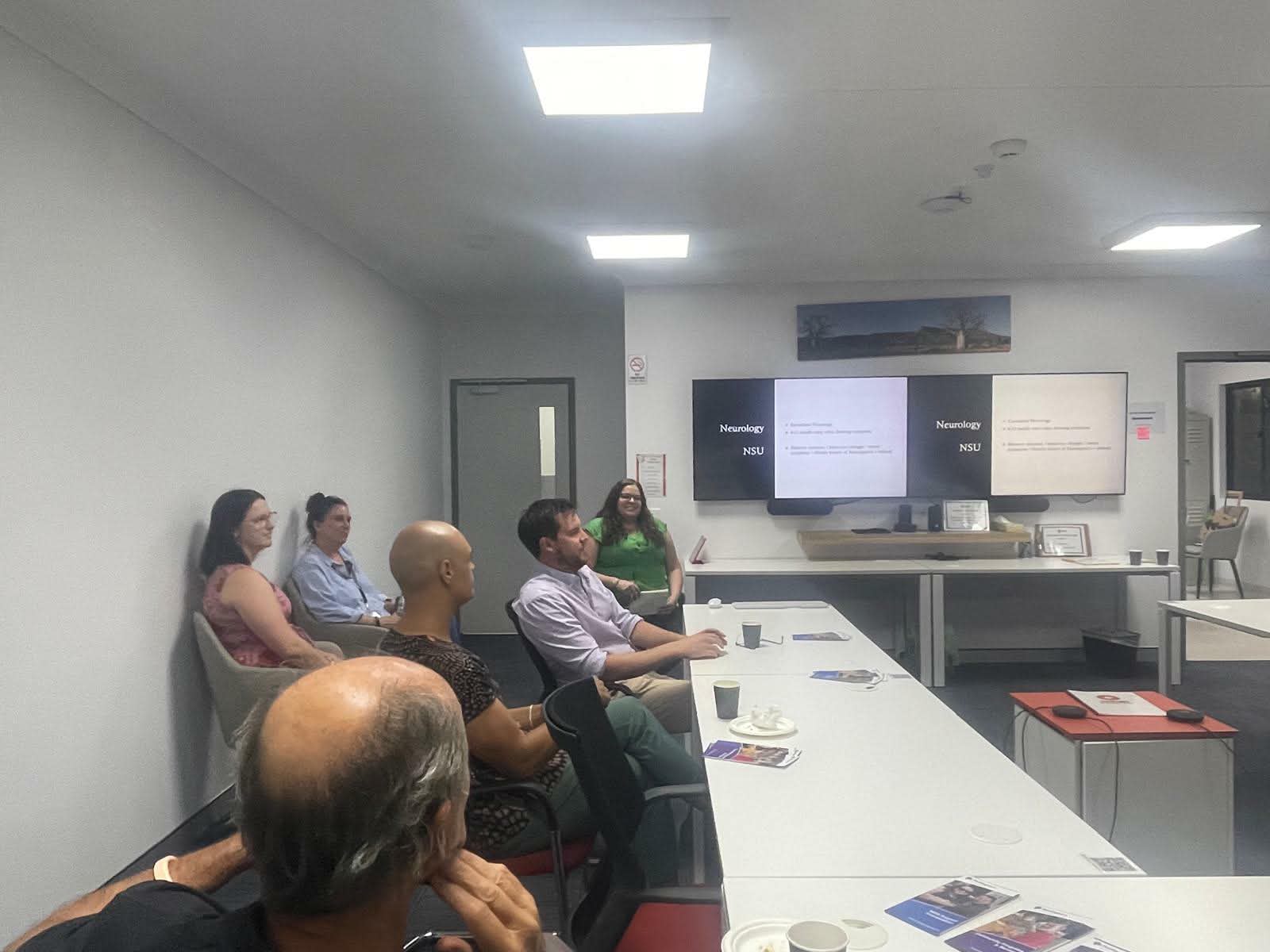
"About 20 years ago... there were a couple of Indigenous individuals we were supporting, and they were telling us that previous members of their family had passed away, from a curse, and we weren't quite sure what the curse was, and we started doing this very organic kind of mapping. It started 20 years ago with the Neurosciences Unit in Western Australia, and ourselves at that stage, we were Huntington's WA, and that's the first sort of real insight that started," she said.
"There were about 70 individuals that we became aware of that had Huntington's. Since then, there wasn't much traction or support from the government, or even non-government agencies, to look at this issue and look at what we may need to be doing in this space.
"So, we continued to do some work where we could, and then about eight years ago, we picked up more steam in regards to it... we ramped up the efforts and started going up on Country twice a year to provide support and work with families and communities and Elders to start to look at what they would like to have done in this space... and what are the most critical needs for them.
"We were doing that work, starting to map that. COVID happened... and then we've come back after COVID. We were able to get some funding from the Department of Communities in Western Australia because what we found is post-COVID and through the work over the last eight years, we've gone from knowing of 70 individuals to over 800 now in the Indigenous population."
Ms Duffield noted that the prevalence rate of Huntington's in Australia overall is eight to 10 in every 100,000 people.
"(With more than 800 cases) We are now out of the rare space in the Indigenous community, and we've got a real issue," she said.
"Not only that, when we first started this work, really starting to map it... eight years ago, we knew of three communities. There are now over 30 communities across Australia that we know have Huntington's confirmed. These are 30 regional and remote and very remote Aboriginal communities now that we have confirmed cases of Huntington's disease.
"We are talking from one side of the country to the other, from Kununurra to Palm Island... We expect up to 2000 Indigenous people are impacted in Australia. So that's around the same amount of people in Australia that have MND (motor neuron disease) right now, and yet MND just recently, earlier this year, got a commitment from the government of $40.2 million to look at work in the MND space."
'A combination of MND, Parkinson's, Dementia, and schizophrenia'
Ms Duffield said Huntington's is on the rise and requires focused, dedicated work.
"We've got a real concern within the Indigenous community here about Huntington's disease, and something needs to happen because it will no longer be a rare disease," she said.
"We know that it needs continuity of care. We know that care is along a trajectory. Huntington's disease is a combination of MND, Parkinson's, Dementia, and schizophrenia rolled into one.
"What we have seen within the Indigenous communities is that symptoms appear to come on earlier in Indigenous populations in Huntington's disease compared to non-Indigenous, and so there needs to be a lot more work in this space.
"Care is limited. Indigenous people with Huntington's, want to stay on Country, and so they should. That's their home. That's where they feel they belong and have a connection. I think we all want to stay close to home. We all want to stay where we have family and where we have support, and it should be no different, regardless of who you are in Australia and where you are located. But we're a far way from that."
Federal government says it is committed to tackling rare diseases and investing in medical research
A federal health department spokesperson told National Indigenous Times the federal government is "committed to improving health equity and addressing disparities experienced by Aboriginal and Torres Strait Islander peoples, including through Closing the Gap, the National Preventive Health Strategy, and broader investments across Aboriginal Community Controlled Health Organisations, primary care, workforce, and regional health services".
"Activities relating to Huntington's disease fall under the National Strategic Action Plan for Rare Diseases," they said.
"The (federal) government is providing funding of $7.45 million over seven years from 2020-21 for implementation activities that align with the National Strategic Action Plan for Rare Diseases. Of this funding, $1.65 million is being provided for rare disease awareness and education activities. The remaining $6.12 million is being provided to undertake development and delivery of education resources for health professionals, and activities to support people living with a rare disease.
"This work, led by Rare Voices Australia, includes partnerships with several peak body Aboriginal and Torres Strait Islander organisations on the development of education materials and training resources for Aboriginal and Torres Strait Islander communities."
The federal government spokesperson said the Commonwealth is committed to health and medical research and supports this through the Medical Research Future Fund (MRFF) and the National Health and Medical Research Council (NHMRC).
"In line with the National Strategic Action Plan for Rare Diseases, over $16.9 million has been invested specifically in HD (Huntington's) research since 2010," they said.
"The NHMRC focuses on investigator-led research and since 2010 NHMRC has expended $15 million towards research relevant to HD across 27 different grants.
"The MRFF funds priority driven research with a focus on research translation and in 2017 it invested $1.9 million into a University of Sydney grant titled 'A randomised controlled trial, of N-Acetyl Cysteine, for premanifest Huntington gene expansion carriers (NAC-preHD)'."



