


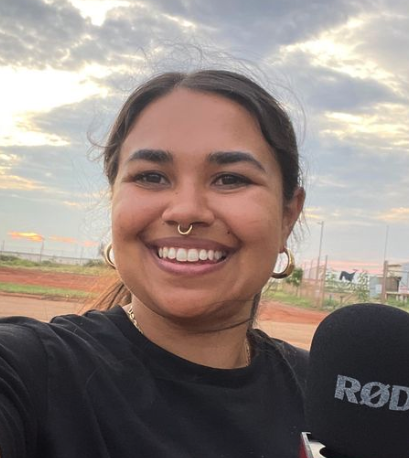

Last week I gave evidence before the Federal Inquiry into racism, hate and violence directed at Aboriginal and Torres Strait Islander people about my experiences as a First Nations media worker.
Unsurprisingly, my testimony, like so many Blakfullas in this country, was all but ignored by mainstream media. This is part of the structural violence and erasure mob are exhausted trying to demand a call for action and we are tired of being either pidgeonholed or overlooked.
I spoke up about the hate directed at First Nations peoples within social media, in our comment sections on National Indigenous Times social media, the people I interview and being on the ground as an Indigenous media worker.
Every day, my concerns for the safety of my people and myself continue to grow as I often fear that a racist could take my life on a typical day reporting on the ground.
The far right movements target Indigenous communities, yet mainstream media barely or only belatedly talks about it.
On Monday, July the 13th 2026, I was called into the Inquiry into racism, hate and violence directed at Aboriginal and Torres Strait Islander people to represent my organisation, National Indigenous Times, to speak about what a typical day in the life of an Indigenous media worker looks like.
I focused on one day in particular, January the 26th, 2026, the day I grabbed my equipment, under the impression that I was interviewing staunch First Nations mob at the Invasion Day protest at Forrest Chase.
I would amplify their message that despite policies that legislated genocides, stole our grandparents, enslaved our people and continues to justify the racial discrimination that runs rampant within our society, First Nations existence is resistance. The day is a reminder that attempts to erase Indigenous people failed.
On January 26th, someone continued the legacy of failing to erase our Mob, when they threw a bomb into Forrest Chase, that thankfully failed to explode.
Liam Alexander Hall has been charged with committing a terrorist act in connection to this attack.
I was close to the stage when I saw a bag being thrown off the second story of Forrest Chase into the crowd, and I saw smoke. I did not know at the time that a bomb had been thrown into the crowd approximately 10 metres away from me.
As the suspect was gently beckoned into the cop paddy wagon, there was an uproar of police violence downstairs as riot protocols were now used to control and disperse a crowd of First Nations mob and non-Indigenous supporters despite the crowd being the victims of an attempted terrorist attack just minutes prior.
As other mainstream media organisations were on the sidelines filming the chaos that ensued, I was heavily handedly pushed by one officer and towered over by a six foot police officer within the crowd because, presumably, to him I was just an Aboriginal woman with a camera.
National Indigenous Times and independent outlets gave the inquiry's evidence from media workers the editorial spotlight it deserves.
Unsurprisingly tabloid media was not interested in covering witness testimonies. Despite NIT's limited staff capacity, our journalists, specifically Dechlan Brennan, dedicated the time to listen and prioritised coverage to reflect the importance of the inquiry.
Working in Indigenous Affairs as a Blackfulla means that I log into our social media and delete comments, block accounts that tell me that my people deserve to die and then while I drive back home, I am stuck in traffic, I wonder if one of these profiles are drowning in the same sea of traffic as me.
My job often involves celebrating amazing people across the nation and having the privilege of using National Indigenous Times to celebrate those feel-good stories. Aboriginal and Torres Strait Islander yarns that focus on Blak excellence play a critical role in the humanisation of First Nations people and shaping the collective minds of what people perceive of us by offering a grassroots perspective directly from Mob. These perspectives are rarely offered to mainstream media and often our achievements are overlooked.
On the flip side, I am interviewing people who have been courageous enough to open about the most traumatic experiences of their lives and the gross injustices they have experienced in hopes that they receive accountability and justice. There's been moments where I've held the hands of my interviewees and sobbed with them while shakily holding the mic. I've gotten big snuggles from children innocently playing at vigils, too innocent to know that they're at their mother's vigil.
Indigenous media differs from mainstream media, because we challenge the legacy of the Australian media ecosystem. Since colonisation, the media has been used as a tool of oppression by constantly instilling Eurocentric values and stereotyping our people, to reduce us to racial stereotypes.
As technology advances, so does racial discrimination, through algorithms that place Aboriginal media into the hands of racists. Where comment sections are echo chambers for racists to feel safe in expressing disgust for our people and artificial intelligence consumes inherently racist media coverage, social media content and documents thus, socialising racist viewpoints into technology while building data centres that drain our water and consume that we as Indigenous people fight tirelessly for.
At the inquiry, I called for sustained action into rectifying racial discrimination, sustained action, not only during moments of public attention, but every day. I called for governments, digital platforms and institutions all to have a responsibility to do more to address racism directed at Aboriginal and Torres Strait Islander people.
So far, the vast majority of my media peers remain silent in the face of discrimination towards my people, with some of them often amplifying narratives that further fuel the struggle my people experience.



