



A computer screen full of biodiversity data might not immediately look like a story about Country.
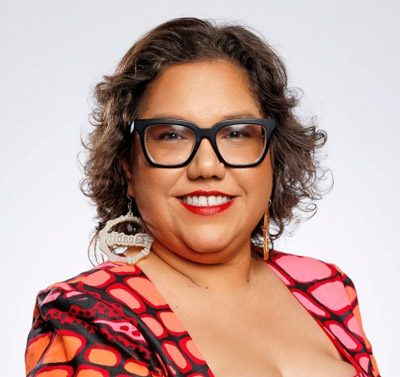
But proud Wallara woman of the Koko-Muluridji people, Gullara McInnes, saw something more in the numbers.
During an internship with the Atlas of Living Australia (ALA), Ms McInnes began exploring whether biodiversity records could reflect the seasonal patterns and movements of species Aboriginal people know through living with and observing Country.
That thinking would eventually leave the computer screen altogether.
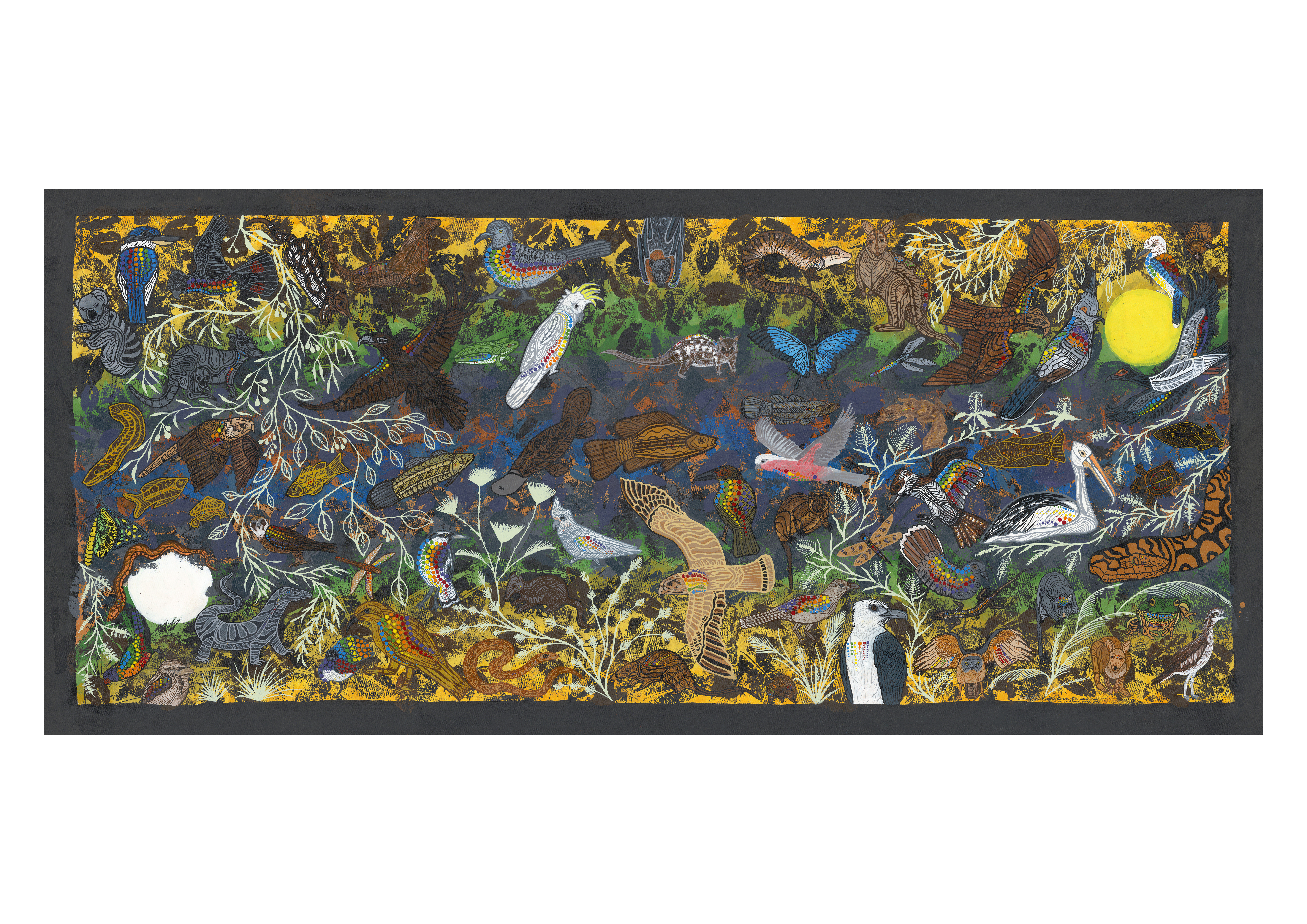
Working alongside her mother, established artist Ann-Marie Keating, Ms McInnes transformed biodiversity data into an artwork featuring more than 60 plants and animals from the Mareeba area, bringing scientific records into conversation with cultural knowledge, family and Country.
Ms McInnes, who studies science and law and is part of the Young Indigenous Women's STEM Academy, has previously worked at the intersection of ancestral knowledge, Western technology and science.
Her work with the ALA involved learning how to access and interpret biodiversity information using R programming tools.
As she worked through the records, she became particularly interested in seasonality and whether data showing when species appeared throughout the year reflected what she already understood from her own environment.
The connection was close to home.
Her mother had previously painted a mural at Mareeba Airport depicting the seasons through birds. Ms McInnes began wondering what would happen if information held inside a scientific database was placed alongside knowledge held within family and culture.
That question moved the project from data to canvas.
Over almost two months, Ms McInnes and her mother painted more than 60 species of animals and plants from the Mareeba area. Each carries cultural significance, while dots layered throughout the artwork represent ALA occurrence records and the seasons in which those species were recorded.
The result does something a conventional graph cannot easily achieve.
It places biodiversity data inside a much bigger story about relationship, responsibility and the way knowledge of Country is carried.
For Ms Keating, the animals are not simply species to be identified and documented. There is lore attached to them and an obligation to care for the places they belong.
"We belong to birds so there are a lot of birds in here," she said.
"We have to uphold our lore. We look after the Country so it looks after us."
Her painting techniques give movement to the animals, placing them in positions people might actually see in nature rather than presenting them as static specimens.
Working beside her mother also became another form of learning for Ms McInnes.
She watched the way her mum layered colours and learnt more about the decisions and cultural meaning sitting behind the artwork.
It is a reminder that knowledge does not only live inside universities, scientific papers or databases.
Some knowledge is learnt by watching your mother work. It sits in conversations and memories. It comes from knowing when animals move, when plants change and what those changes are telling you.
The finished work allows those knowledge systems to sit alongside each other without asking cultural knowledge to prove itself through Western science.
Ms McInnes described the painting as an overlap between what biodiversity data can show and what cultural knowledge already understands about animals and their environment.
She also sees technology as having a role in helping preserve that knowledge for those coming behind her.
Once the work is available online, Ms McInnes hopes the knowledge represented within it can continue to be shared into the future.
ALA Director Andre Zerger said bringing cultural knowledge together with biodiversity occurrence records created a more holistic picture of the local ecosystem.
The ALA draws biodiversity information from numerous providers and makes it publicly accessible for research, environmental planning, policy and land management.
But Ms McInnes and her mum's work also asks us to think more deeply about what Australia recognises as data and whose knowledge is valued when we talk about understanding the environment.
Aboriginal people did not need a database to know when birds arrived, when animals moved or when Country was changing. That knowledge came from paying attention and carrying what was learnt forward.
Ms McInnes is now working in a world where those old ways of knowing can meet new technology.
And perhaps that is the most powerful part of this story.
This is not about using Western science to validate Aboriginal knowledge.
It is about recognising Aboriginal knowledge was already there.



