


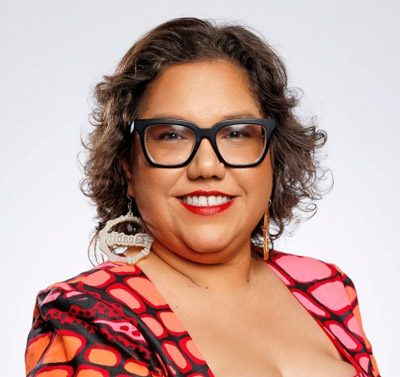

National Science Week is all about celebrating discovery, innovation, and the people who shape our future; and this year, we celebrate Melissa Tipo, whose leadership in STEM is making waves from the Quad nations to Country.
The Quad (Quadrilateral Security Dialogue) is a strategic partnership between Australia, Japan, India, and the United States.
Ms Tipo — a proud Djerait, Larrakia and Kungarakan woman and now Partnerships and Industry Engagement Manager at CSIRO — recently returned from a month-long program titled "Advancing STEM in the Quad". Alongside other changemakers from the four Quad nations, she travelled from Washington, DC to Minneapolis, then on to Arizona and Seattle, visiting some of the world's top science and innovation institutions.
Melissa didn't just go there to take it all in. She went there to show up for her community, to challenge the system, and to speak truth with love and power.
"Being selected for the International Visitors Leadership Program (IVLP) was one of the most unexpected and humbling experiences of my career," she told me. "To be among such brilliant minds — experts leading change in STEM from across the QUAD countries — was an honour in itself. But what stayed with me most wasn't just the technical knowledge shared; it was the human connection," she said.
.jpeg)
Throughout her journey, she shared powerful insights about our cultural knowledges, equity in STEM, and the importance of centering Indigenous girls in science, technology, engineering, and maths. In every room she entered, she carried her mob, her culture, her family, and her purpose.
"I had the opportunity to bring my perspectives in Indigenous STEM education — particularly around how we can grow the industry by creating more inclusive pathways — and it became a powerful journey in its own right," Ms Tipo said.
It wasn't just about learning; it was about building something bigger. Melissa forged new partnerships for the Young Indigenous Women's STEM Academy, which she's helped grow into one of the most impactful programs in the country.
"It reaffirmed that our work is not isolated; it's part of a broader global movement," she said.
In Minnesota, Ms Tipo connected with the Kitty Andersen STEM Justice Program. In Arizona, it was the Si Se Puede Foundation. Both programs moved her deeply; especially stories of young people overcoming the odds to thrive in STEM.
"When we lift each other up, we all win," she said, wiping away tears as she recalled a story of a the Desert Wave high school robotics team made entirely of under-represented girls competing for the first time in the National Robotics Challenge. They went on to win against university teams.
But for me, the proudest moment was hearing her say: "We need to move from consultation to co-design, from being subjects of science to being the scientists. That's how we shift the dial."
That's leadership. That's legacy.
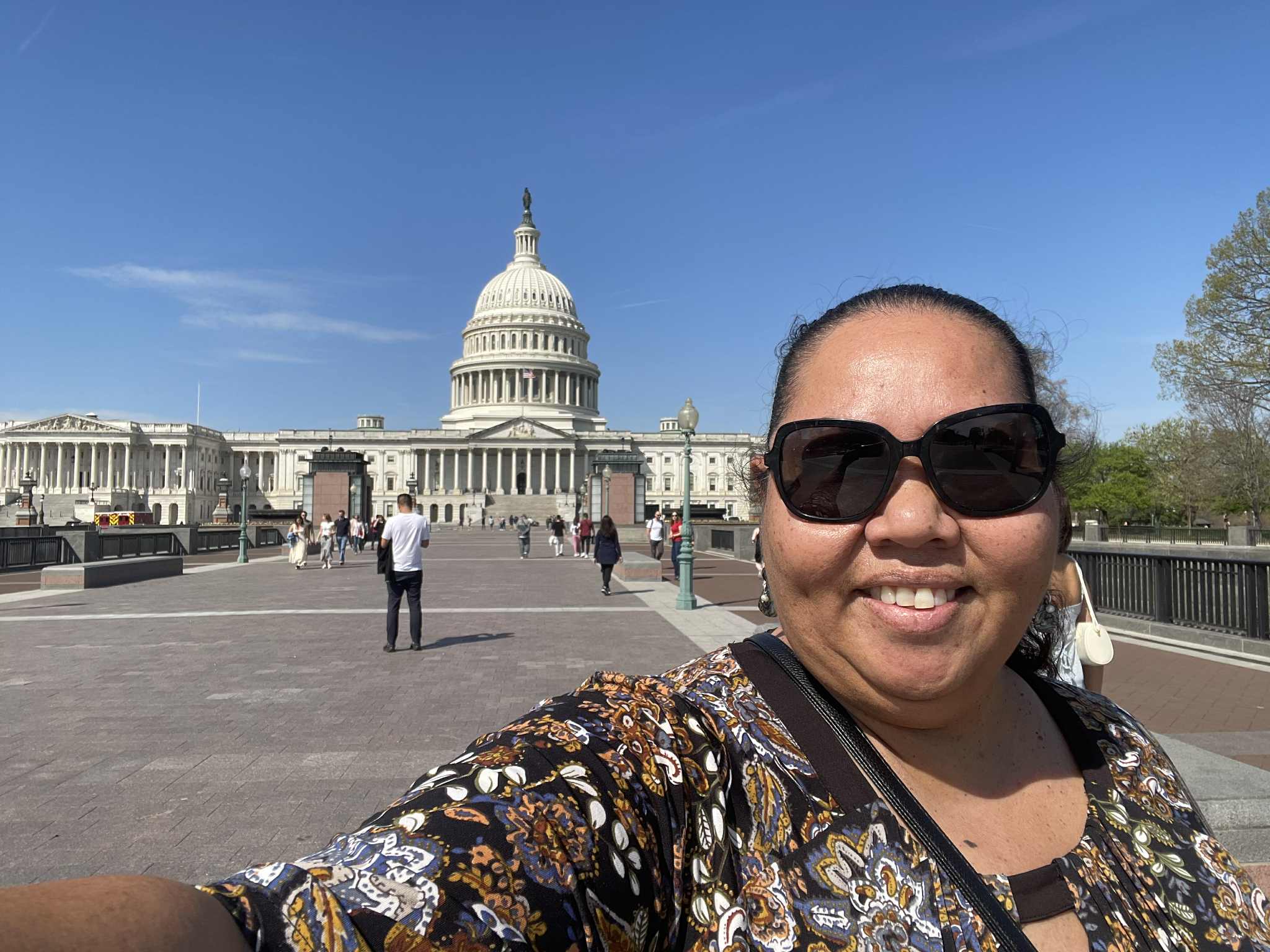
Ms Tipo shared how growing up on a cattle property, looking after Country, and mentoring young mob weren't abstract concepts; they were her everyday life. And now, she's taking those lived experiences and transforming them into policies, partnerships, and pathways that uplift others.
"Now more than ever, we need to be investing in systems that don't just include Indigenous perspectives; but are transformed by them. Nothing about us without us."
As someone who's walked beside her for years — as a sister, a friend, a fellow advocate — I've watched Mel grow into a force of nature. She's created space for young girls to dream big and lead with culture, and she's shown the world that First Nations women belong not just in the room; but at the head of the table.
To every young First Nations girl reading this, hear her words loud and clear:
"You don't need to leave your culture at the door to succeed in STEM. In fact, your identity, your community, your way of seeing the world; those are your superpowers."
Keep walking in your purpose, sis — the future is brighter because you're in it.



