




Tuesday's Treaty announcement came against a backdrop of conservative push-back. Just like the Voice debate, critics to Treaty have labelled it "racist" and "divisive," with some going further, calling it an affront to democracy.
That framing ignores the context, the truth, and the daily realities of discrimination in child protection, justice, health, housing, education and politics for Indigenous people — both in Victoria, and across the country.
"The gap between First Peoples and others did not suddenly appear only when governments began acknowledging it in recent times," a preamble to the Treaty report states.
"It is the result of deliberate and systemic exclusion of First Peoples from the systems and structures being built around them, upon which others prospered."
This is not a new conversation. Treaty does not exist in a vacuum but sits on an arc that stretches back to when colonisation began in what is now Victoria, on Gunditjmara Miring Country in 1834.
"What is now called Victoria existed long before its name," the Yoorrook Justice Commission wrote in its Truth Be Told report.
"It was held, sung, walked and remembered. Knowledge was carried in story and ceremony; in hands that lit fires the right way, that harvested without greed. This was not emptiness. It was presence, deep and abiding."
That presence was violently disrupted. Countless massacres scar the state's history, while dispossession and forced removal of people from their land entrenched a cycle of dislocation and grief that continues today. Aboriginal children in Victoria are still removed from their families at the highest rate in the country.
Suzannah Henty, a sixth-generation descendant of coloniser James Henty, described her ancestors' role before Yoorrook as one of "ethnic cleansing of First Nations peoples."
"Without permission from British authorities, the family illegally squatted on the Gunditjmara homelands, where they stole and damaged tens of thousands of acres of land and waterways," Ms Henty said. "For both the British and First Nations peoples, this settlement was a crime."
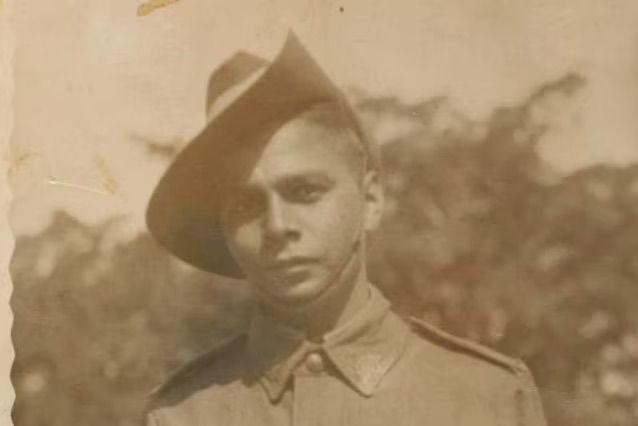
The intergenerational impact is clear. Assembly Co-Chair Ngarra Murray recalled before the truth-telling commission her grandfather, Stewart Murray, who returned from serving a country that denied him citizenship in World War I, only to be excluded from the Soldier Settlement Scheme. In his unpublished manuscript, he wrote:
"I was married and had two children, and was hoping to get something for them to live on and feel secure in owning a piece of my ancestors' land that was stolen and exploited for my grandfather's tribes."
Ms Murray later told Yoorrook: "While those who are not First Peoples live on the land, we are the land."
On Tuesday, she declared the beginning of a "new era" — the Treaty era.
"Treaty offers us the chance to reshape the story of this country. So today is a historic day. Victoria has been on the journey to treaty for nearly a decade, but treaty is the culmination of many decades of activism and work," she said.
Her co-chair, Rueben Berg, has also spoken about levelling the playing field.
"We have been removed from being able to play on this monopoly board and other people have come and taken it over," the Gunditjmara man told Yoorrook.
Mr Berg's father, Gunditjmara Elder Jim Berg, the founder of the Koorie Heritage Trust Inc, shared searing poetry to Yoorrook about the removal and violence perpetrated on the Koorie people.
"Without the truth being told,
of what happened here in the place now called Victoria,
there cannot be reconciliation,
only a divided state as it is today."
Despite all this framing; the thousands of documents submitted to Yoorrook; the wide support amongst the Indigenous community of Victoria for Treaty, the state opposition quickly signalled it would vote against the Treaty bill.
"You [the state government] could have met with Indigenous groups with or without a treaty and put funding into those programs and organisations. They've been desperately calling for that for a long time," Opposition Leader Brad Battin told ABC News Breakfast.
But Mr Berg — who has always ascertained publically the Assembly will engage with the opposition, even after they reneged on the Treaty process last year, was blunt in response, arguing on Tuesday: "To anyone who's suggesting ideas about what we need to do to improve conditions for First Peoples, I'd say the best people you should talk to about that are First Peoples."
.jpg)
Others have also tried to bridge the divide. Earlier this year, Kerrupmara Gunditjmara man Travis Lovett concluded his "Walk for Truth," visiting massacre sites and towns across Victoria before delivering a message stick to Mr Battin.
"I told him that this message stick carries expectations. Expectations of leadership. Expectations of unity. Expectations of walking alongside First Peoples in truth and respect," Mr Lovett said.
In response to opposition towards Treaty, he preaches hope over fear.
"This is his moment to step forward, to lead not just for one part of the community, but for all Victorians. It is his chance to show that Treaty is not something to fear, but something that strengthens us all as Victorians," he said
"Treaty will improve the lives of First Peoples, by further enabling real self-determination. It means our communities can lead solutions on the ground that actually work because they come from us and are led by us."
That is the essence of Treaty: consultation and partnership, not hypothetical handouts or land grabs — statement only delivered with, at best, ignorance, and at worst, spite. It is about moving from decisions made for First Peoples to decisions made with them.
When Treaty does pass Parliament, it will not be unusual in the global context. In most other Commonwealth nations, Treaties with Indigenous peoples are the norm. Australia, in contrast, has long been the outlier.
Tuesday's announcement should not be seen as divisive or feared. Nor should it be reduced to another culture war slogan. It is more than a symbolic milestone — it is a step nearly 200 years overdue.
It is, at last, the start of something vital. And whether this moment becomes a turning point or another missed opportunity will depend not on the rhetoric, but on the courage of those in positions of power to act.



