




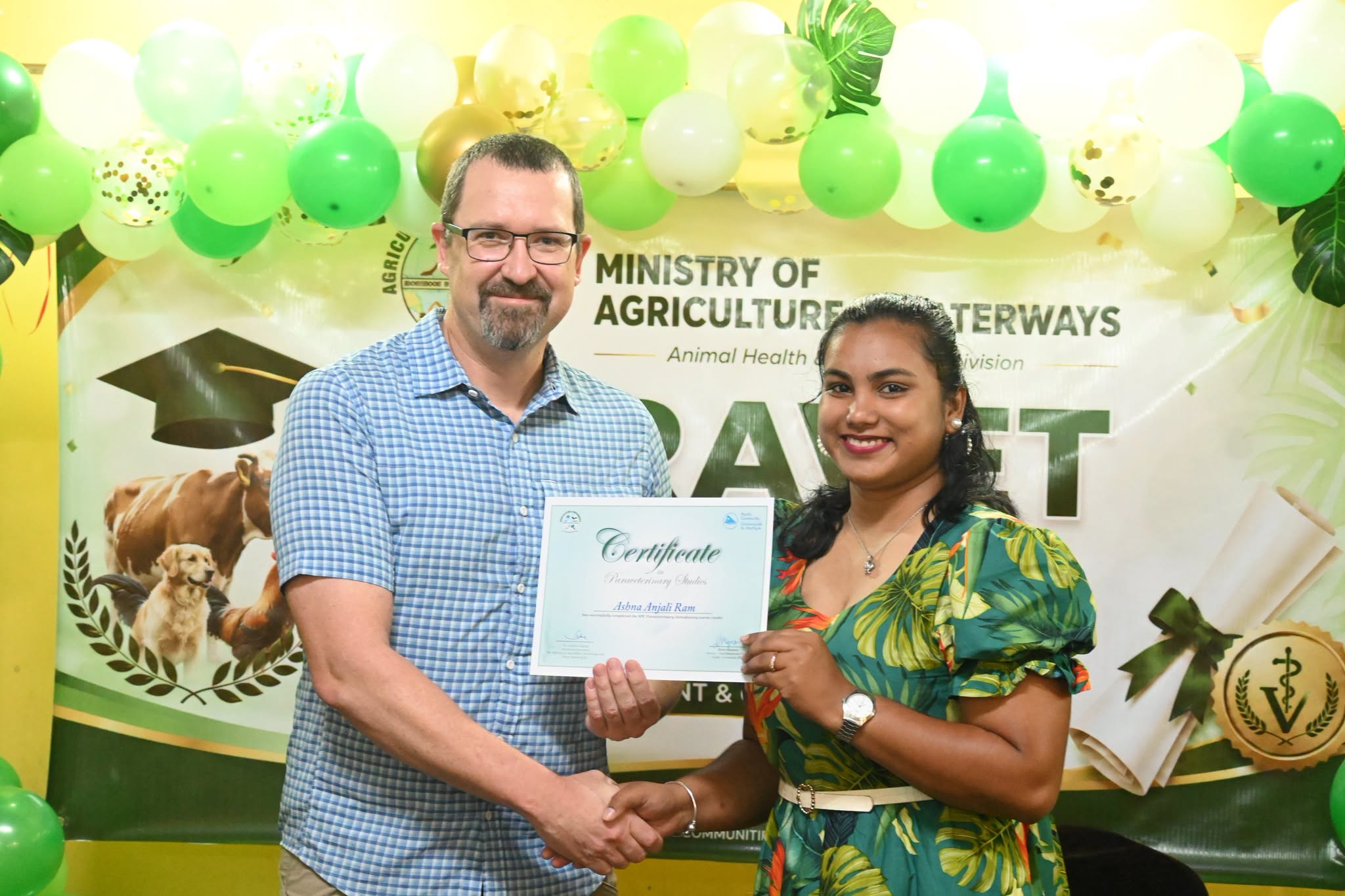
Fiji has strengthened its frontline animal health workforce after 26 agriculture officers completed specialised para-vet training aimed at improving support for livestock farmers and rural communities.
The training involved officers from Fiji's Ministry of Agriculture, Waterways and Sugar Industry and was supported by the Australian Government through the Department of Foreign Affairs and Trade and the Pacific Community.
The program focused on practical skills officers can use while working directly with farmers, including animal handling, clinical examinations, disease recognition, treatment procedures, biosecurity and the responsible use of veterinary medicines.
Participants also gained practical experience undertaking procedures including horse and bull castrations as part of training for more complex animal health situations.
Fiji's Permanent Secretary for Agriculture, Waterways and Sugar Industry Dr Andrew Tukana said strengthening the country's para-vet workforce was important for protecting its livestock and poultry industries.
Early detection of disease and working directly with farmers were identified as key parts of the para-vet role, alongside helping communities improve farm biosecurity and respond to potential animal health concerns.
Dr Tukana said those measures would remain central to protecting the sector.
"Early detection, farmer awareness and strong farm biosecurity will remain critical tools in protecting Fiji's livestock and poultry industries," Dr Tukana said.

Australian veterinarian Dr Dan Edson, who facilitated the training, highlighted the role para-vets play in supporting farmers and livestock production across Pacific communities.
Dr Edson outlined the importance of that work for rural livelihoods.
"Farming, agriculture, smallholder and rural livelihoods are all very much dependent on livestock across the Pacific, and you guys play an incredibly important role in supporting our farmers across the region to improve their productivity, improve the health of their animals and hopefully improve the economic outcomes for their farm," Dr Edson said.
The training comes as animal diseases remain a concern for livestock production and food security across the Pacific.
Dr Edson pointed to Australia's experience with avian influenza as an example of the importance of having trained animal health workers able to respond on the frontline.
Building the skills and confidence of para-vets is also expected to improve animal health services and livestock productivity while strengthening the agriculture sector's ability to respond to disease threats.
For officers completing the program, the training provided an opportunity to build on existing knowledge and develop practical skills for use in the field.
Epeli Misimisi, who is based at the Batiri Sheep Research Station in Vanua Levu, said the next stage would be putting those skills into practice.
Mr Misimisi reflected on what comes after completing the program.
"The training may be completed, but the real learning begins when we apply our knowledge to the field," he said.
The 26 trained para-vets will now return to their work with farmers and communities, where they will help identify and prevent disease, promote animal health practices and support Fiji's livestock sector.



