


Discover the Dakota and Ojibwe histories embedded in popular spots around the state.
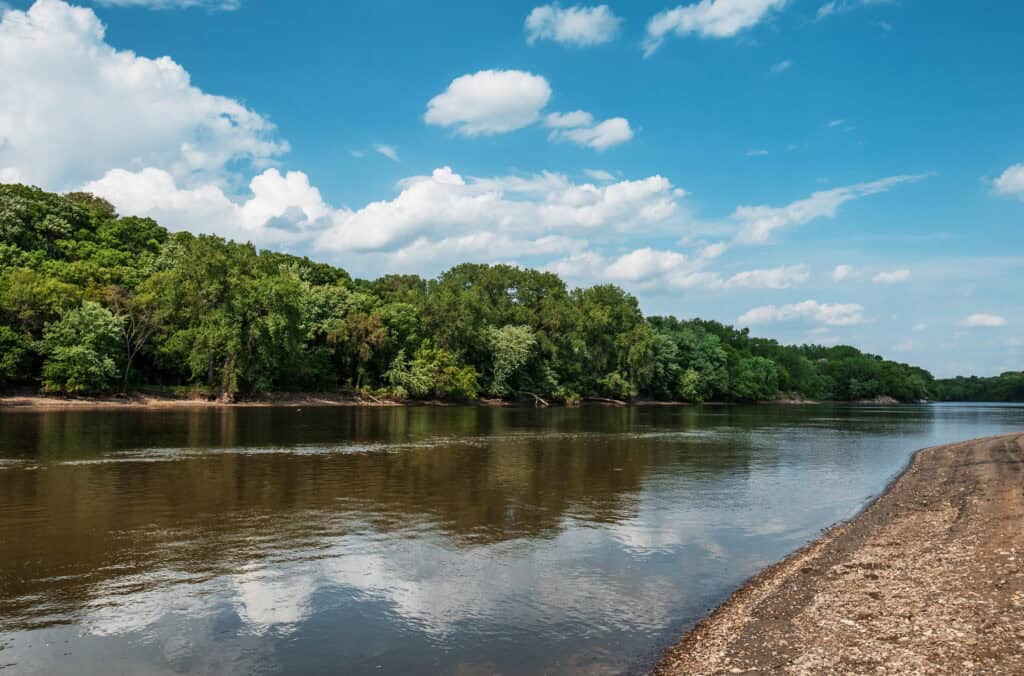
Minnesota might as well be synonymous with lakes and waterways. The Mississippi River begins in Minnesota, and our many lakes grow wild rice in abundance. We vacation on the lakeshores, and our state is home to one-of-a-kind waterscapes like Voyageurs National Park.It's no wonder that the Dakota people uphold the sacredness of Minnesota's bodies of water. Ancient Dakota lifeways centered around water, and the Dakota people's creation story occurs where the Mississippi River and Minnesota rivers meet: Bdote."Mni" is the Dakota word for water, after all, and from Minnetonka to Minnehaha, dozens of places around the state have names that start with Mni.From Minnesota's city names to its most beloved parks and lakes, Indigenous history is just around the corner, often hidden in plain sight. These are the stories of everyday places and the history behind cherished landmarks in Minnesota—many of them involving lakes, rivers, and water.For Minnesota's Indigenous people, especially the Dakota people who have lived in Minnesota for countless generations, and later the Ojibwe, who historically resided in the northern half of the state, these places have held enduring significance for centuries. Many of these places have also withstood significant change and near destruction, holding awe and meaning for all Minnesotans, Native and non-Native.
Mni Sóta Makoce (Minnesota)
Our state's name comes from a Dakota phrase, translated as "the land where the waters reflect the skies." The Dakota name fits well with Minnesota's nickname: The Land of 10,000 Lakes.
Misi-ziibi (The Mississippi River)
Beginning at Lake Itasca, the mighty Mississippi got its name from the Ojibwe people, who called it Misi-ziibi, or "great river."
Bdote
One of the most significant sites in Dakota culture is where the Mississippi and Minnesota rivers meet. According to their creation stories and oral tradition, this confluence, known as Bdote, is where the Dakota people originated.
Today, Fort Snelling State Park occupies some of the Bdote region. The fort itself sits on a high bluff, presiding over the area, with views of Wita Taŋka (Pike Island), the river confluence, a sacred Dakota burial site—and a former concentration camp where more than 1,600 Dakota people (largely women, children, and elders) were held after the U.S.-Dakota War of 1862.
Wita Tanjka, which some consider the very site of Dakota genesis, and the trails throughout the park offer a serene and scenic place to reflect on the cultural significance of Bdote for Indigenous people and the area's complicated history involving the varied peoples of Minnesota.
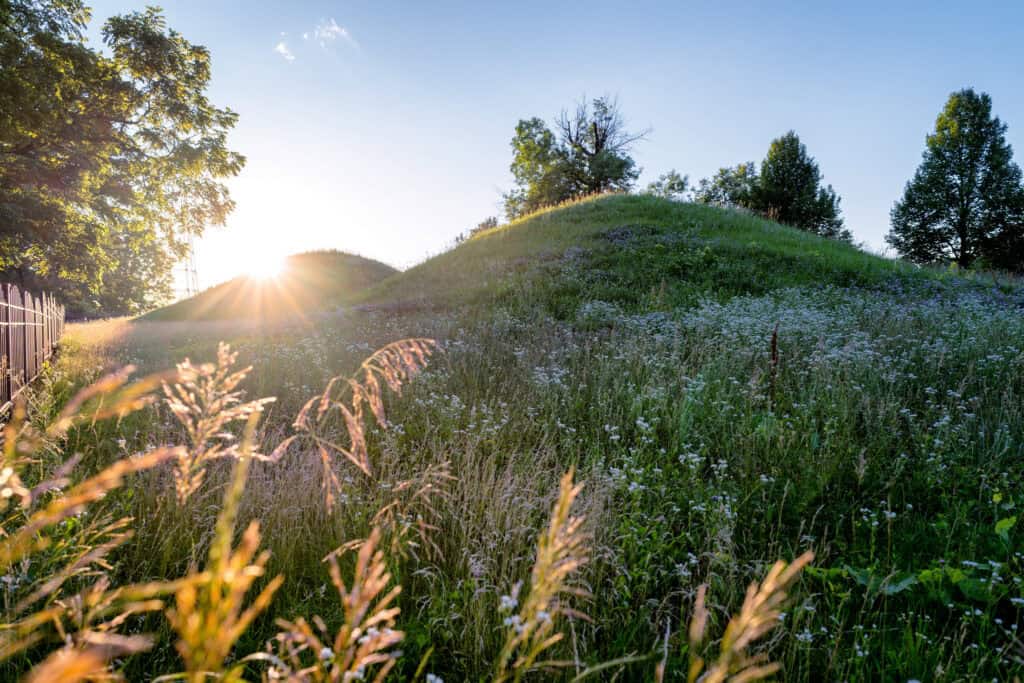
Wic̣aḣapi (formerly Indian Mounds Regional Park)
A beloved neighborhood park for more than a century, the sacred Wic̣aḣapi site sits atop a bluff overlooking the Mississippi in St. Paul's Dayton's Bluff neighborhood. The land is an ancestral burial ground once used by the region's Indigenous people—a landscape shaped by ancient ways of life, including the practice of mound building.
Wic̣aḣapi, which means cemetery, is an earthwork created about 1,500 to 2,000 years ago, as part of ceremonial and burial practices that literally shaped the land in unique and culturally significant ways. These structures hold graves and ancient artifacts from people throughout time. Many of the nearby mounds (around 30), as with others across the Midwest, were destroyed when the land was developed during the city's establishment.
Owámniyomni (St. Anthony Falls)
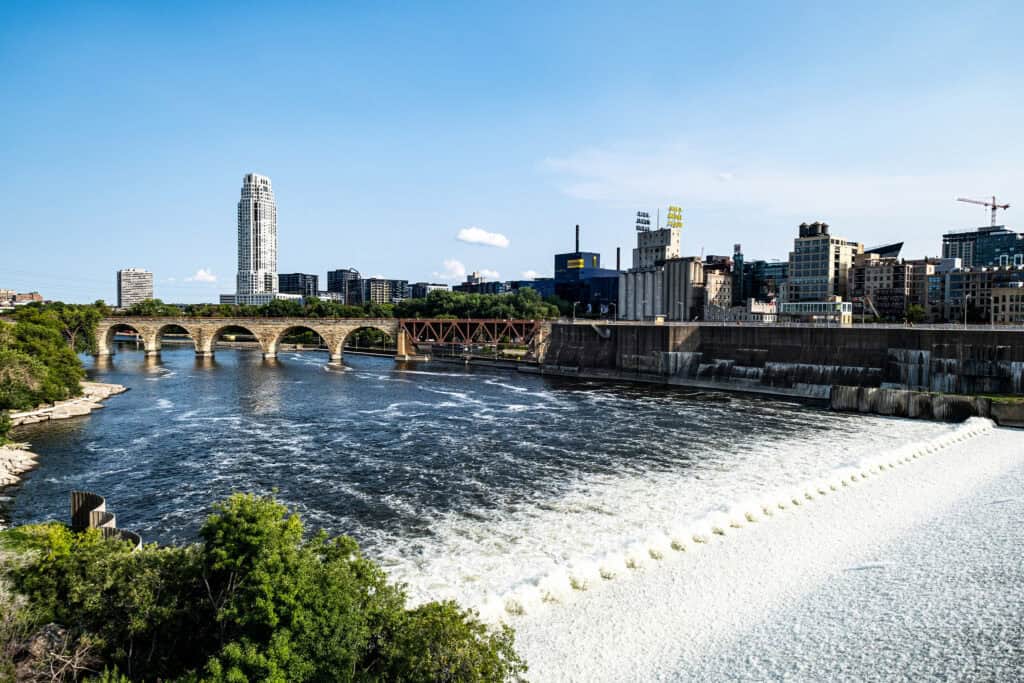
St. Anthony Falls (or Owámniyomni, "turbulent waters," in Dakota) is the site where the Mississippi River once rushed over a limestone drop, creating an energetic waterfall. Both Minnesota's Indigenous people and its settlers recognized the power the falls held.
Owámniyomni seems to lie at the heart of the city, connecting some of Minneapolis's most bustling neighborhoods and is easily accessible from Downtown, Northeast, and the University of Minnesota via the east and west river parkways.
As a point of significant water activity, Owámniyomni is sacred to the Dakota people and is part of a constellation of spiritually significant sites along the river.
Once settlers began using Owámniyomni to power their timber and flour mills in the mid- to late 1800s, industrialization caused the falls' fragile limestone to quickly and severely degrade, permanently altering the falls. What you can see now from the Stone Arch Bridge is a shadow of what the waterfall once was.
However, that may be changing. A Dakota-led nonprofit, Owámniyomni Okhódayapi, began restoring five acres along the falls in 2026, and the land is set to transfer to Dakota stewardship by the end of the year.
Wapaha Ša Paha (Sugar Loaf Bluff)
When driving along Highway 61, which snakes through Minnesota's Bluff Country, Sugar Loaf Bluff is an unmistakable landmark perched atop the hillside in Winona. The bluff is also called Wapaha Ša Paha, or "[Chief] Wapasha's cap" in Dakota.
The Dakota see Wapaha Ša Paha as the sister of Red Wing's He Mni Caŋ (Barn Bluff). According to Dakota oral tradition, the slopes were once a single bluff, split in two by the spirits because of disagreements and disputes among people.
The unmistakable bare limestone formation on the Winona hillside is actually all that remains of a majestic, pointed hill that crested like a wave over the landscape. Then, it more closely resembled the smooth cones of refined sugar people used before granulated sugar was available. Much of the cascading bluff has been carved away, forming this single nub once the hilltop was quarried for limestone.
Bde Maka Ska (Lake Calhoun)
Choose anywhere for a summer stroll in Minneapolis and there's a good chance you'll find yourself circling Bde Maka Ska on a sunny day. Meaning "White Earth Lake" in Dakota, the lake was once the site of a Dakota village. Groups tended to gather around bodies of water, which were excellent for sustaining Native American ways of life.
The state restored the lake's Dakota name in 2018, and after a legal challenge, the Minnesota Supreme Court upheld it in 2020. The name change was an early instance of the ongoing efforts to revive the ancestral names of landmarks around the Twin Cities in the 2010s and beyond.
Mankato (Mahkato)
Mahkato means "greenish-blue earth" in Dakota. Blue Earth County, the "h" was misspelled as "n," becoming the city we now call Mankato. Blue-green clay was plentiful in the area, which the Indigenous people used for ceremonial body paint.
This article was first published by Good Info.



