




The Kimberley's peak environmental organisation has urged the Western Australian and federal governments to provide more support to the Fitzroy Crossing and Noonkanbah communities dealing with the worst floods in WA's history.
Environs Kimberley director Martin Pritchard said community safety was the number one concern and government agencies needed to "work with the community and listen to their needs to provide food, shelter and help to rebuild important infrastructure damaged during the floods".
Mr Pritchard said the extreme flooding event following ex-Tropical Cyclone Ellie isolated communities, displaced people from their homes, damaged roads and bridges, and had also caused grave problems for wildlife and other animals.
"These floods have been devastating to the community, who have had to leave their homes, belongings and animals behind to evacuate," he said.
"We've seen distressing images of homes inundated with floodwaters, photos of wallabies clinging to bridges or trees and cattle struggling to swim in the floodwaters."
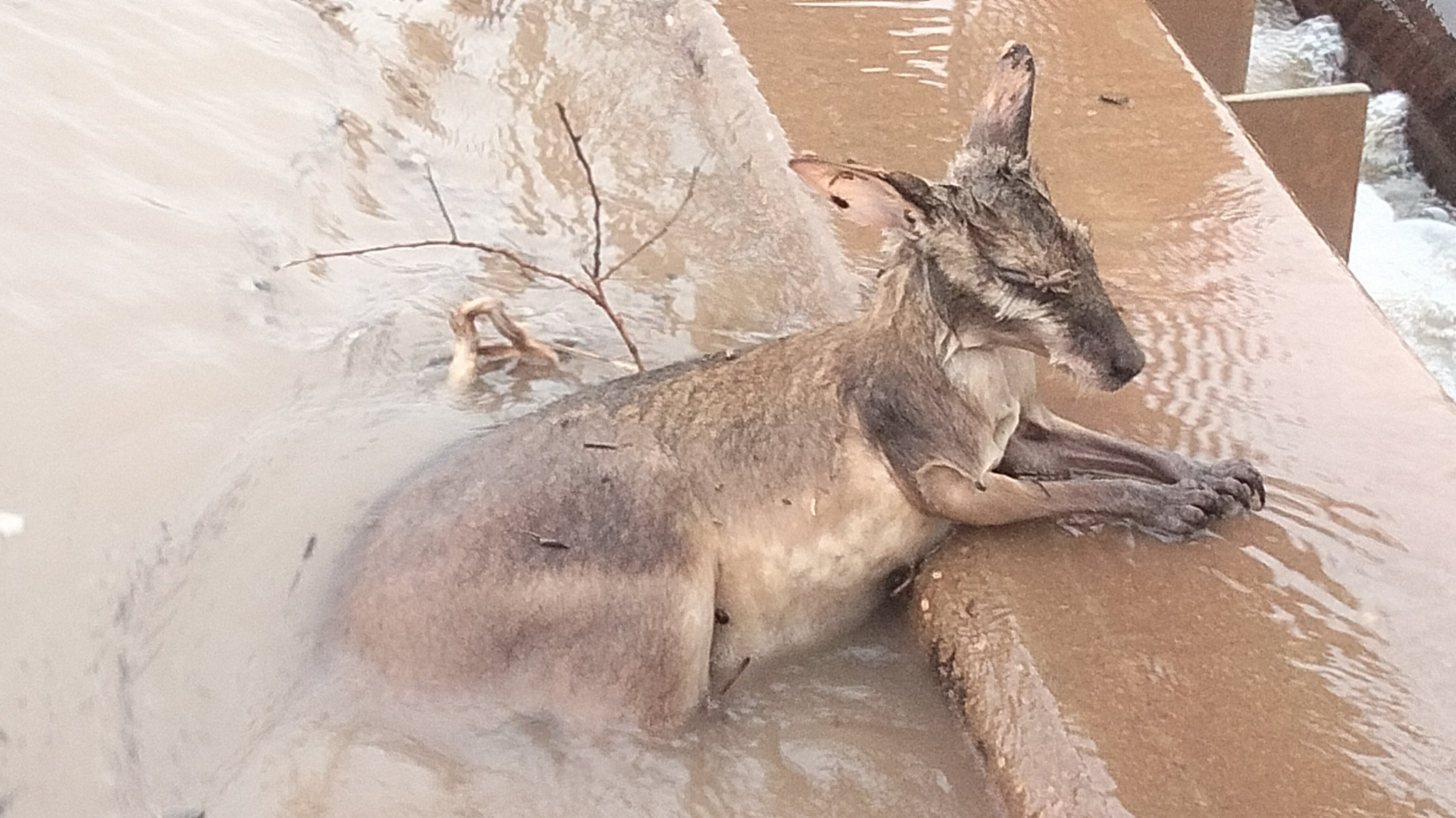
Mr Pritchard said extreme flooding events could continue to happen in the Kimberley as a result of climate change.
"The communities that surround the Martuwarra Fitzroy River experience flooding many years during the wet season, however this is not normal. This is a catastrophic flooding event, with the river reaching a record-breaking 15.8 metres this week," he said.
"We've seen these type of extreme weather events occurring around Australia over the past two years which scientists have linked to climate change. Now that WA has seen its worst flood in history, hopefully this will be a reminder for decision makers that we need to protect our natural environment and create sustainable industries in the Kimberley, and not support damaging large-scale development that will only cause more harm.
"The McGowan government needs to ban fracking to make sure we don't get massive carbon and methane emissions fuelling more extreme events in the Kimberley due to climate change."
National Indigenous Times has contacted the state and federal governments for comment.
A WA government spokesperson told National Indigenous Times that an independent scientific Environmental Protection Authority inquiry into fracking in 2018, led by Dr Tom Hatton, found the environmental risk "low and manageable".
"The State Government accepted all 44 recommendations of this independent inquiry, including introducing new world-class strict controls for where fracking could occur," she said.
"This science-based policy ensures fracking is not permitted in over 98 per cent of Western Australia. This includes the vast majority of the Kimberley, including the Dampier Peninsula and public water source areas.
"Across the two per cent portion of the State where it can occur, for the first time, traditional owners and farmers will have the right to say yes or no to fracking production on their land.
Mr Pritchard also raised concerns that proposals to irrigate from the Martuwarra Fitzroy River "would not only put more pressure on the environment but were also irresponsible given the risk of these extreme weather events".
"This flood would have wiped out irrigation infrastructure, as it did at Camballin in the 1983 floods. Millions of taxpayers and private dollars were washed away due to these floods and have yet to be cleaned up more than 40 years later – we can't let that happen again," he said.
The WA government spokesperson said the state's Department of Water and Environmental Regulation received more than 43,000 submissions in response to the discussion paper on the future management of water in the Fitzroy River catchment, "a significant amount of feedback", and is continuing to consider all submissions in preparation of a draft water allocation plan.
"The McGowan Government is committed to the development of a management plan for the Fitzroy River catchment and no dams on the Fitzroy River and tributaries," she said.
"These commitments are aimed at delivering outcomes for the Fitzroy River and its people, by both protecting the river's heritage-listed cultural and environmental values and providing a basis for sustainable economic development."



