




The vital work of language revitalisation and preservation continues to remain paramount for maintaining culture across the country.
Like many language groups during the protectionism era, the Dharawal people were subject to ration cuts and having their children taken from them for speaking their own language.
Incredibly, members of the La Perouse Aboriginal community managed to keep the Dharawal language alive thanks largely to the efforts of five senior women: Aunty Boronia (Iris) Williams, Aunty Beryl Timbery-Beller, Aunty Gloria Ardler, Aunty Clara Mason, and Aunty Shirley Ingrey.
Remembering their parents and Elders speaking Dharawal, they volunteered their time and emotions in the 1980s and 1990s to document and pass on their knowledge, assisted by family records from the early 20th century.
After they passed, the Dharawal language revitalisation continued with the Gujaga Childcare Centre, and later the Gujaga Foundation, launched in 2019, with the aim of promoting and Dharawal language and culture.
As a result, and despite the permeating impacts of colonisation and the protectionism era which still hang heavy across the community, the Dharawal language continues to grow.
This week, efforts to keep the Dharawal language alive and continue the work of those five incredible women has been given a boost, with the announcement of a new partnership agreement between the Gujaga Foundation and the Paul Ramsay Foundation (PRF) worth $5 million over five years.
The funding will help support the delivery of their Dharawal Language program by expanding its team of language educators, with the ultimate the aim of growing the language program in schools and childcare centres across the city.
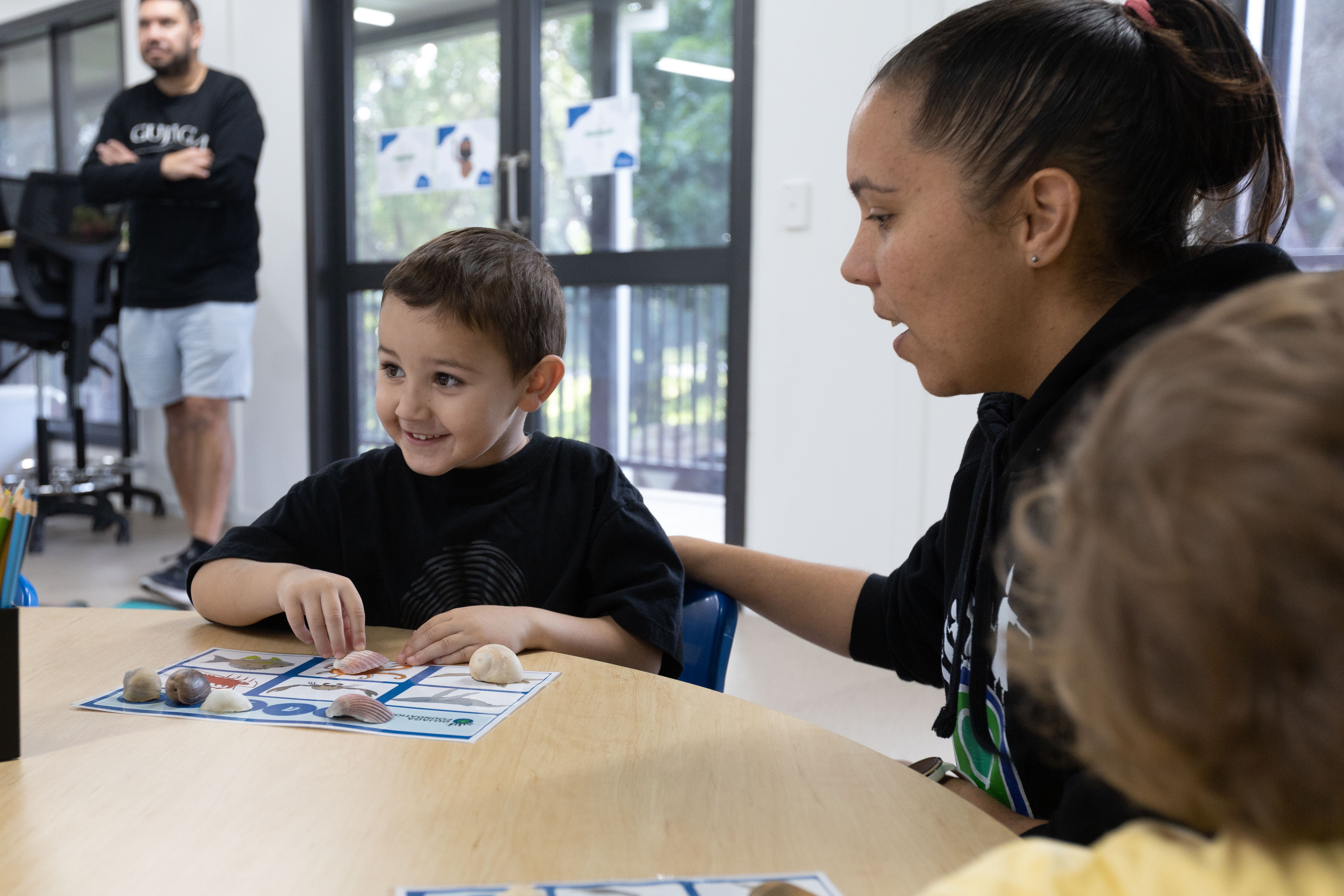
Quaiden Williams Riley is a Dharawal language educator and descendant of Aunty Boronia (Iris) Williams was clear on the importance of keeping the Dharawal language alive.
"Having the opportunity to learn Dharawal language passed down from my great grandmother strengthens my identity and my connection to my Country," he said.
Since its inception, the Gujaga Foundation has grown to more than 20 staff—half of whom are direct descendants of the five women who did so much to keep the embers of the Dharawal language burning.
Director Alan Daly said being able to see the language knowledge provided by his great grandmother's sisters, Aunty Boronia and Aunty Shirley, as well as their grandmother, Kate Sims, being taught to the next generation was "hugely rewarding".
"The fact that we have been able to build a sustainable social enterprise in support of this purpose is also a source of pride," he said.
The Gujaga Foundation's work has already seen an increase in the number of proficient Dharawal speakers to 13.
There is hope this is number will continue to grow through the renewed partnership, which will help to refine the business approach as well as expand its work throughout the northern Dharawal cultural area.
On the new partnership with PRF, chief executive Ash Walker was positive it would improve and expand the organisation.
"The renewed support from the Paul Ramsay Foundation will enable us to continue growing so that we are able to share Dharawal language with both our community and all Australians living on our Country," he said.
PRF was an early partner in the Gujaga Foundation. The philanthropic foundation has supported countless First Nations organisations and communities across Australia and helped the Gujaga Foundation in implementing its business model, as well as enabling it to grow its engagement with educational centres through Indigenous language education.
PRF Head of Young People, John Bush, said the new partnership announcement would also help strengthen reconciliation and self-determination.
"The Dharawal language program is currently running in more than 50 schools and childcare centres across Sydney," Mr Bush said.
"Through language and stories, First Nations children, their families, and communities have a vital pathway for strengthening connection with Country and Culture, determining their own way forward.
"The program is also playing a vital role to enact reconciliation through sharing Indigenous knowledge with the non-Indigenous population from early childhood.
"We are excited to see this expand further across traditional Dharawal Country with renewed partnership."



