




The University of Adelaide and the University of South Australia have marked the second annual Kaurna Day with the launch of a Kaurna songbook aimed at preserving and revitalising the language.
Titled Yurikurringa Ngadluku Paltirna: Listen to Our Songs, the book is a contemporary update of Kaurna Paltinna, first created in the 1990s.
Developed with Kaurna Warra Pintyanthi (KWP), the Centre for Aboriginal Studies in Music (CASM), Kaurna Plains School, independent Aboriginal artists, and Kaurna community members, the book contains 15 songs in Kaurna language or incorporating Kaurna words.
With 109 Indigenous languages in Australia listed as endangered, efforts to protect language and cultural identity remain critical.
KWP project officer, Jaylon Newchurch, said the songbook highlights the evolution of language resources since the 1990s.
"The songbook plays a crucial role in the preservation and revitalisation of the Kaurna language, demonstrating how far language resources have come since the 1990s," Mr Newchurch said.
"It honours the work of those who helped restore the language and serves as a living testament to its resilience.
"By showcasing Kaurna in a modern context, the songbook helps ensure that the language remains vibrant for future generations while staying deeply connected to our roots."
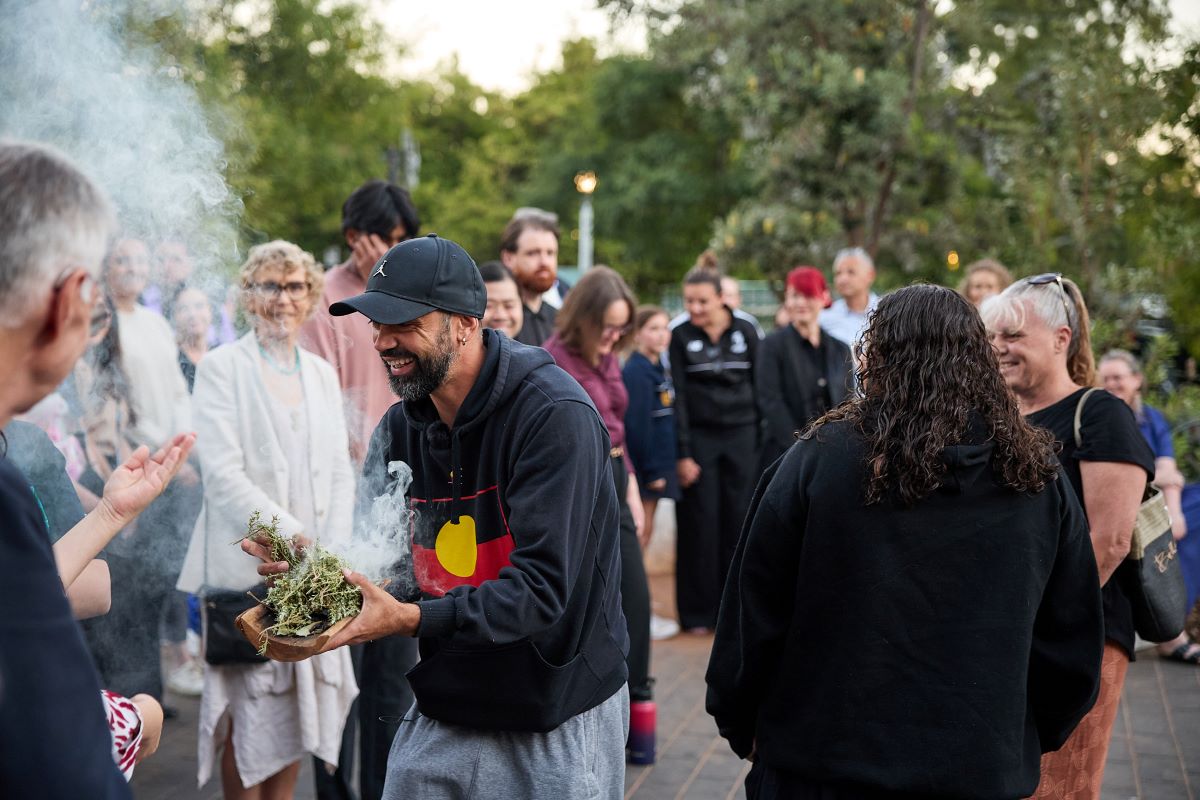
This year, Kaurna Day expanded beyond the University of Adelaide's North Terrace campus to Roseworthy, Waite, and UniSA's City West Campus.
It included a sunrise smoking ceremony at multiple campuses, followed by breakfast catered by Creative Native.
The North Terrace campus hosted community stalls featuring First Nations artists, makers, and businesses, along with performances from DEM MOB, Jamie Goldsmith and Taikurtinna Dance Group, and the Kaurna Plains School Choir.
Academic showcases, student presentations, collaborative sessions, traditional games, and live artmaking by artist Brooke Rigney were also held.
At UniSA's City West Campus, Aboriginal leader Jack Buckskin led Kaurna language workshops.
Limited-edition songbooks will be provided free to schools and community centres in the Kaurna Plains region, with digital versions and audio recordings available on the KWP website.
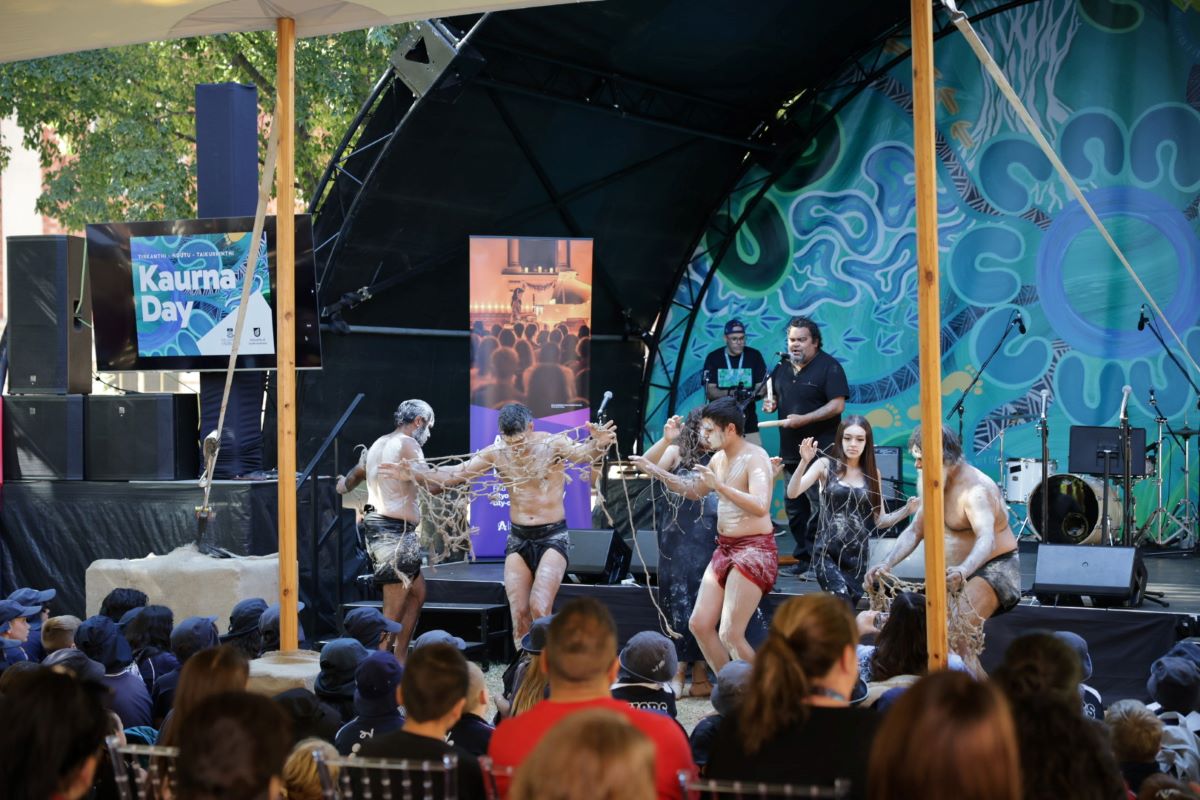
University of Adelaide Pro Vice-Chancellor (Indigenous Engagement), Professor Steve Larkin, said Kaurna Day fosters cultural unity and strengthens ties between the university and the Kaurna community.
"Kaurna Day is a celebration of unity and cultural pride, weaving together the rich histories of the Kaurna community and the academic realms of the University of Adelaide and UniSA," he said.
"Together, we are building a brighter future, honouring the past while paving the way for growth, understanding, and lasting partnerships."
University of Adelaide Vice-Chancellor, Professor Peter Høj, said Kaurna Day reflects the university's connection to the land and its traditional custodians.
"Recognising and celebrating this enduring connection is essential to fostering meaningful reconciliation," he said.
UniSA Pro Vice-Chancellor (Aboriginal Leadership and Strategy), Professor Tina Brodie, said Kaurna Day celebrates both Kaurna culture and broader Aboriginal and Torres Strait Islander traditions.
"Kaurna Day is an opportunity to recognise the ongoing connection of the Kaurna People to their place and to celebrate Aboriginal Torres Strait Islander Cultures more broadly," she said.
"The launch of the Kaurna songbook is a representation of the generosity of the Kaurna people and all Aboriginal and Torres Strait Islander Peoples' who share knowledges and culture with us all."



