



WARNING: Aboriginal and Torres Strait Islander readers are advised the following article contains the name and image of an Indigenous person who has died.
Pressing on the photos in her iPhone gallery, Dawn Carter watched still images move — moments of her daughter, captured before her death.
A face lifts. A voice returns.
"When her grandmother came to visit, Candice [Dawn's daughter] took photos with her. When I pressed on the image to see it go live, Candice was saying, 'come on Grandma, I've got you under my wing'," Dawn told National Indigenous Times.
Last November, Dawn lost her daughter in a dog attack in the Fitzroy Crossing home she has rented from WA's Department of Housing and Works (DHW) for nearly 20 years.
Dawn, a proud Gooniyandi and Kija woman, says Candice's world was organised around family.
When Candice's teenage nephew — a talented footballer and artist — was navigating a difficult period, Dawn describes her daughter as "the driving force" behind getting him back on his feet.
"When he was in trouble, she moved him in, helped him stay on curfew, and told him how it was straight," Dawn said.
"She is the reason he has succeeded to where he is today."
Candice, who was 27, and a proud Gooniyandi and Kija woman met people by asking what she could give, not what she could get.
As a youth worker at Marra Worra Worra Aboriginal Corporation's (MWWAC) Night Space and patrol, manager Nicola Angell described her as "passionate, fearless and funny".
"Candice had high expectations and would insist the kids respect themselves, others and their environment," Ms Angell said.
The mourning for Candice is constant and cellular — though familiar — for Dawn.
Her eldest daughter passed away in 2008.
She had lived with cerebral palsy and died following medical complications.
"She had plates in her hips that we were going to get removed, and she ended up with internal bleeding," Dawn said.
"Doing all of this for a second time, I've learnt all the mistakes and warning signs, because me and Candice both only just came out of losing the first girl.
"She's been gone for 18 years."
By the time Candice died last November, Dawn was already living with the weight of another loss.
Beneath Dawn's sorrow for Candice runs an undercurrent of injustice.
Dawn said she believes the DHW was "a contributing factor" in Candice's death, and that the department behaved in culturally insensitive ways that re-traumatised her in the aftermath.
The two dogs involved in the fatal attack had been with the family for 15 years.
As two women living alone for extended periods, Dawn and Candice wanted to keep the dogs outside for protection but had been waiting three years for the DHW to fix the back door.
"I've been waiting for over three years for my back door to be fixed, and they fixed it two days after my daughter passed away," Dawn said.
"If we could lock our back door securely, the dogs would never have been in the house."
Dawn claims she had called the department's 1800 maintenance number numerous times over the last few years — including as recently as a month before her daughter died — to request the repair.
The DHW responded to the claims in part saying they "offer its condolences to Ms Dawn Carter and her family".
"Maintenance works have been undertaken at Ms Carter's property as required over the course of the tenancy to ensure it remains clean, safe and working," a DHW spokesperson said.
Under public housing rules, Dawn could not arrange her own repairs and was required to wait for the department's approved maintenance provider to attend the property.
Candice, Dawn said, had been frustrated and concerned about not being able to keep the dogs out.
"She was getting sick of the DHW not doing it, so she was in the process of saving up to buy pool fencing just to at least block off the back veranda so she could get the dogs outside," she said.
Failures in remote housing maintenance — including in communities like Fitzroy Crossing — were laid bare in a WA Auditor-General report last year.
The review found the state's housing maintenance system was plagued by delays, high costs and weak oversight.
Since 2015, housing maintenance across the Kimberley has been outsourced under a single contract to private provider Lake Maintenance.
Rather than contacting local tradespeople directly, tenants must report faults through Housing Direct, a government hotline that assigns a priority rating and work order.
Under that system, a back door that cannot be locked — like the one at Dawn's home — should be classified as an emergency or urgent repair, requiring attention within hours or, at most, two days.
However, the Auditor-General found that more than one in four emergency and urgent jobs were not completed within required timeframes.
Those failures did not remain theoretical for Dawn.
One week after Candice's death, a DHW officer visited Dawn.
Candice had been contributing to the rent at Dawn's Fitzroy Crossing home.
Dawn was told not to worry about rent and that Candice would be removed from the household.
Two weeks later, Dawn received a letter — seen by National Indigenous Times — which stated her rent was "unchanged".
Candice Carter's name still appeared in the household income assessment nearly a month after her death.
"Their actions of printing my daughter's name increased my healing time — my anxiety, my depression," Dawn said.
The DHW acknowledged the mistake, attributing it to an "administrative error on the rent assessment that has since been fixed."
"Ms Carter has not been charged rent since the end of November," a DHW spokesperson said.
The impact for Dawn went far beyond paperwork.
Describing the aftermath of the dog attack draws Dawn back into a moment her body seems to remember before she can find the words.
She said she was told by police that the DHW would conduct a forensic clean of the blood-soaked bathroom and bedroom.
"The police said that the DHW were going in to do a forensic clean. They don't want you to worry about the house — they'll come and get the keys," Dawn recounted.
"When they use those words, 'forensics', I assumed that professionalism would go along hand in hand with that."
Following the clean, Dawn said she received an unacceptable and vague list of items removed.
"They sent an email back giving me dot points — 'clothing under vanity', 'bedding on bed', 'clothing on the floor'," she said.
"Knowing and having a clear list of what's there and what's not there would have helped a lot with my anxiety and my healing moving forward."
When Dawn raised concerns about how her daughter's belongings were handled, she said she was told by a housing officer she should be "a bit understanding of the cleaners, because of the trauma that they were walking into".
Dawn says she is too afraid to look at her daughter's items after the way the Department handled them.
In response a DHW spokesperson said the department "recognises the stress the forensic clean caused Ms Carter and her family and will review its approach to organising forensic cleaning in light of her concerns".
Maureen Carter, Dawn's mother and Candice's grandmother, supports her daughter's claims that the department's response lacked cultural sensitivity and compounded the family's trauma.
"Any sensible person would have gone to the grieving mother and said, 'We're going to go in there and clean, and we want to let you know that we'll treat everything with sensitivity'," Maureen told National Indigenous Times.
"None of that was done."
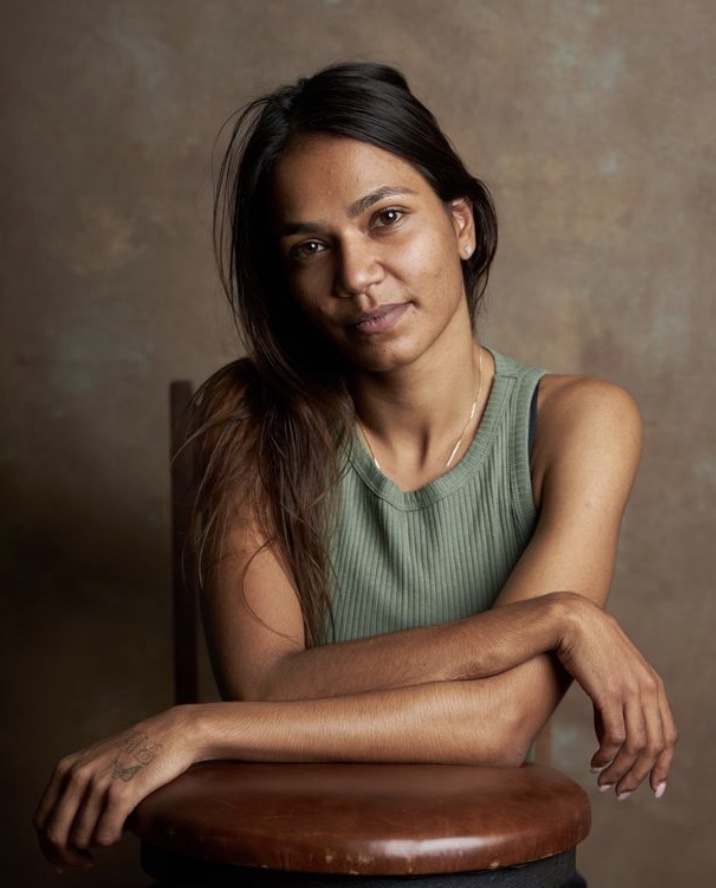
A DHW spokesperson said the department met with Ms Carter's family prior to the forensic clean to explain the process.
Maureen, a proud Gooniyandi and Kija woman, spent the week after her granddaughter's death in mourning inside the home with her sister.
In her culture, it is the grandmother who cleans the space where a grandchild lived, while the mother spends time on Country.
"When I went to the house, me and my sister, we didn't just go in and start cleaning," she said.
"We went into all the bedrooms. We cried into the lounge, kitchen, and then we went to her room, and we cried, and I spoke to her.
"I told her that myself and her other grandmother were here now and we were going to start cleaning this house."
For seven days, Maureen said, she spoke to her granddaughter, letting her know she was taking care of her home.
"Every day we went there, we just opened the door, we would do the same thing," she said. "We'd cry, and we'd go to her room and say, 'We're coming back. You know, it's only us.'"
During this period, Dawn said the DHW officers described her mother and aunt as a hindrance to tradies they had organised to attend the property.
Maureen said she was sharing her experience so other Aboriginal families would not have to endure the same compounded trauma during mourning periods.
"Government departments that provide services to Aboriginal people need to have cultural protocols within their policies, so that when they're dealing with Aboriginal people, it's done in a culturally sensitive way," she said.
After the loss that has reshaped her life, Maureen made one request to the DHW.
"I said to the Department I'd like to see is this house demolished," Maureen said.
"And I was told, 'Oh, well, it's up to the department.' And I said, 'Look, Fitzroy is cultural. You're not going to have a family in Fitzroy wanting to live in this house.'"
Looking after her granddaughter's home after her passing feels backwards for Maureen; Candice had always reassured her that she would one day be the one doing the caring.
"She always said to me, 'Nan, when you get too old and you can't look after yourself, I'm the one who's going to come down (to Perth) and look after you'."
Candice never got the chance to become her grandmother's carer.
Instead, her care lives on in the young women she supported.
Dawn had always known the children adored her daughter. It was only later that the full reach of her influence on young women became clear.
As part of MWWAC After the Flood program — a series of workshops created to help young women rebuild confidence after the disruption of the 2023 Fitzroy Valley floods — Candice had stepped into a mentoring role.
She hadn't told her family she was involved.
Recently, a MWWAC staff member sent Dawn a link.
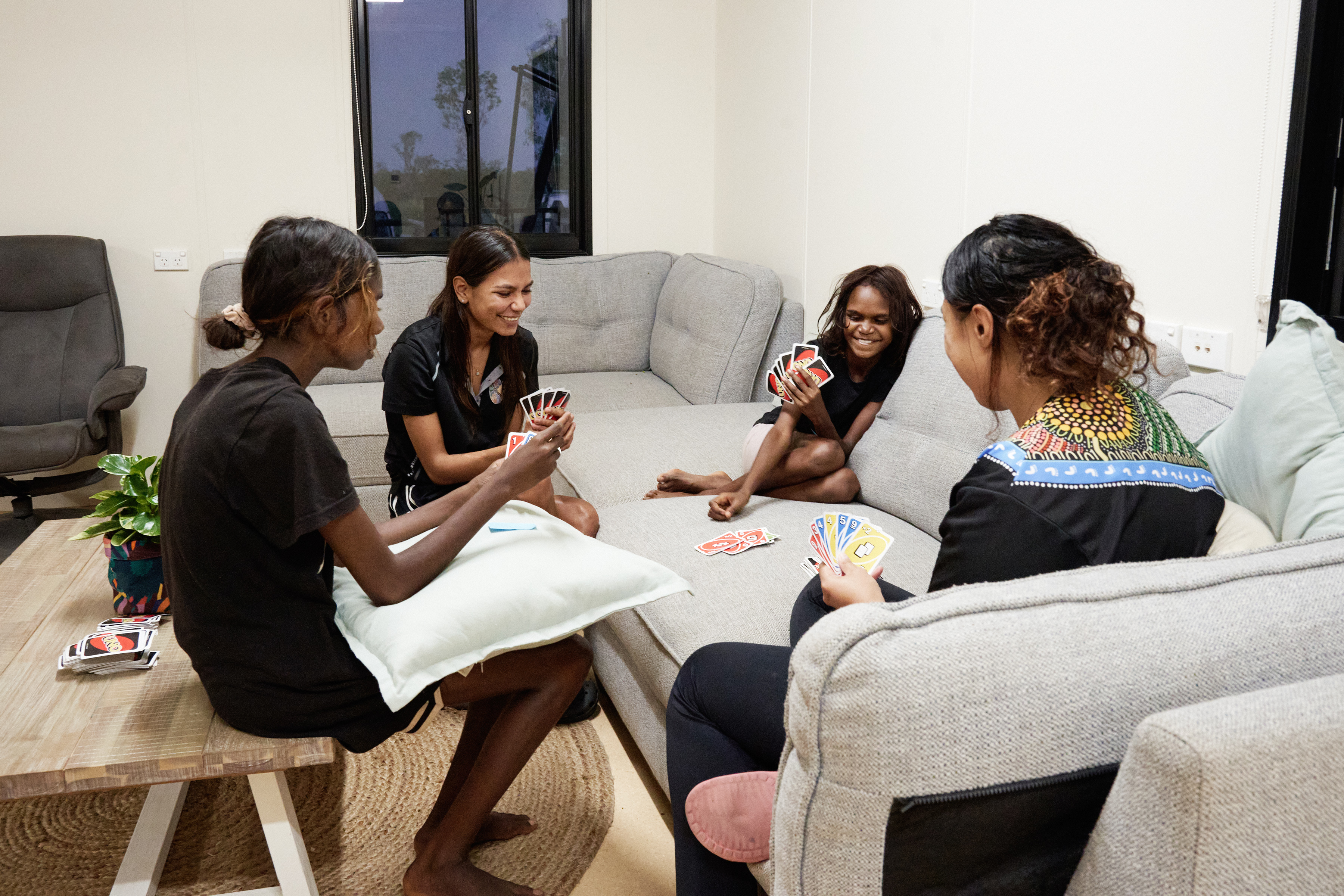
Inside were more than 70 photographs and short videos of Candice — playful and focused — teaching girls how to walk a catwalk, apply makeup, and hold themselves with confidence.
In an interview with Bunuba woman and former MWWAC communications officer, Obby Bedford, Candice spoke about the meaning she found in her work.
"It makes me feel good being someone young people can talk to about things they can't talk to anyone else about," she said.
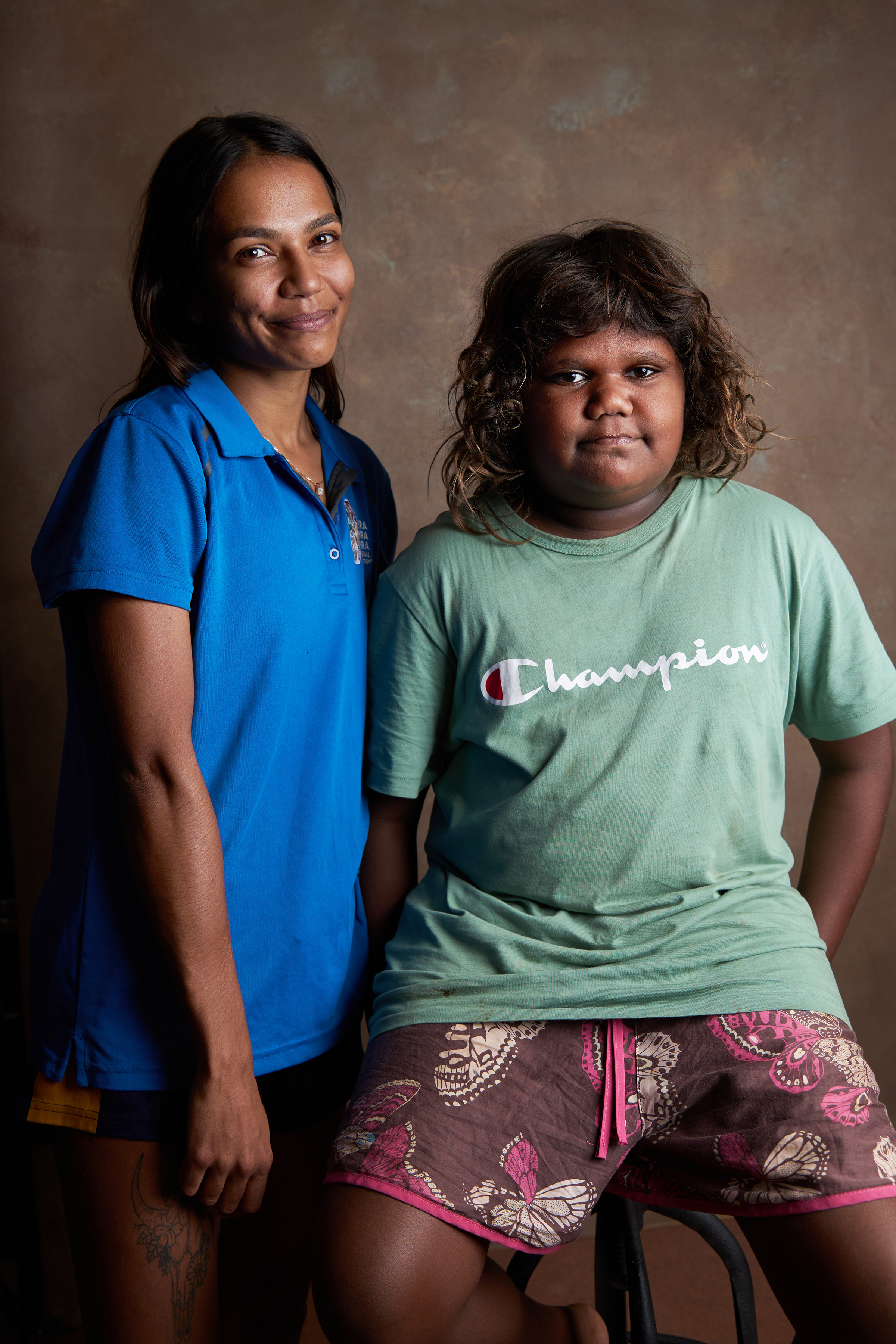
Dawn says she never thought she would leave Fitzroy Crossing.
She was raised there and later brought up her own family in the remote town. But staying has become too painful.
"I never thought I'd leave, but this is the one thing that will make me leave," she said.
Dawn is moving to Perth to support the nephew Candice had nurtured and encouraged to pursue his AFL and art goals.
"I'm doing it in honour of her and her wishes and her nephew's hopes and dreams," she said.
"As soon as the funeral is over, I'll leave. It's a big thing for me.
"This town — I just feel like I've given everything. I don't have anything else to give."
The National Indigenous Times does not suggest it has been established DHW is responsible for Candice's death.



