



Note: this article contains references to assault and abuse which some readers may find distressing.
What happened to Kumanjayi Little Baby in Mpwarente / Alice Springs shocked the nation, and especially Aboriginal people.
Aboriginal women from throughout Australia this week were meeting in Naarm, Melbourne, when we learnt what happened. We were at the Women Deliver conference, to advocate for women and girls' safety, health and human rights. And we cried when we heard the news and are so sorry for mum, the family and community in grief.
The plague of violence against women and girls
Too many Aboriginal women have been sexually assaulted as children. Even though this is not our culture.
I wrote my Ph.D. on Aboriginal child sexual assault over a decade ago, knowing how serious a problem this is. It was my own lived experience, as it was my mother's when she was a girl. It was also a part of Australia's colonial history and still happening to many Aboriginal children who have no voice. Suicides of boys and girls caused by sexual assault and violence was happening while perpetrators were free to intimidate and traumatise.
Aboriginal child sexual assault has been neglected too long. A decade of government inquiries, including the NT Little Children are Sacred inquiry led by Alyawarra woman and health leader Pat Anderson did not lead to the changes needed to protect children. It was largely ignored by the Prime Minister John Howard who instead declared the Northern Territory Emergency Response (NTER), calling in the army and implementing widespread reforms which lost sight and focus on child sexual assault.
Aboriginal self-determination and the leadership of Aboriginal women is vital
In 2016 I began campaigning for a dedicated national plan to end violence against Aboriginal women and children. It was supported by UN Treaty bodies and Aboriginal women alike, and finally after many years, the Australian government. We launched Our Ways - Strong Ways - Our Voices this year. The plan acknowledges violence to women and child sexual assault is a grave human rights violation. We also understand the importance of Aboriginal self-determination and the critical need for our communities to be empowered to lead responses.
Violence against women and girls is preventable. Too often the responses of the state have neglected women and children's safety, endangered them and evidenced racism and bias. We need prevention, healing and systems transformation that tackles neglect and discrimination, including in the criminal justice system. We must raise awareness itself of child sexual assault and ensure that mums can have safe housing as this is critical.
We know that Aboriginal male perpetrators, when they are apprehended and incarcerated, are not held accountable. Prisons can make women and children less safe as perpetrators leave with no rehabilitation and pose serious risk to women and children safety. Aboriginal men must be supported to lead programs to address violence and abuse.
Social Services Minister Tanya Plibersek at the launch of the national dedicated plan committed to invest 218 million to working with Aboriginal community-controlled organisation (ACCOs) to build community safety. We reiterate that Aboriginal women led specialist services have had decades of experience and must be supported to grow and offer critical support to victims experiencing violence, as well as preventative work.
Gender inequality at the core of violence
We also need to tackle gender inequality and the role it plays in perpetuating gender-based violence. The government's support for 'economic empowerment' lacks an evidentiary base, creates personal wealth for a minority of Aboriginal people (and non-Aboriginals falsely claiming identity) and does nothing to address women and children's safety which must be treated as a priority.
As we know, billions are invested in the Aboriginal affairs budget but where's the focus on gender and gender-based violence? This can be compared to the government's commitment in foreign affairs and aid that prioritises gender and women and girls' safety.
In the aftermath of the death of Kumanjayi Little Baby we should be having serious conversation on violence to Aboriginal women and children whose lives are precious.
As a former member of the UN Permanent Forum for Indigenous Issues I promoted member states attention to the historic UN CEDAW General Recommendation 39 (2022) on the Rights of Indigenous Women and Girls, calling for an annual report to the Forum on its implementation, yet this was ignored by Australia.
Kumanjayi Little Baby must never be forgotten. In the name of all our women and girls whose lives were stolen, we call for justice, and an end to Indigenous femicide and this horrific violence.
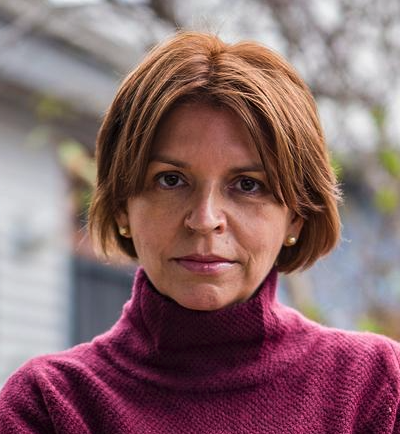
Dr Hannah McGlade is a Kurin Minang human rights expert and law academic.
13 YARN - 13 92 76
Lifeline - 13 11 14
1800 RESPECT - 1800 737 732



