


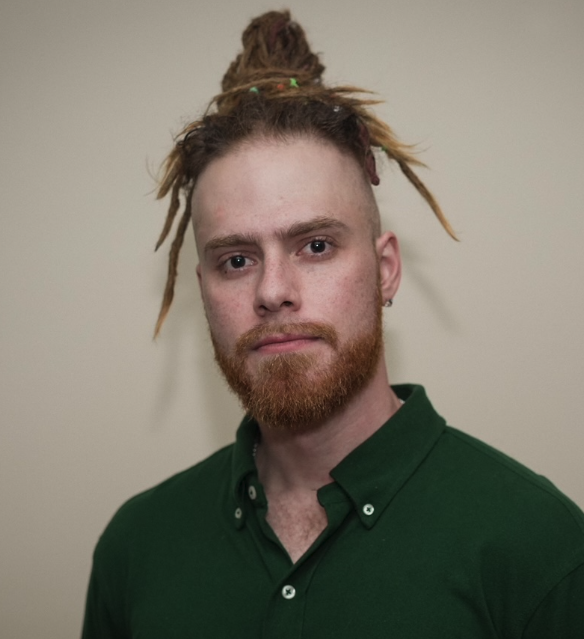

Dr Jared Miles, a proud Yuwi man and academic at the University of Queensland's School of Pharmacy, is working hard to see more Indigenous people join Australia's pharmacy workforce.
"Indigenous people make up just 0.3 per cent of the pharmacy workforce and we are incredibly underrepresented," Dr Miles said.
"Part of my work as a researcher is looking into why this is the case, and what we need to do to change that."
Drawing from his own experiences feeling overwhelmed and isolated as an undergraduate, Dr Miles aims to create a supportive environment for first-year Indigenous pharmacy students.
"When I was an undergraduate student, I found aspects of the university experience really overwhelming, and it was challenging to find other Indigenous students in such a big cohort," he said.
"When I took up my teaching role, I wanted to ensure that incoming students had opportunities to connect with each other, and since then, the number of Pharmacy students identifying as Indigenous has grown from four students to nine students."
As the school's Aboriginal and Torres Strait Islander Education Liaison, Dr Miles reaches out to new Indigenous students each semester.
"At the start of each semester intake I reach out to the Indigenous students and introduce myself, let them know of the current scholarship opportunities and travel funding opportunities, and offer to be their support person at UQ," he said.
He has also played a key role in restructuring the Bachelor of Pharmacy program by introducing a 'blended' teaching model.
"I wanted to develop a model that allowed our students to easily apply the core concepts to the real world," Dr Miles explained.
"Using online videos, quizzes, and other interactive activities to teach the core concepts allows for the students to engage with them in their own time and creates a more attractive learning experience."
"When they get into the face-to-face element of the class, it's then taught in a seminar format where we can discuss how the science can be applied in a real-life pharmacy setting."
In addition to his teaching efforts, Dr Miles was awarded funding through the Australian Research Council Discovery scheme for his research on nicotine metabolism in Indigenous women during pregnancy.
"We're running a community program with Indigenous Health Services, coincidentally in Maryborough where I'm from, to improve literacy and healthy pregnancy around nicotine exposure," he said.
"We don't know how pregnant women actually metabolise nicotine, and therefore don't know what the health impacts can be for both mother and baby."
"We are analysing the blood and urine samples from women in this community, looking at not just the impact of traditional nicotine products, but other factors including vaping and second-hand smoking from partners."



