



Reconciliation Action Plans (RAPs) should fundamentally change the relationships organisations have with Aboriginal people and Aboriginal organisations, says the former South Australian Guardian for Children and Young People.
Appearing in Adelaide last week during the National RAP Conference, Shona Reid also argued that relationships with government, businesses, universities, philanthropic organisations and the broader community sector are critical to helping ACCOs grow and thrive.
"We don't need partnerships that make us dependent. We need partnerships that build our independence, our capability and our influence," she said.
"How do they participate in transforming their services to better meet those of our community?"
The now Chief Executive of Aboriginal Family Support Services (AFSS) in South Australia added: "Imagine if partnerships were designed around long-term organisational strength rather than our short-term projects?"
They need to recognise that Aboriginal organisations bring significant expertise to the table, the Eastern Arrernte woman said.
ACCOs understand communities, she argued, adding: "We understand our histories; we understand the complexities that sit behind that."
"We don't have generational wealth in ACCOs. We don't have the generational infrastructure that sits there."
More than five million Australians now work or study in organisations with RAPs, while 62,000 Indigenous people nationwide are employed by RAP organisations.
Research conducted by CIPW found that Indigenous workers employed by organisations with RAPs were less likely to experience racism than those working elsewhere.
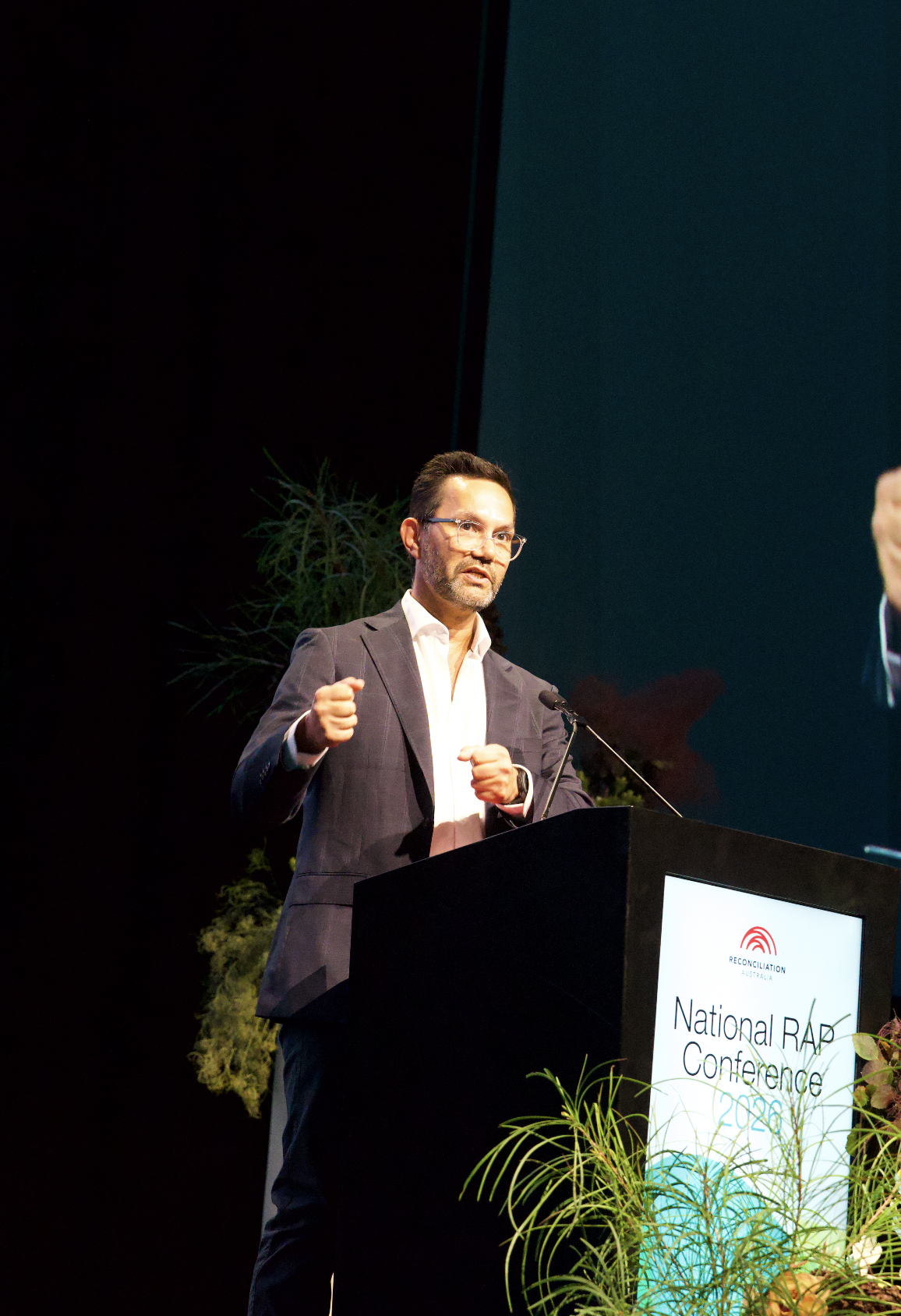
Appearing alongside Ms Reid, Selwyn Button from the Productivity Commission raised concerns that some government agencies have moved away from using RAPs as a practical tool to improve communities and workplaces.
"We've seen a shift away, in terms of government services...fulfilling RAP obligations, and using RAPs as vehicles and tools to look at implementing change," he said.
The Gungarri man noted Priority Reform One of the Closing the Gap Agreement, which centres on partnerships, decision-making, power, autonomy and authority, as well as Priority Reform Three, which focuses on government transformation.
It is about "giving that to Aboriginal and other people to help make better decisions and to partner with governments to do that", he argued.
"It speaks very much to relationships and respect. It is very much about what the reconciliation movement has been on about for a long period of time."
The Commission is currently reviewing the National Agreement on Closing the Gap, and Mr Button argued that governments, businesses and organisations need to look beyond the outcomes they want to achieve.
Meaningful reconciliation and progress on Closing the Gap require genuine relationships, shared decision-making and accountability, Mr Button said, rather than simply setting targets and reporting statistics.
Instead, there needs to be a focus on changing the systems and relationships that influence those outcomes.
"You can't do that unless you've got the relationships; you've got the respect," Mr Button argued.
"You're actually sitting at the table and sharing power and decision-making and enabling community control organisations and enabling community to participate in that process."
During her speech, Ms Reid argued organisations need to apply the Priority Reforms to their own operations, rather than expecting government alone to deliver them.
"A successful RAP should not be measured [by] whether the organisation has delivered on its activities," she said.
"We should be asking ourselves what has it changed for our community, and how our community feels in their place and the place that we share together."
RAPs can help foster these relationships and the shared accountability needed to allow First Nations people to succeed, she added.
"And if we can achieve that, I believe reconciliation can make an enormous contribution to the future of our community-controlled organisations."



