



A rich array of Aboriginal and Torres Strait Islander art at the National Gallery Singapore's exhibition Ever Present: First Peoples Art of Australia has been wowing locals and visitors from around the world.
The exhibition, which runs until September 25, is the largest exhibition of Aboriginal and Torres Strait Islander art seen in Asia.
It has proven popular with audiences getting a window into the culture, history, and contemporary social expression of the world's oldest living cultures.
Among the audience at the gallery when the National Indigenous Times visited last week was German tourist Albrecht Gumlich, who is found reflecting on his own country's shameful history as he studies Australia's troublesome past with First Nations people.
 Tina Baum speaking about Australia 1 by Brook Andrew - Wiradjuri and Ngunnawal artist.
"I am German, and have to deal with an amount of shame about our history, our modern history," Gumlich, an art conservationist, said.
"How is that dealt with by the colonial powers, those people who exploited the world for 500 years?
"And how we can get them to start living with the world without exploiting it? We have a lot to learn from the people who have survived 60,000 years."
Ever Present examines and celebrates Aboriginal and Torres Strait Islander art, confronting all aspects of Australian history.
National Gallery of Australia Aboriginal and Torres Strait Islander Art curator Tina Baum, a Gulumrrgin (Larrakia) Wardaman Karajarri woman, said the exhibition had a lasting impact on audiences.
The Singapore iteration is likely to be the largest the exhibition will ever be, featuring more than 170 artworks drawn from the collections of the National Gallery of Australia and the Wesfarmers Collection of Australian Art.
Ever Present showcases works by more than 150 Aboriginal and Torres Islander artists created over the past 130 years including paintings, video installations, bark paintings,
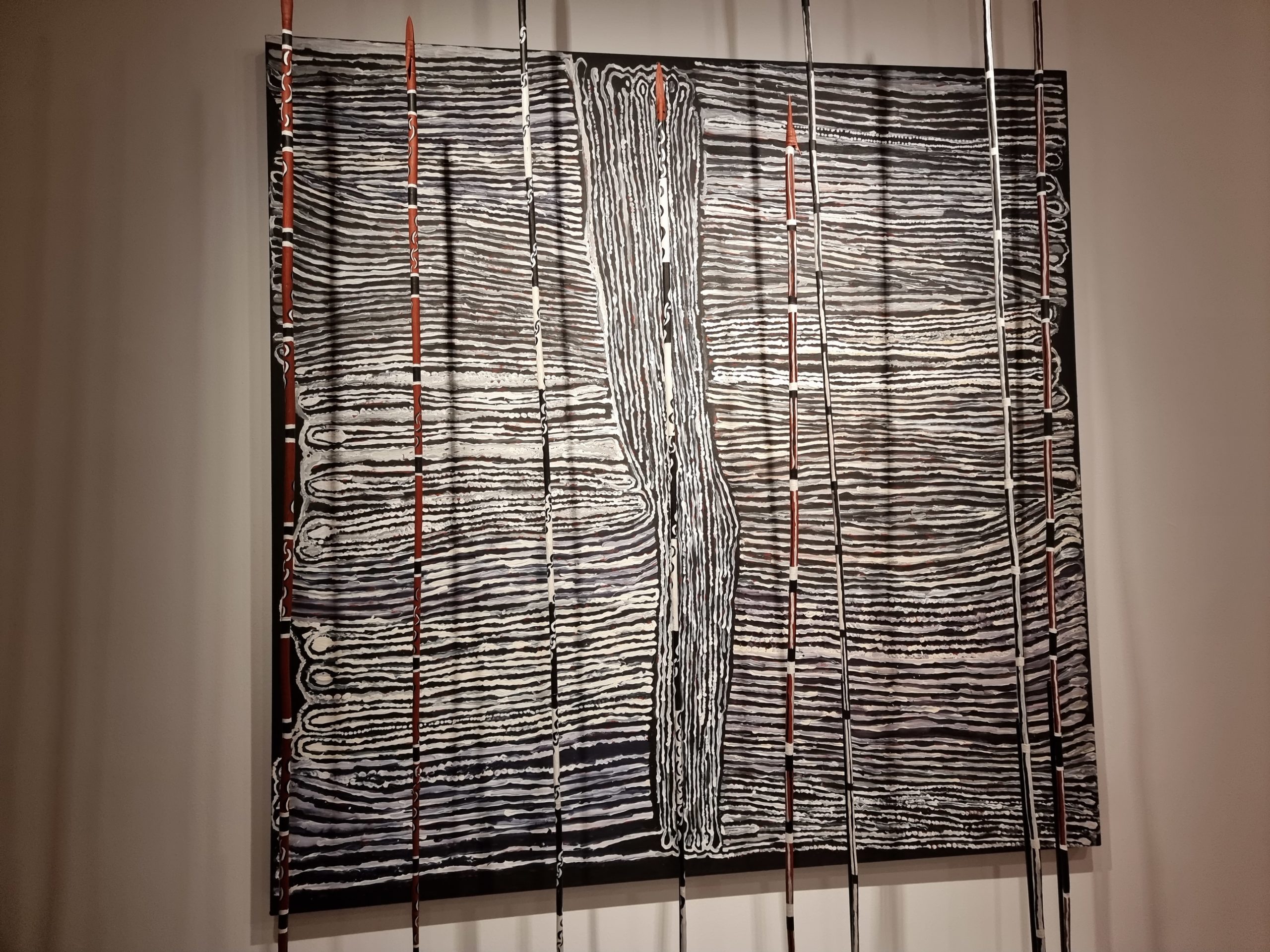 Kulata Tjuta - by Kunmanara (Ray) Ken and Anwar Young. Both Pitjantjatjara-Yankunytjatjara artists.
sculptures and cutting-edge contemporary art.
"We have had such an incredible relationship with Wesfarmers since 2010, who also support our Indigenous Arts Leadership Program," Baum said.
"There are a lot of stories to tell. The audience here primarily have had no exposure to First Nations art from Australia; it's an incredible opportunity.
"People from all over the world come here... Word has gotten out there that this is a great show to see when you come to Singapore."
Baum said the close relationship with South-East Asian neighbours was an important part of the exhibition.
"Our relationship now and also the centuries-long relationship with the Makassar people... Contemporary Makassar artists collaborated with Indigenous artists on producing a video work," she said.
"We were global people well before the British, we were diplomats, traders, business
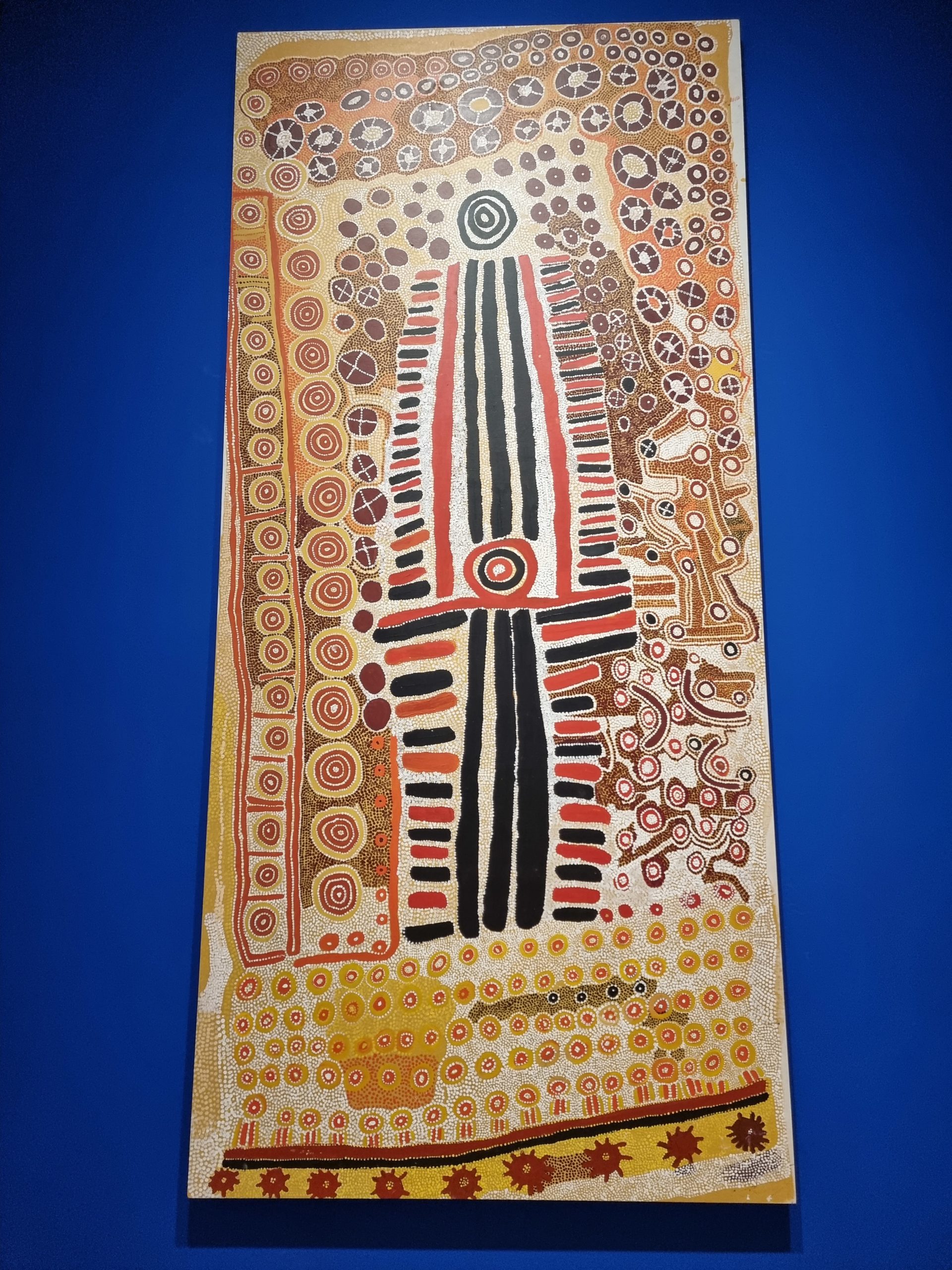 Yanjilypiri Jukurrpa (Star Dreaming). By Paddy Jupurrurla Nelson, Paddy Japaljarri Sims and Kwentwentjay Jungurrayi Spencer. Warlpiri artists.
people... We were the first artists and explorers and navigators."
Baum said the exhibition's six themes laid out a pathway for audiences who have never experienced anything like Ever Present before.
She worked with NGS curators Goh Sze Ying and Phoebe Scott on communicating the concepts and ideas of the exhibition with Singaporean sensibilities in mind.
Ms Goh said the exhibition exposed First Nations art and the social and political context of Australia.
"We were cognisant of creating resonance and relevance for people in Singapore," she said.
"In particular I think one of the key issues was the fact that a lot of nations in South-East Asia have a colonial legacy as part of the British colonial territories, especially Singapore.
"The development has been extremely different, and we do discuss the similarities and the contrasts."
Ever Present explores culture and ceremony, the laws created by and informed by ancestors, with many works about ancestors and the culture and ceremony given to them.
Trade and influence is another of the six themes - reflecting the close relatioship between Indigenous people and South East Asia.
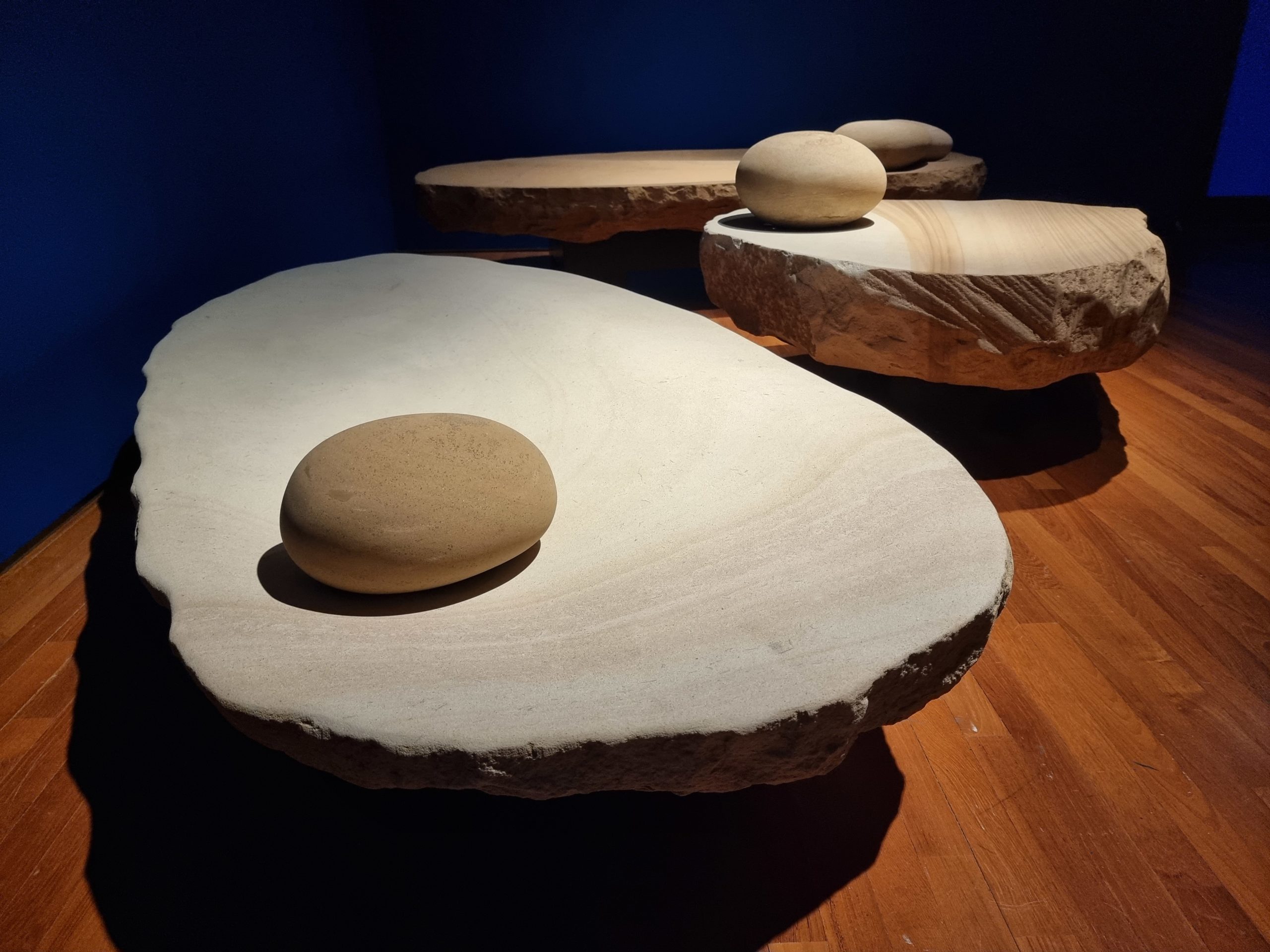 Grinding stones by Jonathan Jones (Wiradjuri-Kamilaroi) with collaborators Dr Uncle Stan Grant Snr. AM and Beatrice Murray (Wiradjuri artists).
"Trade within the country - people will see pearl shells from the Kimberley that flowed through the desert all the way to the east coast," Baum said.
"We were the first traders trading outside the country as well, with the Makassar people in particular, but also the Japanese and Chinese as well were in the Torres Strait, we know about these events from the oral histories.
"Even though it was stopped in 1906, 1907 people are still talking about it, and creating art about it."
Another theme is Resistance and Colonisation, with poignant themes of Stolen Generations, aldn rights an deaths in custody weaved through the exhibition.
Also on display is evidence of early Indigenous livelihoods.
A Wesfarmers-backed Jonathon Jones work tells the story of the first bakers in the world, reflected in giant stones and an accompanying soundscape.
Baum said these works were important parts in dispelling the "primitive society" myth.
The form as well as the content of Ever Present has put First Nations people at the forefront.
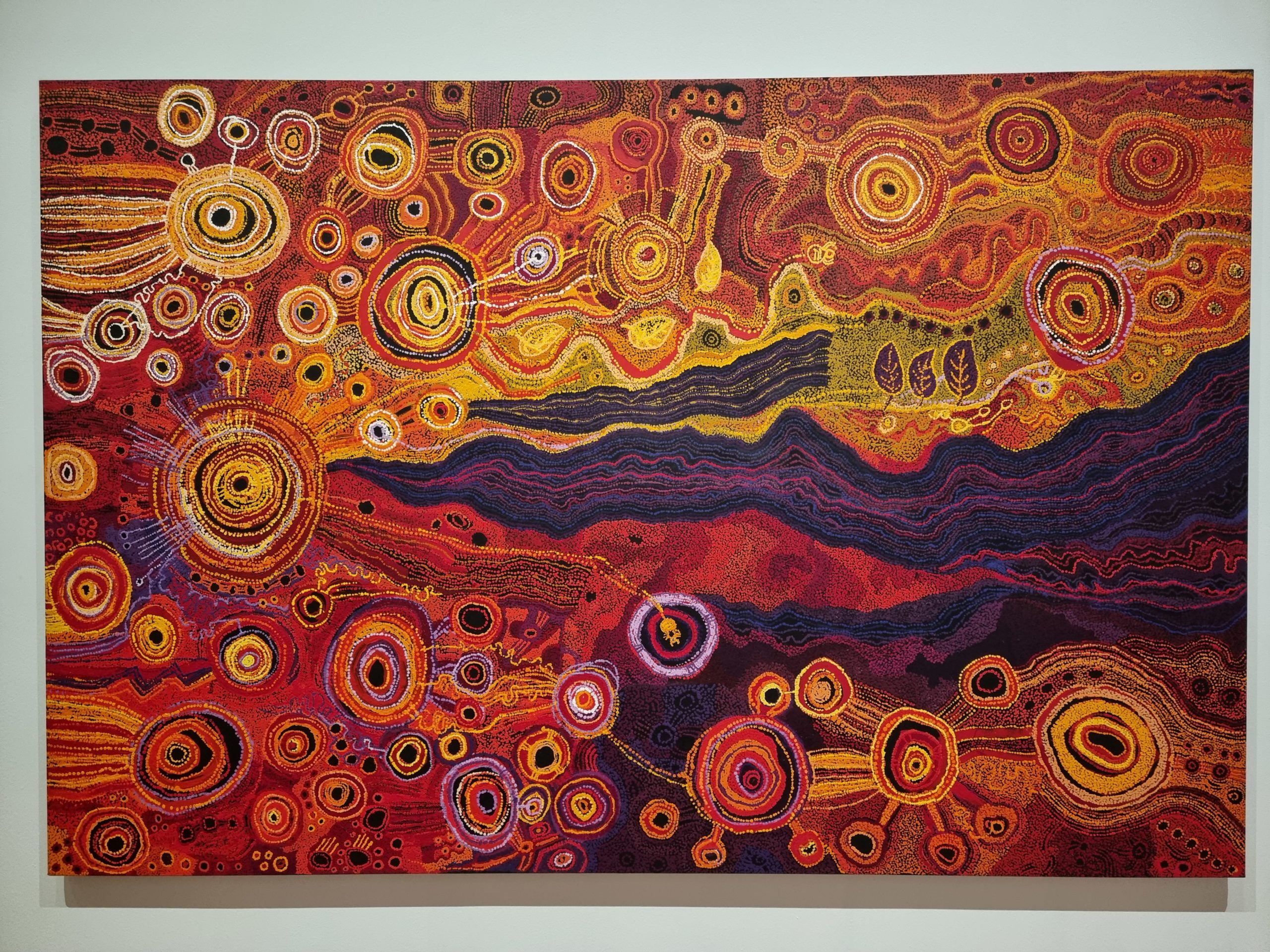 Seven Sisters. by Tjunkara Ken, Sandra Ken, Yaritji Young, Freda Brady, Maringka Tunkin. Pitjantjatjara artists.
Labels attached to works have been de-colonised, with original place names, language, observation of protocols and using the word ancestor instead of attributing works to unknown.
"We call it the Tina Effect," Goh said.
"The conversations generated by the exhibition, how we think about research, how we think about scholarship."
As part of the exhibition, an arts leadership program supported by Wesfarmers has helped 120 alumni make those changes to museum practices.
Goh said five of the works at the exhibition were being shown as part of a collection of modern South East Asian art.
"It's a collection from the modern art history of South East Asia from the late 18th century, and we asked Tina if it would be ok to loan the works of five Aboriginal artists to puncture the narrative of the clean chronology of South East Asian modern art," she said.
These punctures juxtapose with beautiful South East Asian landscapes that were often sent
 Koedal Baydham Adhaz Parw (Crocodile Shark) Mask by Alick Tipoti - Kala Lagaw Ya people of the Maluilgal Nation artist.
to European audiences, with the contemporary work provoking the question, what is left behind, after the plunder.
"They created a lot more opportunity for our local audiences to think about the shared colonial legacy," Ms Goh said.
"Colonisation was at its apex, and they were planting cash crops like rubber, tobacco. You get the very contemporary work in a gallery that talks about the 18th and 19th century and see the relevance, it is still here today."
The exhibition also discusses the question of what indigeneity means in South East Asia, a region with vast diversity and a history of waves of migration.
Ever Present has not only featured paintings, sculpture, photographic works and other static pieces, it has also included performances of dance and song as well as talks, featuring artists such as Alick Tipoti, Tony Albert, Fiona Foley, Julie Gough and others.
It has proven educational too, with school groups enjoying performances, talks, lectures, and social media engagement.
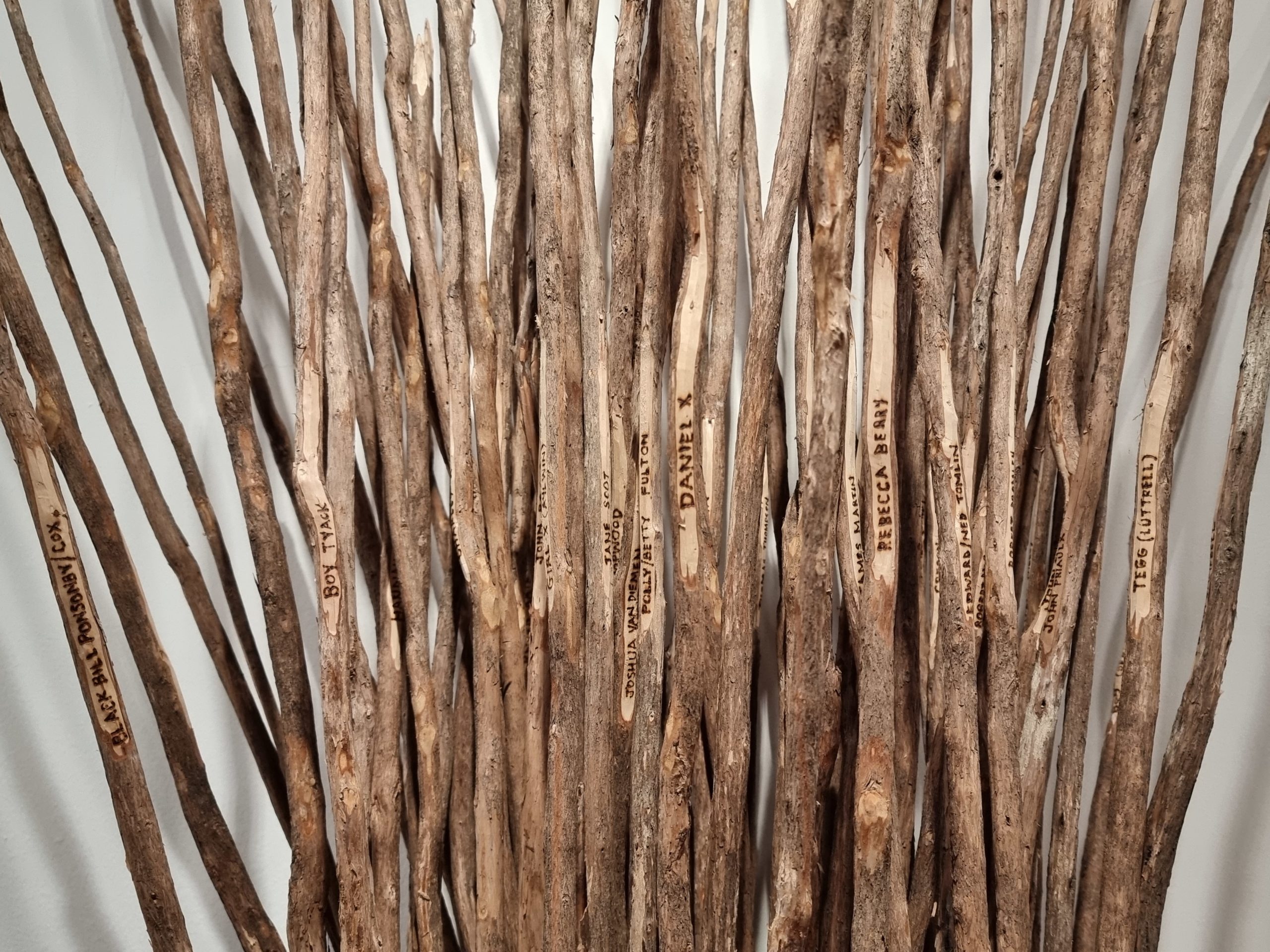 'Some Tasmanian Aboriginal children living with non-Aboriginal people before 1840' - Julie Gough, Trawlwoolway artist.
Baum said Ever Present had generated a huge amount of interest in Aboriginal art in Singapore, and she is directing people interested in buying art to art centres in Australia.
Wesfarmers chairman Michael Chaney said after a successful debut for the exhibition in Australia, the company was thrilled that Singapore is the first international destination for Ever Present.
Mr Gumlich said it was impressive to see Indigenous knowledge had survived 60,000 years and was now reaching a global audience.
"I think it is very important to wrap my mind around the history of Aboriginal people who were treated so badly for so long, the things that happened in my own lifetime, it is shocking," he said.
- Giovanni Torre travelled to Singapore as a guest of Wesfarmers. Wesfarmers was not shown the story prior to publication.



