




Aboriginal family violence prevention service Djirra says a lack of a response from the federal government to a series of reports on violence against Aboriginal women is "deafening".
The last month has seen a number of reports released focussing on gendered violence: the Senate report into murdered and missing First Nations women and children; the Domestic, Family and Sexual Violence Commissioner's first annual report card; and a report into the Rapid Review of Prevention Approaches to End Gender-Based Violence.
They have generated 31 official recommendations, 12 additional recommendations, and 24 findings.
The recommendations from the report into murdered and missing Aboriginal women and children was criticised by campaigners, who said they didn't go far enough, and by Senator Lidia Thorpe, who said in additional comments on the report that the "glaring omission" was a recommendation urgently calling for an improvement in data collection about missing and murdered women and children.
On Thursday, Djirra said there were "no surprises" in the reports, which they said "tells us what we already know".
They 'report' exactly what we have been saying for more than 22 years," Djirra said.
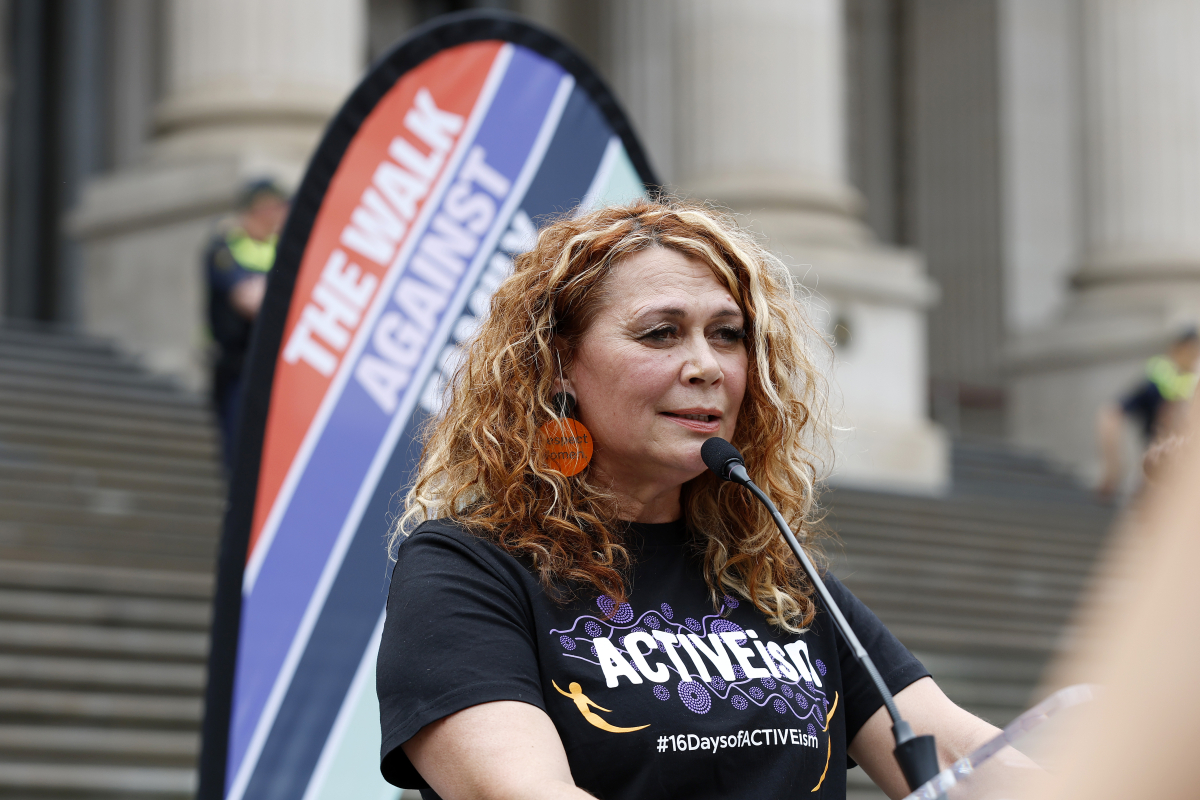
Chief executive Antoinette Braybrook said more reports, inquiries and audits were not the answer.
"In the past two weeks alone there have been 67 'new' recommendations and findings to end violence against our women and children," Ms Braybrook said.
"Why isn't the Government listening? Where is the political leadership we desperately need to end this epidemic?"
In response to the Rapid Review of Prevention Approaches to End Gender-Based Violence report, Federal Minister for Women Katy Gallagher said it "provides important insights to guide our prevention efforts to ensure they continue to be effectively targeted, with the highest possible impact".
"We know that preventing violence is complex, and the guidance in this report will help Government build on the National Plan and its existing work and consider how to further prevent violence – to stop it from occurring in the first instance, to prevent it from escalating, and to stop women being killed," Minister Gallagher said.
Since the three reports have been released, National Indigenous Times has spoken to numerous organisations and community leaders who expressed disappointment at both the lack of media coverage into the murdered and missing Aboriginal women and children report, as well as concern around a perceived view that governments believe releasing reports is akin to real action.
The senate report was delivered to a near empty chamber on a Thursday afternoon, and not reported by a number of major newspapers across the country.
Ms Braybrook said the time for talking was over.
"All three reports highlight the urgent need for sustained and increased funding for Djirra and other specialised frontline services that save lives," she said.
"Yet governments are still not acting."
The government has also been criticised for not providing more funding to the community legal sector, with organisations that help vulnerable people saying they are now turning away up to 1,000 people a day.
"Labor has been talking a big game about helping women and children experiencing family violence, but their failure to fund these services show they're not taking the crisis seriously," Senator Thorpe said earlier this month.
It comes after an independent review into the funding of legal services by Dr Warren Mundy found the current levels are drastically insufficient to meet the needs of Australia's population, especially for marginalised groups like Aboriginal and Torres Strait Islanders, with legal groups arguing they have been raising these concerns for years.
First Nations women are 45 times more likely to experience family violence than non-First Nations women, and at least 25 times more likely to be killed or injured by a former or intimate partner.
The Yoorrook Justice Commission has heard vulnerable First Nations women are being forced to make decisions between homelessness - and the likelihood of their children being taken into child protection - or staying with violent partners, due to a lack of suitable options.
"We must end this exhausting cycle of reports and inquiries that tell us the same thing. Federal, State and Territory Governments must put aside party politics and work together to get real funding [for] our frontline services that keep our women and children safe," Ms Braybrook said.
"These reports must not be buried on shelves in Ministerial offices and government departments. First Nations women and children deserve better. We are watching and we will not be silent."



