




Warning: This report discusses suicide, mental health, and abuse. If you or anyone you know is affected, there are helplines at the end of the article.
The story includes the names of First Nations people who have died.
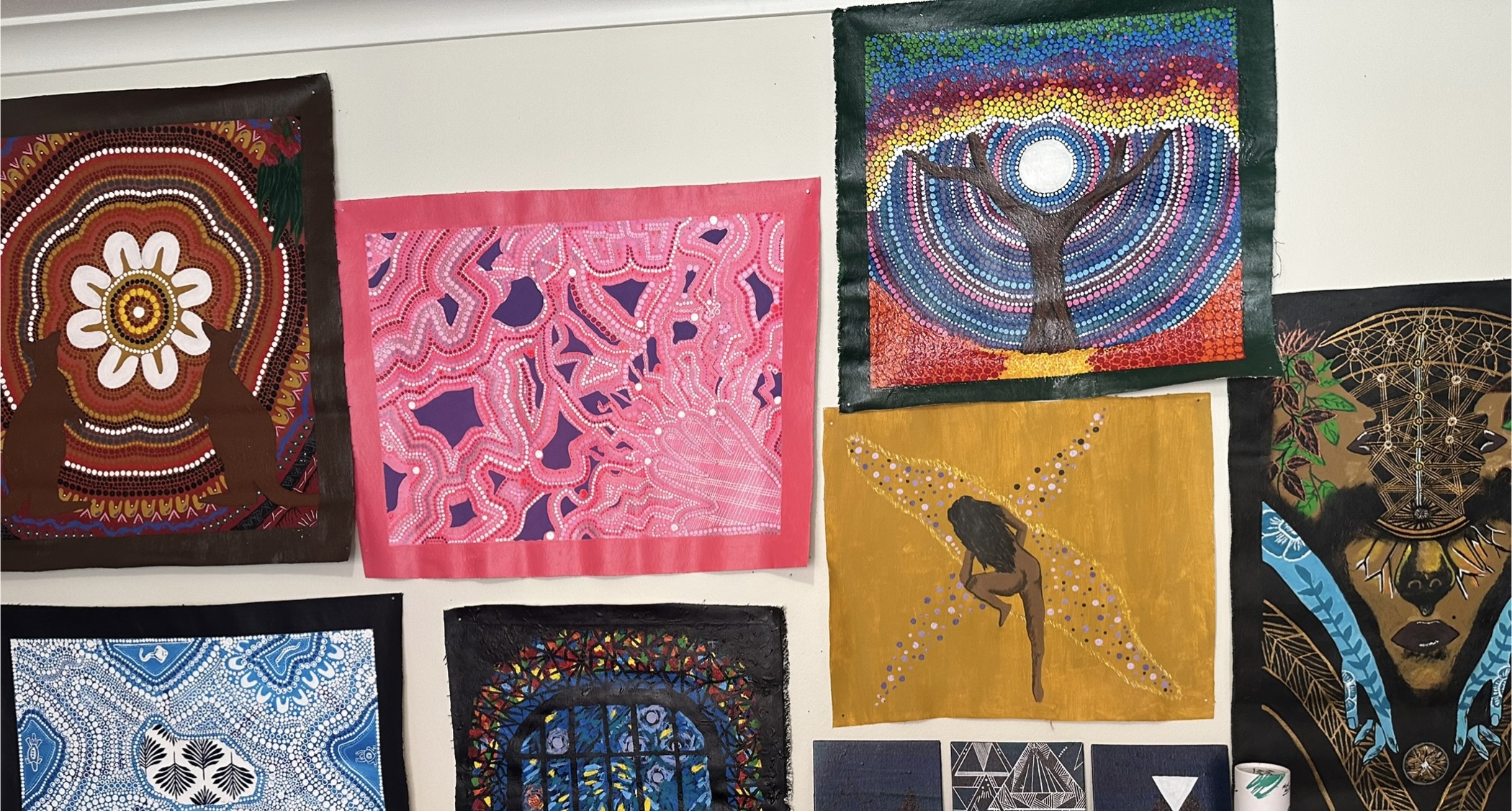
In a small unit in the inner suburbs of Naarm, Anna* is surrounded by her artwork.
Bright, vibrant colours show images of crows, turtles, interspliced with a bleakness that comes from a history of abuse, addiction, and incarceration.
Currently on parole, the Indigenous woman recently left the Dame Phyllis Frost Centre (DPFC), the state's only women's maximum-security facility, after more than three years behind bars.
Having done other stretches over her life, she tells National Indigenous Times the facility has never been worse than it is now. Inmates are "being held back" from cultural sessions - their "only connection to Aunties and Country".
"They are taking away the one thing that gives us access to who we are," Anna says.
"The first thing that gets cut is the cultural programs.
"There is no one culturally there to support women in that space."
Lockdowns lead to rehabilitation program cancellations
Coming into DPFC with drug addiction and trauma stemming from suffering domestic violence, Anna is open about her experiences. Surrounded by her art, much of which was done inside ("it keeps me sane") she is blunt when asked what support she received inside to help her rehabilitate.
"What programs?" she asks. "Not once did I get to do any drug and alcohol rehabilitation programs. Not once."
Looking over her artwork and notes from her time inside, she argues no one is talking about the cuts to vital services; instead, everyone is glossing over them.
Her diary is littered with whole days under the heading "lockdown." One entry says that from noon, the prison "stayed locked down all night", while another reads, "3 pm lockdown. No staff at all. No dinner. No supervisor."
On one day last year, Anna wrote in her diary: "Lockdown. 30 min out all day. No calls. No zooms. No supervisor."
Staff shortages for WestCASA - a community-based not-for-profit sexual assault counselling service - saw services for inmates being cut last April, with inmates told these shortages had "greatly" impacted their ability to take on new clients.
The organisation told National Indigenous Times during lockdowns, inmates "experience unprecedented periods of prolonged isolation, a stripping back or, in some cases, complete removal of supportive services such as WestCASA's support".
WestCASA is now under a new contract at DPFC, with their specialist trauma counselling team at full capacity, including experienced counsellor advocates and a data professional "working to support clients" at the prison.
"WestCASA will continue to work closely to support clients in the journey they are on at Dame Phyllis Frost to address the unexpected impacts of lockdown in accessing the tools they need to self-support," they said.
"Something bad is going to happen."
Inside DPFC, a lack of access to support appears to be having a debilitating impact. National Indigenous Times has been made aware of at least seven self-harm attempts in the past two months. Anna says she was two cells down from an inmate who attempted to take her own life after allegedly arguing expressing to staff an inability to cope with the lockdowns.
"She did it quietly in her cell," Anna says.
"She had almost passed by the time we found her.
"I am suffering trauma and I have nightmares about her attempt…My heart is breaking for her. I want to cry for her. No one should ever feel this isolated."
Regarding the time spent in cells, a spokesperson for the Department of Justice and Community Safety (DJCS) said: "Victorian prisoners' out-of-cell hours are above the national average and we regularly review operational guidelines to make sure they continue to keep staff and people in custody safe."
Anna says there needs to be a dramatic change at DPFC, arguing lockdowns are happening on a "horrendous scale".
"It is a known fact humans can't be held in a space with no other human beings for long periods," she says.
"There is no excuse for these lockdowns.
"Something bad is going to happen."
In response to questions from National Indigenous Times on data regarding health and wellbeing inside DPFC, the DJCS spokesperson said there had been "changes" at the facility to "ensure everyone receives the healthcare they need".
"This includes transitioning to a public healthcare provider and introducing the Aboriginal Healing Unit to provide culturally safe rehabilitation supports for Aboriginal women in custody," the spokesperson said.
Across the country, a significant percentage of Indigenous women in prison have experienced addiction, domestic violence, and long-term abuse.
Writing in The Conversation, Dr Chay Brown and Deirdre Howard-Wagner previously noted, "The incarceration of First Nations women is interwoven with the experience of domestic, family, sexual and other forms of violence against women."
"A high number of First Nations women spend time in custody unsentenced for domestic violence incidents that would never result in a custodial sentence."
Last year, a report by Victoria's ombudsman found Indigenous prisoners are dealing with deeply confronting and distressing conditions, arguing a lack of input by First Nations people into health-related policy in jails has a devastating impact.
Stories of prisoners' experiences - including at DPFC - included being unable to access drug use programs, being abruptly denied medications and having to resort to performing their own 'surgery'.
In 2020, Indigenous woman Veronica Nelson died alone in a "vomit-ridden" cell at DPFC from a rare gastrointestinal condition, despite pleading with guards 49 times to help her.
No charges have ever been laid over her death.
The Coroner examining her death, Simon McGregor, said in his findings: "The systems in place at DPFC to manage the healthcare of prisoners at the time of Veronica's reception were significantly flawed. The inquest identified substantial gaps in policies and procedures which are supposed to safeguard the health and wellbeing of prisoners."
"When one considers the scope of these risks, the prospect of a woman dying alone and unattended in a cell at DPFC becomes less remote," he noted.
In November 2021, Yamatji, Noongar, Wongi and Pitjantjatjara woman, Heather Calgaret, passed away in hospital, having been found in a critical condition by her sister, Suzzane, at DPFC.
She had previously been denied parole due to a lack of suitable accommodation a month before her death.
Anna says the long-term impacts need to be compensated for. Placing otherwise well-behaved inmates in their cells due to staffing shortages should result in time removed from their sentence.
"The consequence [for these lockdowns] is the high number of suicide attempts," she says.
"It is too late when someone passes, you can't bring them back."
*Name changed to protect her identity.
13 YARN - 13 92 76
Lifeline - 13 11 14



